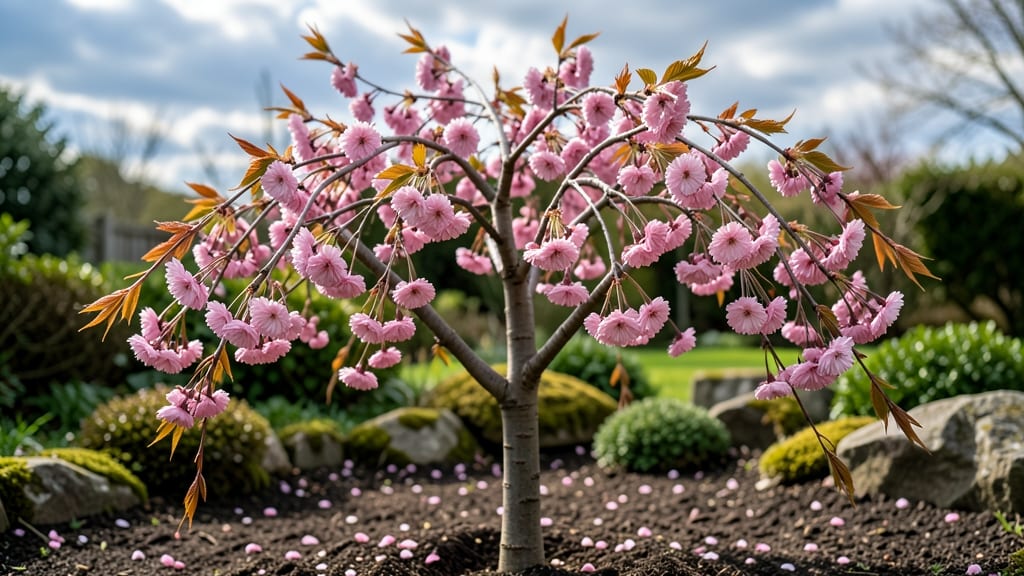
A flowering cherry tree’s growth rate depends on its variety, climate, and care — some varieties gain 3 feet or more in a single year, while others take their time to reach maturity.
If you’re dreaming of a stunning spring display but impatient to see your flowering cherry tree reach its full glory, understanding its growth rate is key.
Some varieties shoot up 3 feet in a season, while others grow more slowly, making the difference between a quick reward and a decade-long wait.
In this guide, we’ll break down how fast different flowering cherry varieties grow, from the fastest growers like the Kanzan to the slower but equally stunning Autumnalis.
You’ll also learn how your climate zone affects growth speed and how simple care tweaks can help your tree hit its height potential faster.
Whether you’re planning a backyard centerpiece or a container garden statement, knowing what to expect year by year will help you set realistic goals and avoid common pitfalls that slow growth.
Dwarf
10-15 ft
Container friendly
Semi-Dwarf
15-25 ft
Most popular
Standard
25-40 ft
Full orchard size
Flowering cherry tree growth rate by variety: fastest & slowest growers
Choosing a flowering cherry tree means committing to years of patience—but some varieties grow like rockets while others take their sweet time.
The Kanzan cherry (Prunus serrulata) can add 3 feet per year in ideal conditions, while the Autumnalis cherry (Prunus subhirtella) grows more steadily at 1-2 feet annually.
Understanding these differences helps you plan your landscape timeline and set realistic expectations for that springtime blossom explosion you’re dreaming of.
Growth rates aren’t just about height—they’re influenced by climate zone, soil quality, and care practices.
A wild cherry (Prunus avium) might shoot up 5 feet in its first year if planted in Zone 8, but struggle in Zone 5 where cold winters slow early growth.
Let’s break down the yearly height progression for these popular varieties so you can predict when your tree will reach its mature glory.
🌱 Pro Tip: Most flowering cherries take 5-10 years to reach full bloom potential. The fastest growers (like Kanzan) may flower earlier, while slower varieties (like Autumnalis) reward you with decades of reliable blooms.
Variety
Year 1 (ft)
Year 2 (ft)
Year 3 (ft)
Year 5 (ft)
Mature Height (ft)
Bloom Time
Kanzan (Prunus serrulata)
3-5
8-12
15-20
25-30
25-40
Late April
Autumnalis (Prunus subhirtella)
2-4
5-8
10-14
15-20
20-30
March-April
Wild Cherry (Prunus avium)
5-7
12-18
20-25
30-35
30-50
April-May
Shirofugen (Prunus serrulata)
2-3
6-9
12-16
20-25
25-35
Late April
How climate zones affect flowering cherry growth speed: what to expect where you live
Your flowering cherry tree won’t grow at the same speed whether you’re in Zone 5’s chilly winters or Zone 9’s mild climate. Cold-hardy varieties like Kanzan may take 2-3 years to reach 5 feet in colder zones, while Autumnalis can hit 6 feet in Zone 8 by year 2.
The difference? Seasonal dormancy and winter cold slow growth in northern climates.
In USDA Zone 6, flowering cherries experience 60-90 days of dormancy each winter, which delays spring growth. Meanwhile, Zone 8 trees grow nearly 20% faster thanks to longer growing seasons. Even soil warmth plays a role—warmer zones let roots establish earlier, fueling faster upward growth.
USDA Zone
Growth Rate (Year 1)
Dormancy Period
Key Limitation
Zone 5
2-4 ft
120-150 days
Late spring thaw
Zone 6
3-5 ft
90-120 days
Winter dieback risk
Zone 7
4-6 ft
60-90 days
Summer heat stress
Zone 8
5-7 ft
30-60 days
Minimal dormancy
Zone 9
6-8 ft
0-30 days
Pest pressure
To speed up growth in Zone 6 or colder, choose early-blooming varieties like Prunus subhirtella, which tolerate brief cold snaps. In Zone 8+, focus on root protection from summer heat—mulch with 3 inches of wood chips to keep roots cool. Both strategies help compensate for climate limitations.
Another trick? Plant in microclimates—southern exposures or near buildings can add 5-10°F warmth, extending your tree’s growing season. I’ve seen Zone 6 cherries grow 1 foot taller when planted against a south-facing wall compared to open yard plantings.
Remember, flowering cherries prioritize root development over height in their first 2 years. In Zone 9, you’ll notice 2-3 feet of growth annually, but Zone 5 trees may only add 1-2 feet due to winter stress.
Patience pays off—most varieties reach mature height in 10-15 years, regardless of zone.
For fastest results, combine zone-appropriate varieties with consistent care: deep watering, balanced fertilizer in spring, and pruning dead wood annually. Your flowering cherry’s growth speed will reflect both nature’s climate gifts and your gardening efforts. 🌸