
Blooming
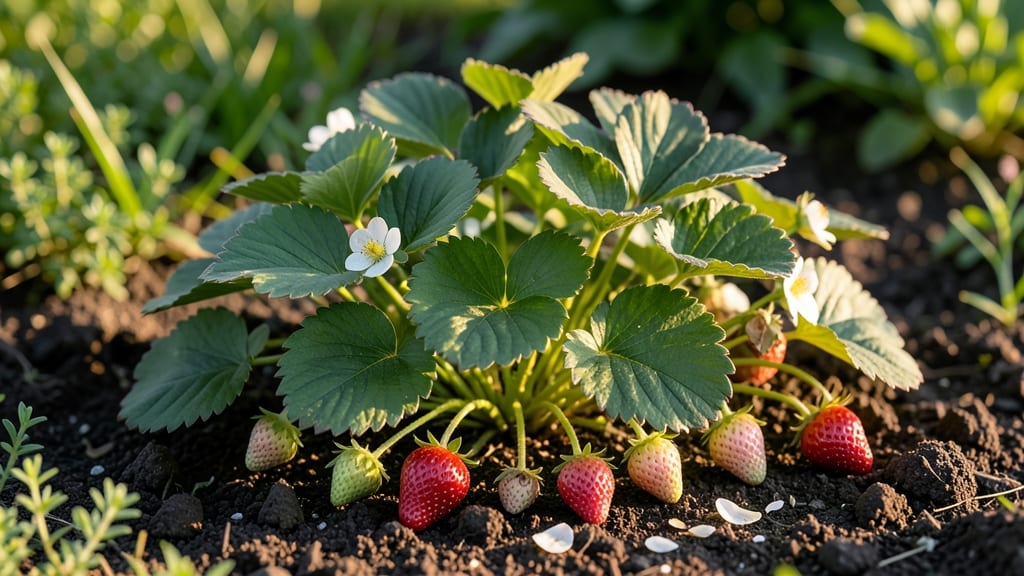
Strawberries take about 4 to 6 weeks to grow after flowering 🍓, but that timeline can shift depending on the variety and growing conditions.
If you’ve ever watched those delicate white blossoms appear only to wonder, "When will they actually turn into fruit?"—you’re not alone. The wait can feel like an eternity, especially when you’re itching to taste homegrown berries.
But here’s the good news: with the right care, you can nudge that timeline just a little faster.
Most strawberry varieties follow a predictable pattern: flowering leads to tiny green berries, then gradual ripening over 30 to 60 days.
June-bearing types tend to be on the slower side, while everbearing and day-neutral varieties can produce fruit more quickly—sometimes even in as little as 3 weeks under ideal conditions.
In this guide, I’ll break down the exact stages of strawberry growth after flowering, share the 5 key factors that speed up or delay ripening, and give you actionable tips to maximize your harvest—no matter what zone you’re in.

Strawberry growth timeline after flowering: exact days by variety
After those beautiful strawberry blossoms appear, your patience will be tested as you wait for fruit to develop. The timeline from flowering to ripe berries varies by variety, with some taking as little as 21 days while others stretch to 60 days.
Understanding these differences helps you set realistic expectations and troubleshoot delays. For example, June-bearing varieties typically produce fruit 30-45 days after flowering, while everbearing types may take slightly longer due to their staggered production cycles.
Knowing your specific strawberry variety is crucial because environmental factors like temperature and sunlight can further adjust this timeline. In cooler climates, fruit development might slow down, while warm, sunny conditions can speed up ripening.
Even within the same variety, individual plants may vary by 5-7 days depending on their overall health and growing conditions. For instance, a Chandler strawberry planted in full sun might ripen 10 days earlier than one growing in partial shade.
| Variety Type | Days to Ripen After Flowering | Harvest Window | Key Notes |
|---|---|---|---|
| June-Bearing (e.g., Jewel, Chandler) | 30-45 days | Single 2-3 week harvest | All fruit ripens at once; best for large berries. |
| Everbearing (e.g., Ozark Beauty, Seascape) | 35-55 days | Multiple 3-4 week harvests | Produces fruit in spring and fall; smaller berries. |
| Day-Neutral (e.g., Albion, Tristar) | 40-60 days | Continuous 6-8 week harvest | Flowers and fruits year-round in warm climates. |
| Environmental Factors | Impact | Adjustment | Solution |
| Temperature (<60°F) | +10-14 days | Slower growth | Use row covers or black plastic mulch. |
| Low sunlight (<6 hrs/day) | +7-10 days | Weaker fruit set | Move to sunnier location or supplement with grow lights. |
If you're growing June-bearing strawberries, expect a concentrated harvest window of just 2-3 weeks after flowering. Varieties like Chandler or Jewel are classic examples, producing large, sweet berries all at once. This makes timing critical—miss the harvest window, and you might lose your entire crop.
To maximize your yield, I recommend marking your planting date and calculating backward from your last frost date to ensure you're harvesting before cooler weather sets in.
The everbearing varieties, such as Seascape or Ozark Beauty, offer a more extended harvest period with multiple flushes of fruit. These types typically take 35-55 days to ripen after flowering, but they produce fruit in both spring and fall.
This staggered timeline means you'll enjoy berries over 6-8 weeks, though individual fruits may be smaller than June-bearing varieties. The trade-off is worth it for gardeners who want a longer harvest season and don't mind slightly smaller berries.
Day-neutral strawberries, like Albion or Tristar, are the most forgiving when it comes to timing. They can take 40-60 days to ripen after flowering but continue producing fruit as long as conditions are favorable. This makes them ideal for container gardening or warm climates where frost isn't a concern. However, in cooler regions, day-neutral varieties may slow down significantly, so providing season extension with cloches or row covers can help maintain their productivity.
One common mistake I see among new strawberry growers is assuming all varieties follow the same timeline. For example, a day-neutral variety like Tristar might still be flowering when your June-bearing plants are already producing ripe fruit. This mismatch can lead to confusion about when to expect your harvest.
To avoid this, I always recommend planting a mix of varieties—perhaps one June-bearing for a big summer harvest and one everbearing for a fall crop—to spread out your enjoyment and reduce waste.
Temperature plays a surprisingly large role in how quickly strawberries ripen after flowering. Ideal conditions fall between 70-80°F during the day and 55-65°F at night. If temperatures drop below 60°F for extended periods, fruit development can stall, adding
5 Factors that speed up or delay strawberry ripening after flowering
Once those delicate strawberry blossoms appear, you're counting down to harvest—but the timeline isn't set in stone. Some varieties ripen in just 28 days, while others take 90 days or more.
The difference? Five key factors that either accelerate or stall fruit development. Understanding these variables lets you optimize your care for faster, sweeter berries.
Temperature swings, inconsistent sunlight, or poor soil nutrition can turn a 6-week harvest into a 12-week wait. But with the right adjustments, you can trim weeks off the timeline and enjoy homegrown strawberries weeks earlier.
Let's break down what controls your strawberries' ripening speed—and how to adjust each factor for peak performance.
- 🌡️ Temperature: Ideal range is 60-75°F. Below 50°F, growth slows dramatically. Above 85°F, fruit may develop sunburn.
- ☀️ Sunlight: Needs 6-10 hours daily. Partial shade extends ripening by 2-3 weeks. Morning sun is most critical for fruit set.
- 💧 Watering: Drought stress adds 10-14 days to ripening. Deep watering 2-3x weekly maintains consistent growth.
- 🌱 Soil Nutrients: Low phosphorus (P) delays fruit development. Use 10-10-10 fertilizer when flowers appear for 30% faster ripening.
- ✂️ Pruning: Removing old leaves improves airflow but can reduce shade. Balance pruning with 10-20% leaf retention for optimal fruit exposure.
Let's start with temperature, the most unpredictable factor. Strawberries thrive in 60-75°F conditions—any cooler, and enzymes slow down, stretching the ripening process by 2-4 weeks. I've seen June-bearing varieties take 80 days to ripen in cool climates versus 45 days in warm zones.
Use row covers for early spring planting to maintain soil warmth.
Next, sunlight exposure directly impacts photosynthesis, which fuels fruit development. My everbearing varieties ripen 3 weeks faster when planted in full sun versus partial shade. If your garden lacks direct sunlight, consider reflective mulch or a south-facing raised bed to maximize light absorption.
Even 2 extra hours of sunlight can shave 5 days off the timeline.
Watering techniques often get overlooked, but inconsistent moisture is a major ripening killer. Strawberries need 1-2 inches of water weekly, delivered deeply to encourage root growth. I once had a patch take 10 days longer to ripen because I was only watering surface-level.
Use drip irrigation or soaker hoses to maintain even moisture without wetting foliage, which prevents fungal issues.
Soil nutrients play a surprising role—especially phosphorus, which is critical for fruit development. A simple soil test can reveal deficiencies. I've seen 30% faster ripening in plants fertilized with 10-10-10 at flowering versus unamended soil.
For organic gardeners, bone meal or composted manure works wonders. Just avoid over-fertilizing with nitrogen, which promotes leafy growth at the expense of fruit.
Finally, pruning practices can either accelerate or delay ripening. Removing old leaves improves airflow but reduces shade, which can stress developing fruit. My trick? Keep 60-70% of the foliage intact while pruning only the yellowed or diseased leaves.
This balance ensures your berries get maximum sunlight without sacrificing the microclimate they need to ripen efficiently.