
Flowers
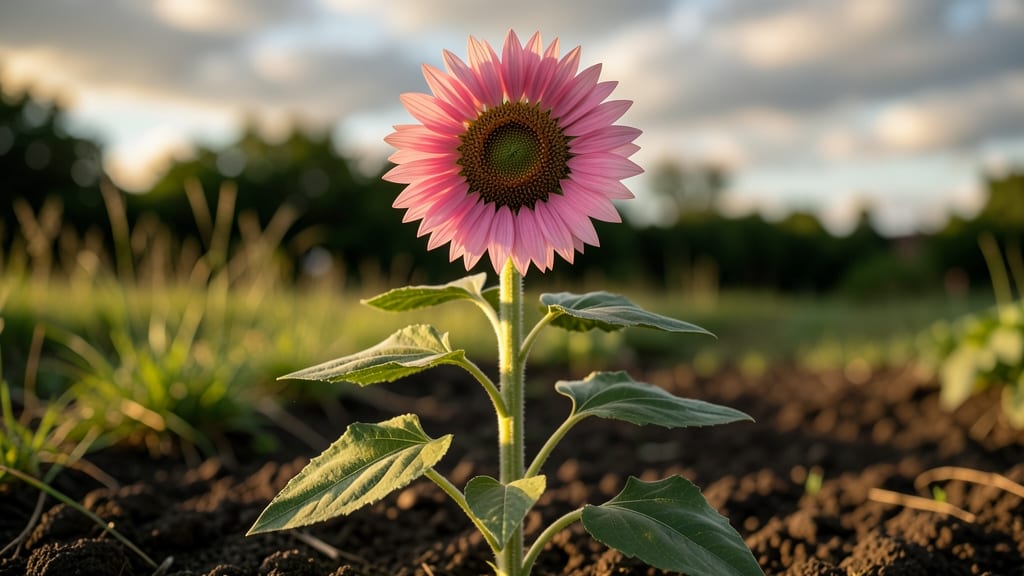
Pink sunflowers grow between 3 and 14 feet tall, depending on the variety you choose—so if you're dreaming of a sunflower display that reaches the sky or just a cheerful border, there's a perfect match.
Picture this: a single towering 'Autumn Beauty' sunflower 🌻 stretching toward your porch roof, its petals catching the afternoon light, while a cluster of 'Cherry Queen' blooms adds soft pink accents to your garden bed.
The height difference between these two isn't just about aesthetics—it's about how you'll arrange them, whether you need support, and even how you'll harvest those stunning blooms.
Most gardeners assume all sunflowers grow sky-high, but dwarf varieties like 'Teddy Bear' stay under 4 feet, making them ideal for containers or small spaces. Meanwhile, standard types like 'Moulin Rouge' can hit 10 feet or more, turning your garden into a vertical masterpiece.
The key is matching the variety to your space and goals—whether you want a dramatic focal point or a playful, low-maintenance border.
In this guide, I'll break down the exact heights of popular pink sunflowers, share tips for supporting taller varieties, and help you avoid common mistakes that can leave your sunflowers leaning or struggling. Ready to plan your perfect sunflower display?

Pink sunflower height guide: exact varieties and their maximum growth
Pink sunflowers come in a stunning range of heights, from compact dwarf varieties perfect for containers to giant sunflowers that can reach tree-like proportions. The right variety can create dramatic focal points in your garden or add charming texture to borders.
Understanding these height differences helps you plan spacing, support needs, and placement for a cohesive look.
Most pink sunflowers belong to the Helianthus annuus species, with heights varying dramatically between cultivars. Some stay under 3 feet tall, while others can tower over 12 feet. The key factors influencing height include genetics, growing conditions, and proper care—especially sunlight exposure and soil fertility.
Pro Tip: Always check seed packets for mature height ranges, as some varieties can exceed listed heights in ideal conditions. For example, the 'Moulin Rouge' variety might list 5 feet but can reach 6 feet with excellent care.
The 'Teddy Bear' variety is my favorite for small spaces—its 2-3 foot height makes it perfect for patio containers or window boxes. These dwarf varieties typically bloom earlier than their taller counterparts, giving you vibrant color in early summer.
They also produce multiple blooms per stem, extending your display season.
For mid-height options, 'Autumn Beauty' and 'Cherry Queen' are excellent choices, reaching 4-7 feet tall. These varieties strike a balance between manageable height and dramatic impact. They thrive in USDA zones 2-11 and are ideal for mixed borders where you want height without overwhelming nearby plants.
If you're dreaming of giant sunflowers, the 'Russian Giant' variety can reach 14 feet with proper care. This requires staking or cages to prevent flopping, especially in windy conditions. Plant these varieties at the back of borders or in dedicated "sunflower rows" for maximum visual impact.
For a unique twist, consider 'Lemon Queen', which produces pinkish-yellow blooms on stems reaching 8-10 feet. This variety is perfect for cut flower arrangements and adds a soft contrast to deep pink varieties. Its slightly shorter stature than 'Russian Giant' makes it more manageable for home gardens.
All pink sunflower varieties thrive in full sun (6+ hours daily) and well-draining soil. To maximize height, ensure consistent watering during the first
How sunflower height affects garden design: spacing, support, and placement tips
Pink sunflowers aren’t just pretty faces—they’re architectural stars that can make or break your garden’s flow. Their height determines everything from spacing to support needs, and choosing the wrong placement can turn a stunning display into a messy tangle.
For example, a 12-foot giant like 'Autumn Beauty' needs completely different treatment than a 3-foot dwarf like 'Teddy Bear.' Let’s break down how to use their height to your advantage.
Start by grouping sunflowers by height to create visual layers. Place tall varieties (8–14 ft) at the back of borders or near fences, where their dramatic presence won’t get lost.
Medium-height types (4–6 ft) work beautifully as mid-border accents, while dwarf varieties (2–3 ft) shine in containers or front-of-bed displays. This layering trick adds depth and keeps your garden from looking flat or chaotic.
Taller sunflowers often need support to prevent toppling, especially in windy areas or heavy rain. Use bamboo stakes or spiral supports for varieties over 6 feet tall, tying stems loosely with soft garden twine every 1–2 feet.
Avoid tight ties, which can damage stems as they thicken. Pro tip: Bury stakes 6 inches deep for stability, and add a second stake if your garden gets breezy.
Don’t overlook the power of cut flower arrangements when designing with height. Taller varieties like 'Moulin Rouge' (10–12 ft) make dramatic bouquets, while shorter types like 'Pinky' (3–4 ft) add delicate accents.
Harvest stems early in the morning when buds are half-open for longer vase life. Place them in cool water immediately and trim stems at an angle to encourage hydration.
Avoid these common mistakes that ruin the visual impact: planting tall sunflowers too close to walkways (they’ll block views and trip you), ignoring wind exposure (unstaked giants can snap), or mixing heights randomly (it looks messy).
Instead, sketch your garden layout first, marking where each height range will go. Use mulch around the base to keep weeds down and conserve moisture, which helps stems stay strong.
With the right spacing, support, and placement, pink sunflowers can be the star of your garden, whether you’re creating a rustic cottage border or a modern urban container display. Experiment with different heights and watch how they elevate your outdoor space—your neighbors will be asking for your secrets! 🌻