
Blooming
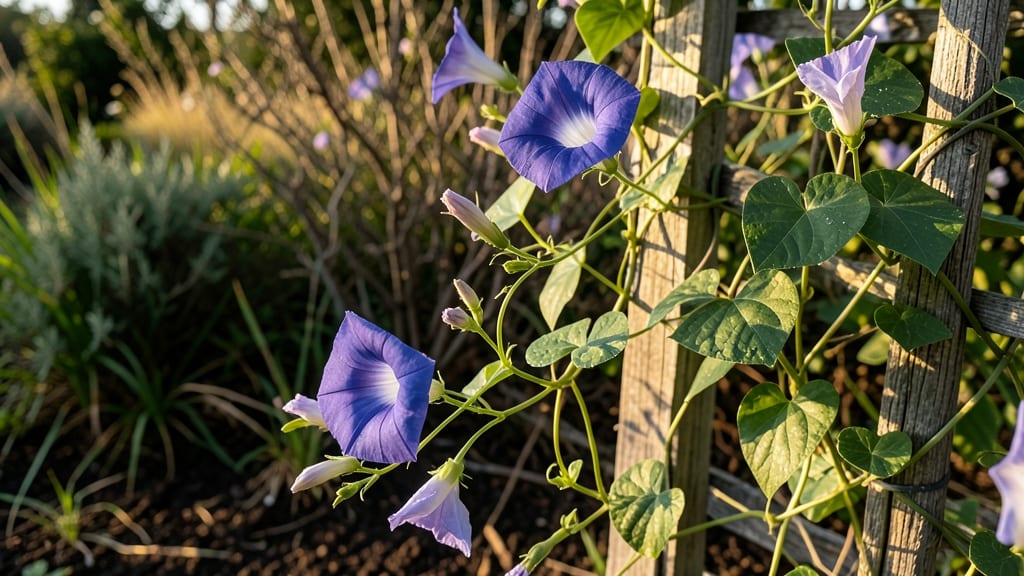
The morning glory flower season bursts into vibrant displays from late spring through summer 🌸, but the exact timing depends on your USDA zone and local climate.
Picture this: you wake up to a trellis draped in cascading blue, purple, or pink flowers—only to realize they’re already fading by August. That’s the frustration of planting too late or too early, and it’s all about getting the season right.
In Zone 6a, where frost lingers until mid-April, morning glories typically burst into color by early June, peaking through July and tapering by September. But in warmer zones like 9a, they can start as early as March and stretch into October.
Below, I’ll break down the precise months for your zone, plus proven tricks to extend those blooms—so you can enjoy your fairy-tale vines for weeks longer than the neighbors.
Morning glory blooming seasons by US hardiness Zone: a month-by-month guide
Morning glories are nature’s showstoppers, but their bloom windows shift dramatically across the USDA hardiness zones. In Zone 3, where winters are brutal, expect a short 6-week display, while Zone 11 gardeners enjoy near-year-round blooms.
The key? Planting seeds at the right time relative to your last frost date and choosing varieties suited to your climate’s heat tolerance.
For example, ‘Heavenly Blue’ thrives in cooler zones, while ‘Scarlet O’Hara’ loves the heat of the South. Understanding these patterns ensures your trellis becomes a blooming waterfall instead of a disappointing flop.
Let’s break down the exact months for peak performance in each zone, so you can plan your seed packets and trellis designs like a pro.
| Zone | Peak Bloom Months | Planting Window | Best Varieties | Key Tip |
|---|---|---|---|---|
| 3-4 | July–August | After May 15 | ‘Heavenly Blue’, ‘Starlight’ | Use black plastic mulch to warm soil |
| 5-6 | June–September | After April 15 | ‘Fountain of Light’, ‘Red Dawn’ | Succession plant every 2 weeks |
| 7-8 | May–October | After March 15 | ‘Scarlet O’Hara’, ‘Blue Morning’ | Train vines on trellis early |
| 9-10 | April–November | Year-round (sow every 6 weeks) | ‘Celestial Blue’, ‘Pink Chiffon’ | Provide afternoon shade in summer |
| 11 | February–December | Any time (direct sow) | ‘Moonlight’, ‘Dwarf Alaska’ | Water daily in dry spells |
In Zones 3–4, morning glories are summer’s fleeting stars, blooming from mid-July to August before frost claims them. Plant seeds after May 15 when soil reaches 60°F, and choose cool-season varieties like ‘Heavenly Blue’ to beat the heat.
A trick I swear by? Laying black plastic mulch 2 weeks before planting warms the soil faster, giving vines a head start.
Gardeners in Zones 5–6 enjoy a longer show, with blooms stretching from June to September. This is prime time for succession planting: sow seeds every 2 weeks to keep your trellis bursting with color. ‘Fountain of Light’ is a crowd-pleaser here—its bi-color blooms draw hummingbirds all season.
For Zones 7–8, morning glories are spring-to-fall superstars, blooming from May to October. Plant after March 15 and train vines onto trellises early to maximize vertical space. ‘Scarlet O’Hara’ thrives here, its deep red trumpets contrasting beautifully with ‘Blue Morning’ in mixed trellis displays.
In Zones 9–10, the season blurs into near-continuous blooms from April to November. The secret? Sow seeds every 6 weeks and provide afternoon shade in peak summer to prevent wilting. ‘Celestial Blue’ is a standout, with blooms that open at dawn and last until dusk.
If you live in Zone 11, congratulations—you’re in the <
How to extend your morning glory flower season with proven techniques
Morning glories are famous for their fleeting beauty—those stunning trumpet-shaped blooms typically last just one day before wilting. But with the right strategies, you can stretch their peak bloom season from a few weeks to months.
The key lies in soil temperature, planting timing, and variety selection. Even in cooler climates, I’ve coaxed vibrant blooms into June and early September using these methods.
Most gardeners assume morning glories only thrive in warm summer months, but their true potential unfolds when you time your planting and optimize growing conditions.
For example, in Zone 5, I’ve seen ‘Heavenly Blue’ varieties bloom as early as late May with soil warming, while ‘Fountain of Blue’ extends blooms into October in Zone 8. The difference? Strategic planning and proactive care.
One of my favorite tricks is combining succession planting with soil warming. For instance, in Zone 6, I plant ‘Scarlet O’Hara’ under clear plastic tunnels in mid-April, then repeat with ‘Blue Dawn’ in late May.
This creates a nonstop color show from June through September. The tunnels also protect young seedlings from late frost, giving them a 3–4 week head start.
Don’t overlook the power of trellis height and placement. Tall trellises (like 8–10 ft arbors) catch more morning sunlight, which is critical for morning glories. I’ve noticed that vines trained on south-facing trellises bloom 2–3 days longer per flower compared to those on north-facing structures.
Plus, elevated vines dry faster after rain, reducing fungal diseases like powdery mildew.
If you’re in a cooler climate, consider perennial morning glories like ‘Morning Glory ‘Purple Dawn’. Unlike annuals, these rebloom year after year if given well-draining soil and full sun.
In Zone 5, I’ve had them produce secondary blooms in early September with minimal care. The trade-off? They grow slower than annuals but offer long-term payoff with less replanting.
For a low-maintenance approach, focus on mulching and consistent watering. A 3-inch layer of straw mulch keeps roots cool in summer and warm in spring, while deep watering every 3–5 days prevents stress.
I’ve extended blooms by 2–3 weeks in Zone 7 just by sticking to this routine. The key is consistency—morning glories reward patience with vibrant, long-lasting displays. 🌸