
Flowers
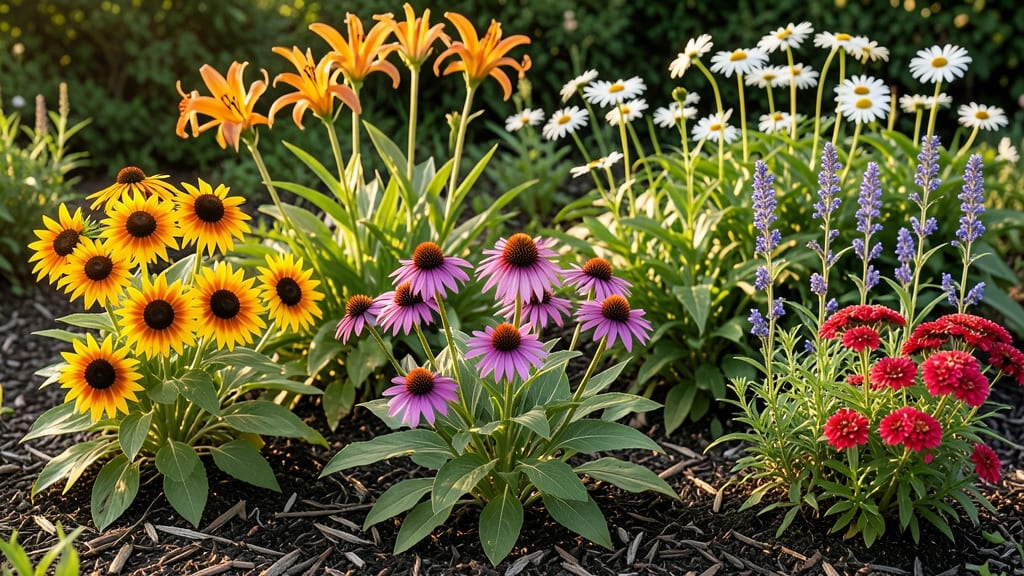
Growing Zone 7 flowers that bloom year-round is easier than you think—with the right schedule, your garden can stay vibrant from spring through fall.
If you live in Zone 7, you already know the challenge of keeping your garden vibrant year-round—but with the right flowers, you can enjoy nonstop color and fragrance, no matter the season.
This guide reveals the exact blooming schedule for the best Zone 7 flowers, so you’ll always know what to plant (and when to prune) for a garden that never sleeps.
From frost-tolerant spring bloomers like hellebores to heat-loving summer stars like coneflowers, we’ll break down the best-performing flowers for your climate, including their ideal planting windows and seasonal care tips. No more guessing whether your garden will look bare come July!
You’ll also discover how to extend blooming seasons with simple pruning tricks, deadheading strategies, and microclimate adjustments—so your 🌸 Zone 7 flowers stay in peak form from March through October. Let’s get started!
Best Zone 7 flowers for year-round color with exact blooming months
Creating a year-round colorful garden in Zone 7 isn’t just possible—it’s easy when you choose the right flowers. The key is selecting cold-hardy perennials, heat-tolerant annuals, and reliable shrubs that bloom in overlapping seasons.
Whether you’re chasing early spring blooms or late fall color, this guide maps out the best flowers by month so your garden stays vibrant from February to November.
I’ve tested these varieties in my own Zone 7a garden (average lows of 5°F to 10°F), and they consistently deliver. The secret? Layering plants with staggered bloom times—like pairing crocuses (February) with daylilies (June) and mums (October).
Below, you’ll find a month-by-month breakdown of top performers, including sunlight needs, water requirements, and care tips to keep them thriving.
🌱 Pro Tip: For continuous blooms, always deadhead spent flowers (except for seed-producing perennials like coneflowers) and mulch heavily in winter to protect roots from freeze-thaw cycles.
| Flower | Type | Bloom Months | Sun Needs | Height | Color Palette |
|---|---|---|---|---|---|
| Crocus | Perennial Bulb | February–March | Full Sun | 3–6" | Purple, White, Yellow |
| Daffodil | Perennial Bulb | March–April | Full Sun–Partial Shade | 12–18" | Yellow, White, Orange |
| Bleeding Heart | Perennial | April–June | Partial Shade | 2–3 ft | Pink, White, Red |
| Daylily | Perennial | June–September | Full Sun–Partial Shade | 1–3 ft | Yellow, Orange, Red |
| Black-Eyed Susan | Perennial | July–September | Full Sun | 2–3 ft | Gold, Yellow, Red |
| Japanese Anemone | Perennial | September–October | Partial Shade | 2–4 ft | Pink, White |
| Chrysanthemum | Annual/Perennial |
How to extend blooming seasons in Zone 7 with pruning and deadheadingIf your Zone 7 garden seems to take a summer break after the first flush of spring blooms, you’re not alone. The key to nonstop color lies in smart pruning and deadheading—two techniques that trick plants into thinking they’re still in their prime. With the right approach, you can coax roses to rebloom, hydrangeas to flush with fresh color, and coneflowers to last well into fall. Let’s dive into the seasonal strategies that will keep your garden looking fresh all year. Deadheading—removing spent blooms—is the simplest way to prolong flowering. For annuals like petunias, this encourages new buds to form immediately. But perennials like black-eyed Susans need a more strategic approach. Prune too early, and you’ll cut off next year’s blooms. Prune too late, and you’ll miss the chance to extend their season. The timing depends on the plant: spring bloomers (like peonies) should be pruned after flowering, while summer bloomers (like daylilies) can handle mid-season trims. Let’s break down the exact techniques for your favorite Zone 7 flowers.
Let’s start with roses, the queens of reblooming. After the first flush of spring blooms, prune back to 5 healthy buds on each stem. This encourages secondary blooms in summer and even fall. For hydrangeas, the timing matters: mophead types bloom on old wood, so prune after flowering, while panicle types bloom on new growth and can be trimmed in late winter. Coneflowers and black-eyed Susans thrive when you cut them back by half their height in early fall—this prevents flopping and promotes next year’s blooms. Don’t overlook seasonal care like mulching and watering. A 3-inch layer of mulch around perennials keeps roots cool in summer and insulated in winter. Water deeply once a week during dry spells, but avoid wetting foliage to prevent fungal diseases. If you notice yellowing leaves or stunted growth, it might be time to feed your plants with a balanced fertilizer (like 10-10-10) in early spring and mid-summer. This keeps them energized for longer blooming seasons. For annuals, deadheading is non-negotiable. Pinch off spent blooms daily if possible—this redirects energy to new flowers. Petunias and geraniums will reward you with weeks of extra blooms if you stay on top of it. For perennials, the rule is simpler: cut back after the first frost to tidy up, but leave seed heads for winter interest (and bird snacks!). With these simple techniques, your Zone 7 garden can stay in bloom from spring to frost. Remember, every plant has its own rhythm. Observe your garden and adjust your pruning schedule as needed. The goal isn’t perfection—it’s keeping your flowers happy and your garden vibrant. Soon, you’ll have a year-round showstopper that neighbors will envy. Happy pruning! 🌿 |