
Flowers
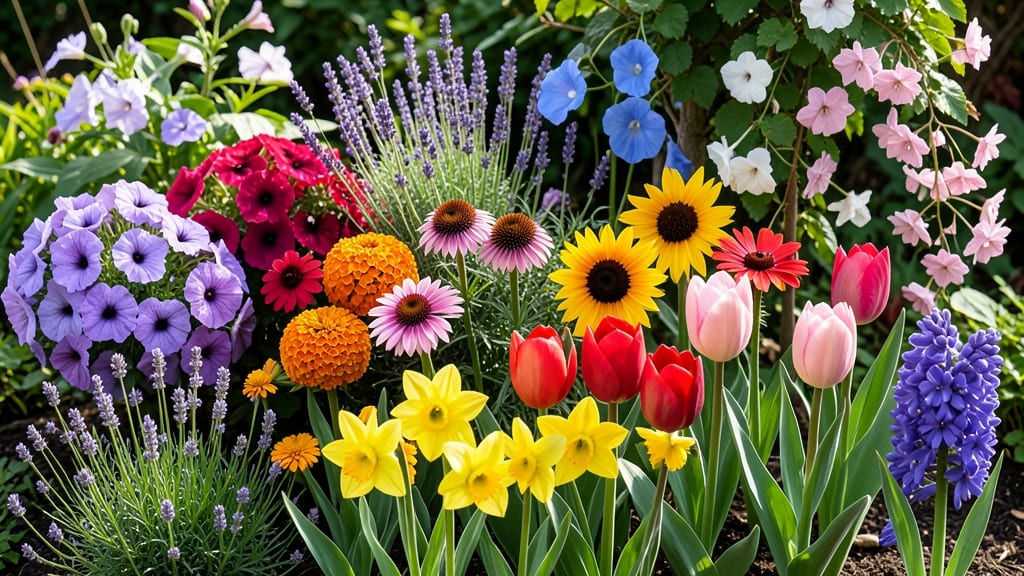
Exploring the different types of flowers 🌸 can turn your garden into a living canvas, where every season brings fresh colors and textures to enjoy.
Picture this: a spring garden bursting with fragrant peonies and delicate tulips, followed by summer’s bold dahlias and sunflowers, then fall’s fiery chrysanthemums and winter’s hardy hellebores keeping things alive. That’s the magic of layering flowers by bloom time—no dead patches, just year-round beauty.
But here’s the catch: not all flowers play well together. Some need full sun, others thrive in shade; some bloom for weeks, while others fade too fast. The key is pairing the right varieties for your space, whether you’re filling containers, borders, or a full flower bed.
In this guide, I’ll break down the best flowers by season, height, and sunlight needs—plus how to mix them for minimal overlap and maximum impact. Ready to design a garden that never stops blooming?
12 Must-know flower types for seasonal garden color palettes
Creating a garden that bursts with color year-round requires selecting the right flowers for each season. By strategically combining annuals, perennials, bulbs, and shrubs, you can ensure continuous blooms from early spring to late winter.
Each flower type brings its own unique textures, fragrances, and hues, transforming your outdoor space into a living canvas.
The key to a vibrant seasonal palette lies in understanding which flowers thrive in specific conditions and bloom times. For example, peony and tulip varieties dominate spring, while dahlias and zinnias take center stage in summer.
Fall brings chrysanthemums and aster flowers, and winter often features hellebores and winter jasmine for structure and subtle color.
Here’s a breakdown of 12 standout flower types, categorized by their peak bloom seasons, along with their ideal growing conditions and care essentials.
| Flower Type | Season | Sunlight Needs | Water Needs | Mature Size | Care Tips |
|---|---|---|---|---|---|
| Peony | Spring | Full Sun | Moderate | 2-3 ft | Deadhead spent blooms |
| Tulip | Spring | Full Sun to Partial Shade | Low | 1-2 ft | Plant bulbs in fall |
| Dahlia | Summer | Full Sun | Moderate to High | 3-5 ft | Stake tall varieties |
| Zinnia | Summer to Fall | Full Sun | Moderate | 1-4 ft | Deadhead regularly |
| Chrysanthemum | Fall | Full Sun to Partial Shade | Moderate | 1-3 ft | Pinch back early |
| Hellebore | Winter to Early Spring | Partial Shade | Low | 1-2 ft | Plant in shade |
| Lavender | Summer | Full
How to design a year-round flower garden with minimal overlapA year-round flower garden isn’t just about planting pretty blooms—it’s about creating a dynamic, ever-changing display where each seasonal flower type takes center stage. The key? Strategic layering by height, bloom time, and sunlight needs to avoid color and texture gaps while keeping maintenance manageable. Start by grouping tall flowers (like delphiniums or hollyhocks) at the back, medium-height perennials (such as black-eyed Susans) in the middle, and low-growing annuals (like pansies or violas) up front. Think of your garden as a seasonal calendar. Early spring bulbs like crocuses and daffodils pop up before foliage emerges, while late-winter hellebores add color when little else is blooming. Summer thrives with dahlias and zinnias, and fall brings chrysanthemums and aster flowers. Even winter isn’t left out—evergreen shrubs like boxwood or ornamental grasses provide structure, while winter jasmine offers fragrant blooms. 5 Key Flower Types for Seasonal Layering
Don’t forget companion plants to bridge gaps between blooming seasons. For example, evergreen shrubs like boxwood or inkberry holly add structure in winter, while early spring bulbs like snowdrops and grape hyacinths provide color before perennials emerge. Pair fragrant flowers like lavender or roses with pollinator-friendly plants (e.g., bee balm or salvia) to attract beneficial insects year-round. Sunlight is another critical factor. Group sun-loving flowers (like daylilies or coreopsis) in the south-facing areas of your garden, while shade-tolerant plants (such as bleeding heart or hostas) thrive under trees. Use mulch to retain moisture and suppress weeds, which is especially helpful during hot summer months when water needs spike. To minimize overlap, stagger planting times. For instance, plant spring-blooming bulbs in fall and summer annuals in early spring to ensure a seamless transition. Succession planting—replacing spent blooms with new varieties—keeps your garden lively without gaps. For example, swap out spring pansies with summer marigolds as temperatures rise. Finally, embrace textural variety to add depth. Mix fine foliage (like ferns or lamb’s ear) with bold leaves (such as hostas or coleus) and spiky plants (e.g., yucca or sago palm). This creates a multi-dimensional garden that’s as visually interesting in winter as it is in summer. With these strategies, your garden will bloom continuously, offering color, fragrance, and texture in every season. |