
Flowers
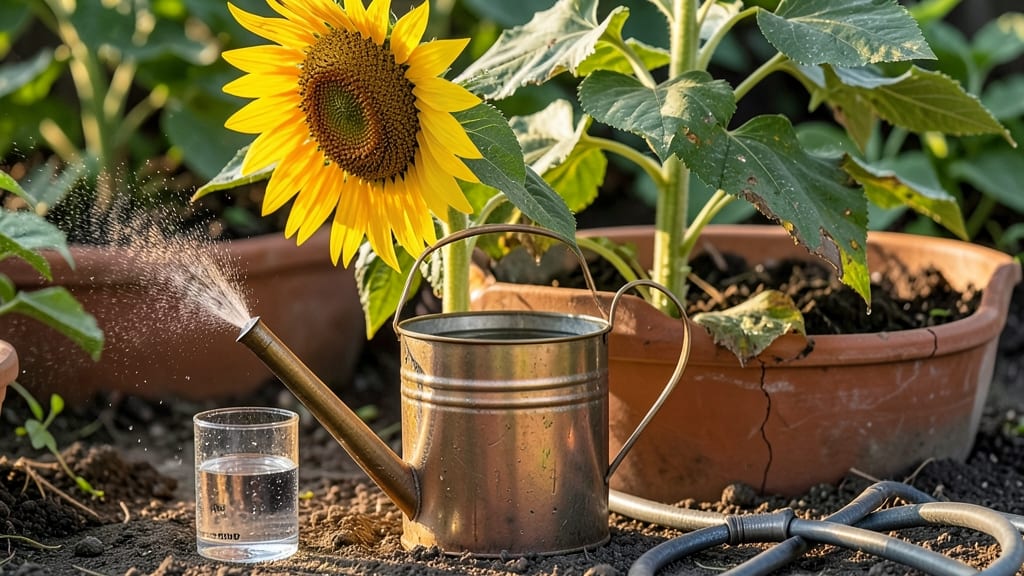
Sunflowers don’t actually need a lot of water once they’re established — most gardeners overdo it without realizing how tough these giants really are.
Picture this: you’re checking your 🌻 sunflowers after a week of dry heat, expecting wilted leaves, only to find them standing tall. That’s because mature sunflowers are surprisingly drought-tolerant, though their early growth stages demand consistent moisture.
The key is understanding when to water deeply and when to let the soil dry slightly between drinks.
Overwatering is the real enemy here, leading to soggy soil that chokes roots and invites disease. But underwatering young plants can stunt their growth before they even reach half their potential height.
I’ll walk you through the exact watering schedule by season, how to tell if your sunflowers are thirsty or drowning, and the simple tricks to keep them happy without wasting a drop.
By the end, you’ll know exactly how much water sunflowers need — and when to hold back. No guesswork, just strong stalks and happy blooms all summer long.
How much water do sunflowers really need?
Sunflowers might look like they need endless water to support their towering stems and vibrant blooms, but the truth is more nuanced. While they do require consistent moisture during their growth stages, overwatering is a common mistake that can lead to root rot and weak stalks.
The key is understanding their watering needs at each growth stage—from delicate seedlings to mature, drought-resistant plants.
Many gardeners assume sunflowers are water-guzzlers, but mature plants are surprisingly drought-tolerant once established. The real focus should be on deep, infrequent watering that encourages strong root development rather than shallow, frequent soaking. Let’s break down exactly how much water sunflowers need—and when—to keep them thriving without wasting resources.
⚠️ NON-NEGOTIABLE: The summary-table below provides a quick reference for sunflower watering needs by growth stage, including soil moisture cues and frequency. Use this as your guide to avoid common pitfalls like overwatering or underwatering.
| Growth Stage | Watering Frequency | Soil Moisture Cue | Water Amount | Key Notes |
|---|---|---|---|---|
| Seedling (0-4 weeks) | Every 2-3 days | Top 1-2 inches dry | 1/2 cup per plant | Keep soil consistently moist; avoid soggy soil. |
| Vegetative (4-8 weeks) | Every 3-5 days | Top 2-3 inches dry | 1-2 cups per plant | Encourage deep root growth with deep watering. |
| Flowering (8-12 weeks) | Every 5-7 days | Top 3-4 inches dry | 2-3 cups per plant | Critical for bloom development; reduce frequency if rain occurs. |
| Maturity (12+ weeks) | Every 10-14 days | Top 4+ inches dry | 1-2 gallons per plant | Drought-tolerant; water only if soil is bone-dry. |
During the seedling stage, sunflowers are most vulnerable to drought stress or overwatering. Young plants have shallow roots, so they need frequent, light watering to keep the top 1-2 inches of soil moist.
Think of this stage as the foundation-building phase—just like a skyscraper needs a solid base, your sunflowers need consistent moisture to develop strong roots before they can handle deeper watering.
As sunflowers enter the vegetative stage (4-8 weeks), their roots begin to grow deeper, and you can gradually reduce watering frequency while increasing the amount per session. Aim for deep watering sessions that encourage roots to extend downward, making the plant more resilient to drought later on.
A simple trick is to water in the early morning to allow foliage to dry quickly, reducing the risk of fungal diseases like powdery mildew.
The flowering stage (8-12 weeks) is when sunflowers demand the most attention. This is when their energy is focused on producing blooms and seeds, and they need consistent moisture to support this process.
However, avoid the temptation to overwater—this stage is still about deep, infrequent watering. Overwatering now can lead to blossom end rot or weakened stems that struggle to support the heavy flower heads.
Once sunflowers reach maturity (12+ weeks), they become surprisingly drought-tolerant. At this point, their deep root systems can access water from lower soil layers, and they can go 10-14 days without water if the soil is dry.
This is why many gardeners are surprised to learn that mature sunflowers don’t need "a lot of water"—they’re built to handle dry spells once established. Focus on watering only when the top 4+ inches of soil are bone-dry.
One of the biggest myths about sunflowers is that they require constant watering to thrive. In reality, overwatering is more damaging than underwatering for mature plants. The key is to water deeply but infrequently, allowing the soil to dry out between sessions.
This approach not only conserves water but also strengthens the plant’s natural resilience. For example, in my own garden, I’ve seen sunflowers in drought conditions continue to produce seeds with minimal supplemental watering.
To check if your sunflowers are getting the right amount of water, use the "finger test": stick your finger about 2 inches into the soil. If it feels dry, it’s time to water.
For container-grown sunflowers, the soil dries out faster, so you may need to water every 2-3 days during hot weather. Always ensure containers have drainage holes to prevent waterlogging, which can lead to root rot.
In hot, dry climates, sunflowers may need slightly more frequent watering during the vegetative and flowering
Signs of overwatering vs. underwatering sunflowers
Sunflowers may look like they need constant hydration, but too much or too little water can stunt their growth. Overwatering creates soggy roots, while underwatering causes wilting—both are easy to spot if you know what to look for.
Let’s break down the key differences so you can keep your sunflowers thriving without guesswork.
When sunflowers are overwatered, their leaves turn yellowish-green and feel mushy to the touch. The soil stays permanently damp, and you might notice a foul odor from rotting roots.
In contrast, underwatered sunflowers develop crispy, brown leaf edges and droop dramatically—even in the morning. Both conditions stress your plants, but the fixes couldn’t be more different.
Yellowing leaves
Mushy stems
Foul soil odor
Stunted growth
Brown leaf edges
Crispy leaves
Wilting (even in AM)
Slow recovery
Let soil dry
Improve drainage
Reduce frequency
Water deeply
Morning watering
Mulch to retain moisture
Root rot
Fungal diseases
Weak stems
Stunted growth
Premature wilting
Reduced flowering
For overwatered sunflowers, the first step is to stop watering immediately and let the soil dry out. Amend the soil with perlite or sand to improve drainage, and avoid watering until the top 2 inches of soil feel dry.
If the roots are already rotting, you may need to repot or replace the plant to save it.
If your sunflowers show signs of underwatering, give them a deep soak—aim for 1-2 gallons per plant—and focus on the root zone. Water in the early morning to reduce evaporation, and apply a 2-3 inch layer of mulch to lock in moisture.
This mimics natural rainfall and helps roots absorb water steadily.
Remember, sunflowers are drought-tolerant once established, but young plants need consistent moisture to grow strong. The key is balanced watering: enough to keep soil moist but not soggy. Pay attention to your plants’ signals, and you’ll grow taller, healthier sunflowers with minimal stress.
🌱