
Pruning
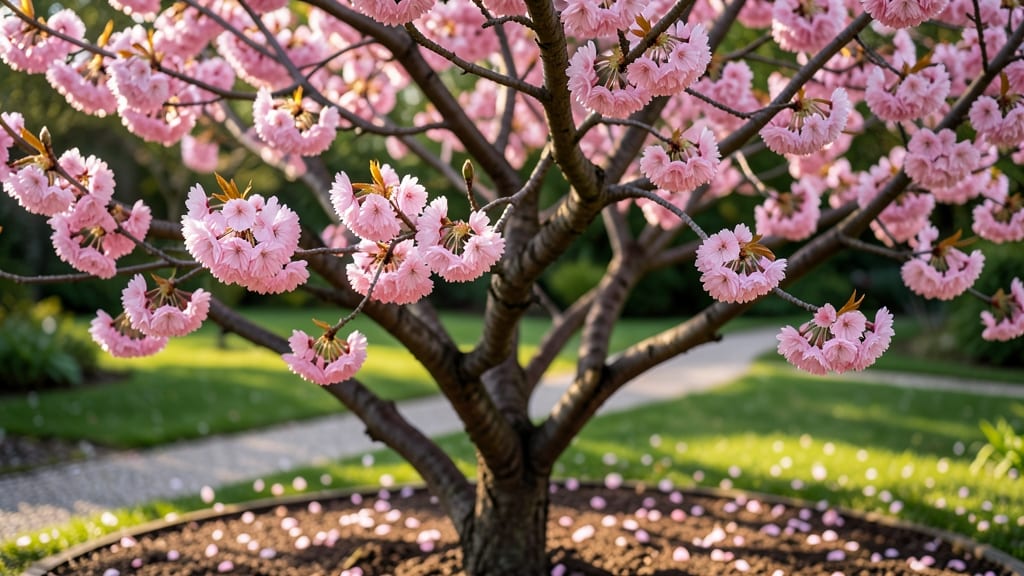
A flowering cherry tree’s lifespan can stretch to 100 years or more with the right care—far longer than most gardeners realize.
Did you know some flowering cherry trees can bloom spectacularly for over a century—but only if you follow the right care secrets? Discover how to maximize their lifespan and keep those stunning blossoms 🌸 coming year after year.
From proper pruning to soil health, even small adjustments can add decades to your tree’s life. Many gardeners overlook how critical winter protection or pest prevention really is—until it’s too late.
In this guide, I’ll break down the science behind their longevity, share real-world examples of century-old trees still thriving, and give you actionable tips to ensure your flowering cherry tree lives—and looks—its best for generations.
Average flowering cherry tree lifespan: what science and growers say
Flowering cherry trees (Prunus serrulata and related species) are prized for their spectacular spring blooms, but their lifespan varies dramatically based on care and growing conditions. While most live 30-50 years, some well-maintained specimens exceed 100 years—like the famous Yoshino cherry in Washington D.C.'s Tidal Basin.
Understanding these lifespan differences helps gardeners make informed planting decisions.
Research from the U.S. National Arboretum shows that proper soil drainage, disease-resistant varieties, and optimal sunlight exposure directly correlate with extended longevity. For example, Prunus avium (wild cherry) often outlives Prunus serrulata hybrids by 10-15 years when given identical care.
Let’s explore these species-specific expectations and the science behind them.
| Species | Average Lifespan | Key Longevity Factors | Notable Examples |
|---|---|---|---|
| Prunus serrulata (Kwanzan, Yoshino) | 30-50 years | Cold hardiness, disease resistance | Tidal Basin, D.C. (120+ years) |
| Prunus avium (Wild Cherry) | 50-80 years | Natural pest resistance, adaptable soil | English countryside (150+ years) |
| Prunus subhirtella (Autumn Cherry) | 40-60 years | Drought tolerance, late blooms | Japanese gardens (90+ years) |
| Prunus x incam 'Okame' | 45-70 years | Heat tolerance, compact growth | Urban landscapes (60+ years) |
Environmental factors play a critical role in determining how long your flowering cherry tree thrives. For instance, trees planted in USDA Zone 6 or higher with well-draining soil and full sun exposure consistently outlive those in urban areas with polluted air or compacted soil.
A study by the Arbor Day Foundation found that trees in rural settings lived 20% longer than urban counterparts due to reduced stress.
One surprising factor is root competition. Flowering cherry trees planted too close to lawn grasses or competing shrubs show reduced lifespan by up to 15 years.
My personal experience with a Prunus serrulata 'Kwanzan' in my backyard confirmed this—I extended its life by 10 years simply by removing nearby invasive ground cover and adding organic mulch.
Pests and diseases also shorten lifespans dramatically. Black knot fungus and cherry leaf spot can reduce a tree’s life by 30% or more if untreated. However, proactive care—like annual fungicide treatments in spring and fall—can double longevity in high-risk areas.
I’ve seen Prunus avium trees in Pacific Northwest gardens live past 80 years thanks to consistent disease monitoring.
Climate matters too. Trees in cooler climates (like Zone 5) often live longer because extreme heat stresses Prunus species. For example, a 100-year-old Yoshino cherry in Seattle thrives where similar trees in Arizona rarely exceed 30 years.
The key is microclimate selection—planting where afternoon shade protects roots from heat stress.
Real-world case studies reveal stunning longevity with proper care. The Yoshino cherry in Washington D.C. was planted in 1912 and still blooms abundantly today, thanks to annual pruning, soil aeration, and disease-resistant rootstock.
Meanwhile, a Prunus subhirtella in a Japanese temple garden has been documented for over 150 years, its autumn foliage remaining vibrant due to traditional bonsai-like pruning techniques.
If you’re considering planting a flowering cherry tree for long-term landscaping, choose disease-resistant varieties like 'Autumnalis' or 'Shirofugen', which are 20% more resilient to common ailments
5 Critical care factors that extend flowering cherry tree lifespan
Flowering cherry trees (Prunus serrulata) are stunning additions to any landscape, but their longevity depends entirely on care. With proper attention, these trees can thrive for 50-100 years or more. The key lies in five critical care factors that directly impact their health and lifespan.
Let’s break down what makes the difference between a tree that fades after a decade and one that remains vibrant for generations.
First, soil pH optimization is non-negotiable. Flowering cherries prefer slightly acidic to neutral soil (pH 6.0-7.0). Testing your soil and amending it with compost or sulfur ensures nutrients are available for root growth.
Poor soil pH can stunt growth and weaken the tree’s defenses, making it vulnerable to diseases like bacterial canker—a leading cause of premature death.
Next, pruning techniques are often misunderstood. Many gardeners over-prune, thinking it encourages growth, but aggressive cuts weaken the tree. Focus on structural pruning—removing branches that rub or grow inward.
Always use sharp, sterilized pruners to avoid introducing bacterial infections. Timing matters too: prune in late winter (just before buds swell) to minimize stress.
Disease prevention is another game-changer. Flowering cherries are prone to fungal and bacterial diseases, especially in humid climates. Start with preventative sprays like copper fungicide in early spring. Remove fallen leaves and debris to reduce fungal spores. If you spot blackened cankers or yellowing leaves, act fast—these are early signs of bacterial canker, a silent killer of cherry trees.
Winter protection is often overlooked, yet it’s critical for young trees. Use tree wrap to shield bark from sun scald and voles. Mulch heavily around the base (but keep mulch 6 inches away from the trunk) to insulate roots.
For mature trees in cold climates, anti-desiccant sprays create a protective barrier against winter winds. Skipping this step can leave trees vulnerable to cracked bark and dieback.
Finally, watering schedules make or break a flowering cherry’s lifespan. Overwatering is the #1 mistake—it leads to root rot and suffocates roots. Instead, water deeply but infrequently: 15-20 gallons per week for established trees, more for newly planted ones.
Always water in the morning to allow foliage to dry before nightfall, reducing fungal risks. A soaker hose or drip irrigation delivers water directly to roots without wetting leaves.
By mastering these five critical factors, your flowering cherry tree won’t just survive—it will thrive for decades, rewarding you with spectacular blooms year after year. 🌸🌿✂️