
Planting
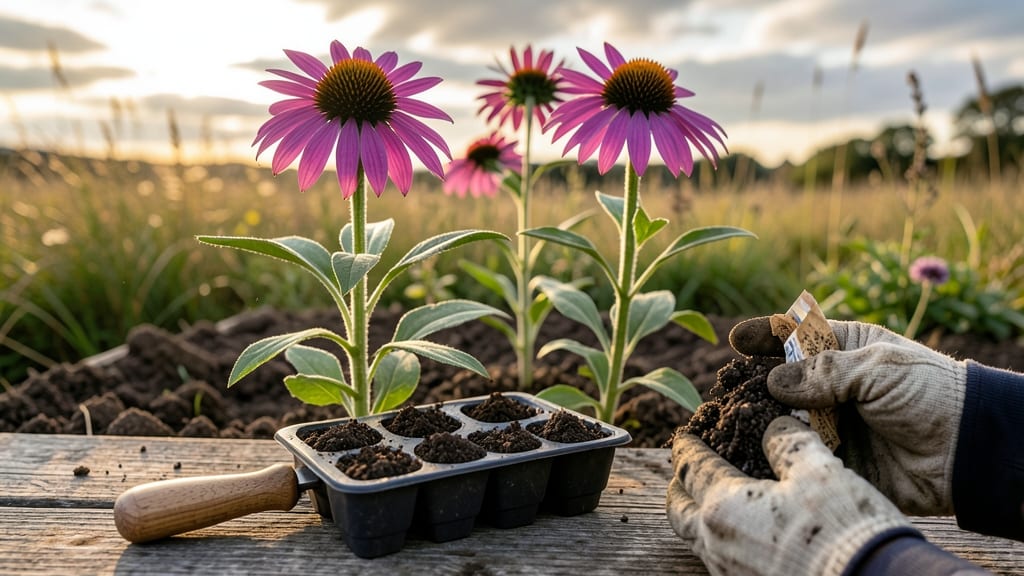
The perfect coneflower seed planting depth by seed type
Getting your coneflower seeds (like Echinacea) to sprout strong and healthy starts with one critical step: planting them at the right depth. Too shallow, and they’ll dry out before germinating; too deep, and they’ll struggle to reach the surface.
The ideal planting depth creates the perfect balance for moisture, air, and light—key factors for germination success. For most coneflower varieties, this means a gentle 1/4-inch depth, but there are exceptions based on seed size and soil type.
Before you grab your trowel, remember that soil conditions play a huge role. Sandy soils dry out faster, so you might need to adjust slightly deeper, while clay-heavy soils can hold moisture too long—requiring shallower planting.
Season also matters: spring planting benefits from warmer soil, while fall plantings need extra care to avoid winter moisture stress. Let’s break down the exact depth guidelines by seed type and how to tweak them for your garden’s unique conditions.
🌱 Did You Know? Coneflower seeds have a hard outer shell that needs moisture and warmth to soften before germination. Planting too deep can trap them in cold, damp soil, delaying or preventing sprouts entirely.
For standard Echinacea varieties, like the popular 'Magnus' or 'White Swan', a 1/4-inch depth is your golden rule. Use a ruler or your finger (the first knuckle works!) to measure accurately.
Press the soil gently around the seeds—just enough to ensure contact, but avoid compacting it. Overly dense soil can suffocate young roots, leading to weak stems later on.
If you’re planting in sandy soil, which drains quickly, increase the depth slightly to 3/16 inch to retain moisture near the seeds. Conversely, clay soil holds water too long, so reduce depth to 1/8 inch to prevent rot.
Always loosen the soil before planting to improve aeration and root penetration. A simple fork or tiller can work wonders for breaking up compacted layers.
Seasonal timing also affects depth. In spring planting, warmer soil speeds up germination, so stick to the standard depth. For fall plantings, however, consider planting 1/8 inch deeper to protect seeds from winter moisture fluctuations.
This extra depth acts as a buffer, ensuring seeds stay moist without rotting. Just be sure to mark your rows to avoid disturbing them in early spring.
One common mistake is using a measuring tool that’s too large, like a standard ruler, which can make it hard to gauge small depths. Instead, I recommend using a toothpick or matchstick marked at 1/4-inch intervals.
This gives you precision without overworking the soil. For dwarf varieties, like 'White Lustre', never exceed 1/8 inch—their delicate roots need quick access to light.
After planting, keep the soil consistently moist (not soggy) until germination. A light misting with a spray bottle works best for the first few days.
Once sprouts appear, reduce watering slightly to prevent fungal issues. Thin seedlings to 12-18 inches apart when they’re 3-4 inches tall—this prevents overcrowding and ensures each plant gets enough nutrients for strong stems and vibrant blooms.
Pro tip: If you’re planting in containers, use
Common mistakes that stunt coneflower growth (and how to fix them)
Over-planting coneflower seeds too deep or too shallow is the #1 reason they fail to thrive. I’ve seen weak stems and poor germination from both extremes—here’s why it happens and how to fix it.
Shallow planting (less than 1/8 inch) exposes seeds to drying out or being washed away, while burying too deep (over 1/2 inch) smothers them, preventing sprouts from reaching the surface.
Soil type plays a huge role too. Clay soil compacts easily, while sandy soil drains too fast—both can trap seeds at the wrong depth or leave them vulnerable.
⚠️ Critical Planting Depth for Coneflower Seeds
Ideal depth: 1/4 inch (about the width of a pencil). This ensures seeds get enough moisture without suffocating.
Clay soil fix: Loosen soil with compost to prevent compaction. Sandy soil fix: Mix in peat moss to retain moisture.
💡 Pro tip: Use a seed starter mix for consistent moisture until germination.
Another common mistake is planting too close together, which leads to competition for nutrients and weak stems. Space seeds 12-18 inches apart to give roots room to grow.
If your coneflowers develop weak stems after sprouting, it’s often a sign of overcrowding or poor soil drainage. Thin seedlings to 18 inches apart and amend soil with compost to strengthen roots.
For established plants, mulching around the base (2-3 inches deep) helps retain moisture and prevents soil compaction, which can suffocate roots over time.