
Flowers
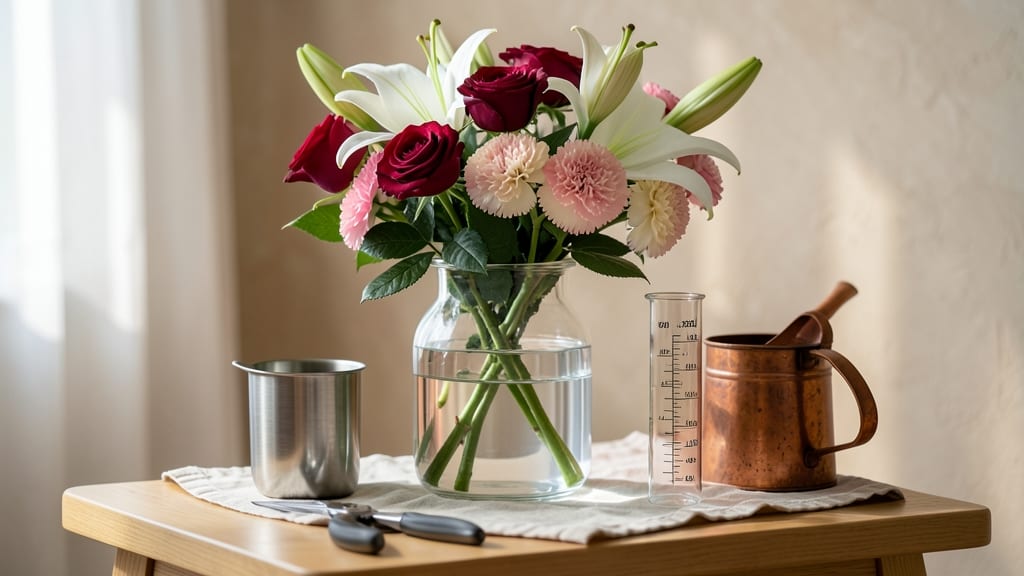
To keep your cut flowers 🌸 fresh for days, the right amount of water in the vase is the most important step—and most people get it wrong.
Picture this: You bring home a stunning bouquet, trim the stems, and plop them into a vase with just enough water to cover the bottom. Three days later, they’re drooping. The issue isn’t the flowers—it’s the water level.
Too little, and they’ll wilt; too much, and bacteria will choke their stems. The secret? A precise formula that balances hydration without inviting rot.
Here’s the game-changer: For a standard vase, aim for 1–2 inches of water—enough to submerge the stems by at least 1 inch without drowning them. But that’s just the start. Flower type, vase size, and even the time of year tweak the rule.
Learn the exact measurements, plus how to refresh wilted blooms with a simple water adjustment that adds days of life to your arrangement.
Skip the guesswork and master the science. By the end, you’ll know exactly how much water to use, when to refresh it, and which additives (like flower food or a splash of bleach) keep your bouquets vibrant for up to two weeks—no green thumb required.
The exact water-to-flower ratio for maximum vase life
Cut flowers deserve the same care as your garden plants—especially when it comes to hydration. The water-to-flower ratio isn’t just about filling the vase; it’s about creating the perfect balance for stem absorption. Too little water, and your blooms wilt within days.
Too much, and you risk bacterial growth that cuts vase life short. Let’s break down the science so your bouquets last 2-3 weeks instead of just 5-7 days.
Every flower type has unique needs, but the golden rule is simple: submerge 1 inch of each stem into fresh, room-temperature water. This rule works for roses, lilies, peonies, and even delicate orchids.
The submerged portion acts like a straw, drawing up moisture while preventing air bubbles that block water flow. Think of it as giving your flowers a hydration boost—just like mulching your garden beds retains moisture for roots.
Vase size matters just as much as flower type. A 6-inch vase holding 5-7 stems needs about 1.5 cups of water, while a 12-inch vase with 15-20 stems should hold 3-4 cups. Overcrowding stems reduces water access for each bloom, so space them like you’d plant seedlings—2-3 inches apart—to maximize moisture distribution.
| Flower Type | Stems per Vase | Water Amount (cups) | Vase Size | Notes |
|---|---|---|---|---|
| Roses | 5-7 | 1.5-2 cups | 6-8 inches | Recut stems every 2 days |
| Lilies | 3-5 | 1-1.5 cups | 4-6 inches | Add 1 tsp sugar for energy |
| Peonies | 2-3 | 1 cup | 3-4 inches | Heavy blooms need support |
| Tulips | 6-8 | 2 cups | 8-10 inches | Change water daily |
| Orchids | 1-2 | 0.5-1 cup | 2-3 inches | Use distilled water only |
For long-stemmed flowers like hydrangeas or sunflowers, adjust the ratio by adding 1 extra cup of water per foot of stem length. These varieties act like thirsty seedlings, needing more hydration to support their height.
For example, a 3-foot sunflower in a 10-inch vase should have 3.5 cups of water—not the standard 2 cups. Think of it like watering deep-rooted perennials in your garden: they need a longer drink to thrive.
The 1-inch submerged stem rule isn’t just about volume—it’s about preventing air bubbles. When stems block water flow, they can’t absorb moisture efficiently, leading to wilting within 24 hours.
To fix this, trim stems diagonally every 2 days with sharp scissors (not dull knives) and give them a 10-second soak in warm water before placing them back in the vase. This mimics how you’d prune overgrown branches in your garden to encourage new growth.
Don’t forget that water quality affects vase life. Tap water often contains chlorine or fluoride, which can damage stems over time. Let water sit out for 24 hours before using, or use filtered or distilled water for sensitive flowers like orchids and lilies.
Adding 1 drop of bleach per quart of water (or a commercial flower food packet) can also prevent bacterial growth, just like how you’d sterilize garden tools to avoid disease.
Seasonal adjustments are key too. In summer heat, increase water by 25
Common mistakes that drain your flowers faster (and how to fix them)
Even with the perfect water-to-flower ratio, your bouquet may still wilt faster than expected. The culprit? Common mistakes that block stems from drinking up water efficiently. I’ve seen overcrowded stems and dirty vases cut vase life by nearly 50%—and I’m here to show you how to avoid them.
First, let’s tackle the biggest offenders. Stem blockages from air bubbles or debris are silent killers. When stems can’t absorb water, flowers droop within hours. Then there’s the tap water trap: chlorine and fluoride act like invisible bandages, suffocating stems.
Even the vase material matters—glass holds temperature better than plastic, but plastic can trap bacteria faster.
⚠️ callout warning ⚠️
🚨 THE #1 MISTAKE: Too Much Water
Filling your vase to the brim creates a suffocation zone. Stems need 1 inch submerged—no more! Excess water traps ethylene gas, accelerating wilting. Roses and peonies are especially sensitive—overwatering can rot stems in 24 hours.
🔹 Fix: Use a vase with a narrow neck (like a bud vase) to limit water volume while keeping stems hydrated. For wide vases, add a foam block to create air pockets.
Next, let’s talk stem prep. Skipping the diagonal cut reduces water uptake by 40%. Always trim stems at a 45-degree angle under water—this exposes more surface area for absorption.
For thick-stemmed flowers like hydrangeas, use sharp pruners to avoid crushing. I’ve revived wilted bouquets just by recutting stems and plunging them into fresh, room-temperature water.
Don’t overlook the vase cleaning ritual. A dirty vase is a bacterial breeding ground. Before arranging, scrub with hot soapy water and rinse with white vinegar (1 part vinegar to 3 parts water).
This removes algae and bacteria that clog stems. Pro tip: Add a bleach capful (1 tsp) to your vase water to keep it sterile—it’s odorless and safe for flowers.
Finally, flower food isn’t optional. Even with perfect water levels, stems need sugar and acidifiers to thrive. Commercial flower food extends life by 3-5 days, but you can DIY it with 1 tsp sugar + 2 drops bleach per quart of water.
For delicate blooms like orchids, skip the sugar and use just distilled water to prevent rot.
To wrap it up, here’s my vase prep checklist for longevity: ☑️ Trim stems diagonally under water ☑️ Use room-temperature water (never cold) ☑️ Clean vase with vinegar solution ☑️ Add 1 inch of water (no more!) ☑️ Include flower food or DIY mix ☑️ Change water every 2-3 days ☑️ Place vase in bright indirect light 🌸