
Plants
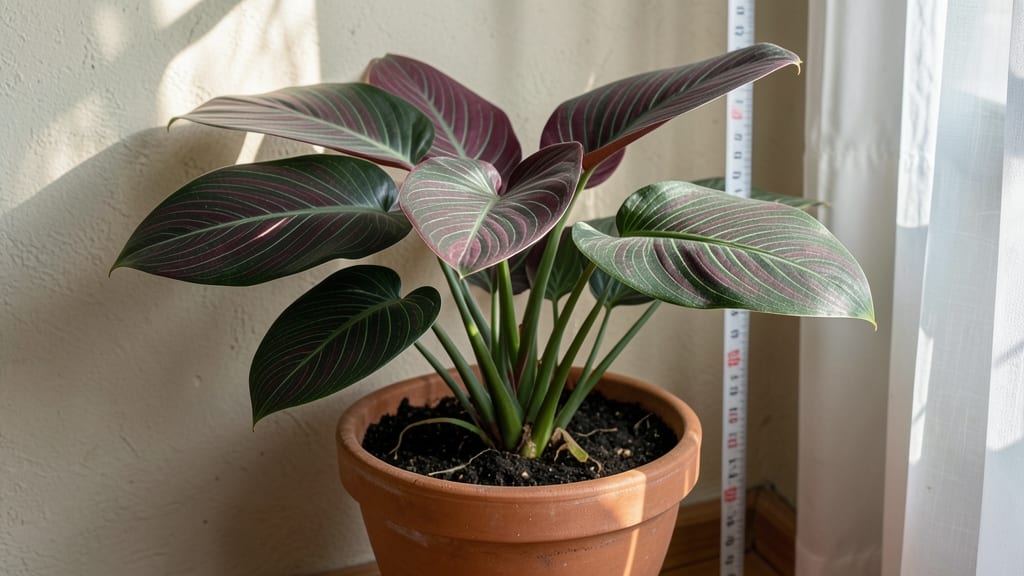
Calathea plants grow between 1 and 3 feet tall at maturity, depending on the variety and care you provide—some stay small enough for a desk, while others need floor space to thrive.
If you're considering adding a calathea 🌿 to your indoor jungle, knowing its mature height is key to choosing the right variety for your space—some stay compact while others reach towering proportions.
Popular types like Calathea orbifolia max out around 2 feet, making them perfect for shelves, but Calathea lancifolia can stretch toward 3 feet, needing room to spread its striking leaves.
Below, I’ll break down exact height ranges by species, how light affects growth, and tips to keep your calathea at your ideal size—whether you want a petite tabletop plant or a lush floor statement.

Calathea height ranges by variety: compact vs. tall growing types
Choosing the right calathea variety depends on your space and design goals. Some varieties stay under 2 feet, perfect for shelves or desks, while others reach 3 feet or taller, ideal for floor displays.
Let's explore the height ranges of popular calathea types to help you pick the perfect fit for your home.
Understanding calathea growth habits is crucial because these tropical plants grow best in low to medium indirect light. Their mature height can vary significantly based on variety, care, and container size. For example, Calathea orbifolia stays compact, while Calathea lancifolia can grow quite tall with proper care.
| Variety | Mature Height | Best For | Growth Rate |
|---|---|---|---|
| Calathea orbifolia | 12-18 inches | Shelves, desks, hanging baskets | Slow to moderate |
| Calathea lancifolia | 24-36 inches | Floor displays, large tables | Moderate to fast |
| Calathea makoyana | 12-24 inches | Shelves, hanging baskets | Slow |
| Calathea rufibarba | 18-24 inches | Desks, shelves, hanging baskets | Moderate |
| Calathea medallion | 12-18 inches | Shelves, desks, hanging baskets | Slow to moderate |
| Calathea warscewiczii | 24-36 inches | Floor displays, large spaces | Moderate |
If you have limited space, varieties like Calathea orbifolia or Calathea makoyana are excellent choices. These stay under 2 feet and thrive in smaller pots or hanging baskets. Their compact growth makes them perfect for desks or shelves without overwhelming your decor.
For larger spaces, consider taller varieties like Calathea lancifolia or Calathea warscewiczii. These can reach 3 feet or more and add a dramatic tropical feel to your room. Place them near windows where they can receive bright indirect light to support their height.
Your pot size also influences height. Smaller pots restrict root growth, keeping plants shorter and bushier. For example, a 6-inch pot will limit Calathea orbifolia to around 12 inches, while a 12-inch pot allows it to reach its full 18-inch height.
Choose your container size based on your desired look and space constraints.
Another factor to consider is light exposure. While calatheas prefer indirect light, too little light can stunt growth, while too much direct light can cause leaf burn. Bright indirect light promotes healthy, upright growth, while low light may result in leggy, stretched-out plants.
Always position your calathea where it gets 4-6 hours of filtered light daily.
If you're unsure which variety to choose, start with a medium-height calathea like Calathea rufibarba or Calathea medallion. These offer a balance between compact and tall growth, making them versatile for most indoor spaces. Their moderate height of 18-24 inches works well in both small and large rooms.
Remember, calathea growth is influenced by multiple factors, including humidity, soil quality, and care routine. Maintaining 60% humidity or higher and using a well-draining, peat-based potting mix will encourage healthy growth and help your plant reach its full potential height.
With the right conditions, your calathea will thrive and add stunning tropical beauty to your home.
How light conditions affect Calathea height and growth habits
Calathea plants thrive under indirect light, but the intensity and quality of light dramatically influence their height, leaf size, and growth rate. Too much direct sun can scorch delicate foliage, while insufficient light leads to stunted growth and smaller leaves.
Understanding these relationships helps you create the perfect conditions for your Calathea to reach its full potential.
The photosynthesis process in calatheas is highly sensitive to light. In low-light conditions, plants grow slower but develop broader leaves to maximize light absorption. Conversely, bright indirect light encourages faster growth and taller stems, though it may require more frequent pruning to maintain a compact shape.
Balancing these factors is key to achieving the ideal 2-3 foot mature height most varieties aim for.
For Calathea orbifolia, which naturally grows taller (up to 3 feet), bright indirect light is essential to support its upright growth habit. Place it near an east-facing window where morning light is gentle but sufficient.
If your space lacks natural light, supplement with a grow light 6-8 inches above the plant for 12-14 hours daily to mimic ideal conditions.
On the other hand, Calathea lancifolia tends to stay shorter (1.5-2.5 feet) and adapts well to moderate low light. In dimmer corners, its growth slows, but the plant remains healthy with broader leaves.
To encourage upward growth, rotate the pot quarter-turns weekly so all sides receive even light exposure, preventing lopsided development.
Monitor your calathea’s leaf color and size as key indicators of light success. Deep, vibrant patterns signal optimal light, while dull or yellowing leaves suggest insufficient light.
If your plant starts stretching toward the light (a condition called etiolation), it’s time to adjust its position or increase light exposure gradually to avoid shocking the foliage.
Pro tip: Use a light meter or observe your calathea’s response to adjust placement. If leaves develop crispy edges, it’s getting too much light; if they’re small and sparse, it needs more.
With the right balance, your calathea will grow to its full mature height while maintaining lush, striking foliage that’s the hallmark of this beloved houseplant. 🪴