
Fertilization
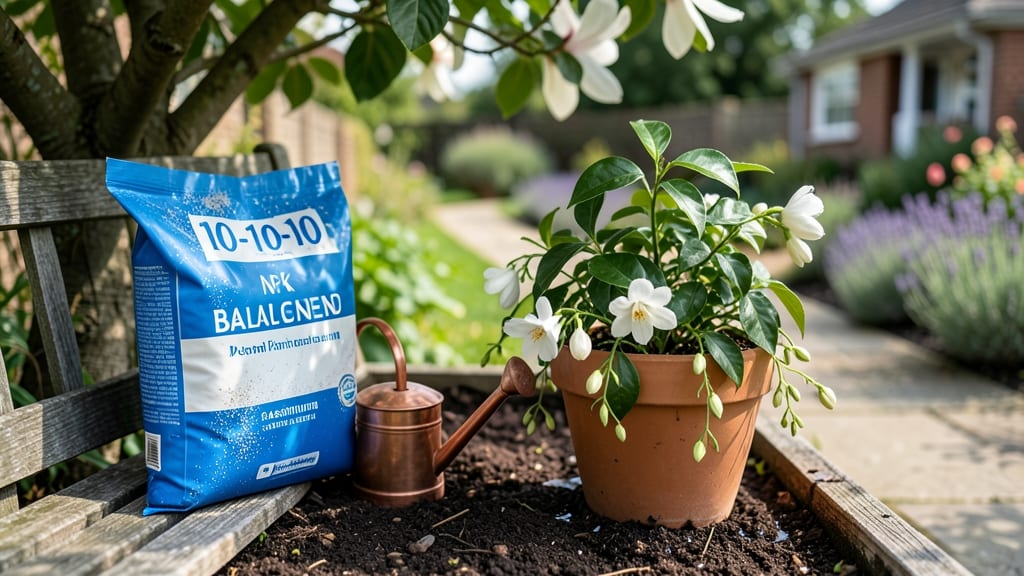
Feeding your jasmine plant with the right flower plant food is the secret to those intoxicating blooms that fill your garden with fragrance.
Picture this: your jasmine 🌸 is lush and thriving, but the flowers are sparse or lack that signature sweet scent. That’s not just a plant quirk—it’s a nutrition problem. Too much nitrogen, and you’ll get leafy vines with no blooms.
Too little phosphorus, and those flowers won’t develop properly. Getting the balance right is the key to turning your jasmine into a fragrant powerhouse.
In this guide, I’ll break down the best nitrogen-phosphorus-potassium (NPK) ratios for jasmine growth, whether you’re using organic or synthetic fertilizers, and how to adjust your feeding schedule for peak blooming season. No more guessing—just science-backed tips to keep your jasmine happy, healthy, and overflowing with scent.
You’ll also learn how to spot over- or under-fertilization early, so you can correct it before your plant sends up distress signals. By the end, you’ll have a clear plan to feed your jasmine exactly what it needs—when it needs it—for the most stunning, fragrant blooms of the season.


Optimal nitrogen-phosphorus-potassium ratios for jasmine flower growth
The NPK ratio is the secret code to unlocking your jasmine’s full potential. Too much nitrogen means lush leaves but few flowers, while phosphorus and potassium are the power duo behind those fragrant blooms.
For jasmine, the magic happens when you adjust these ratios based on the plant’s growth stage—whether it’s focusing on foliage development or flower production. Let’s break down the science behind feeding your jasmine for maximum fragrance and beauty.
Jasmine plants thrive when their nutritional needs align with their natural growth cycle. In early spring, when new shoots emerge, a higher nitrogen ratio (like 10-5-5) encourages vigorous vine growth.
But as summer arrives and flowering season peaks, shift to a balanced or phosphorus-heavy formula (like 5-10-10 or 3-8-6) to trigger abundant blooms. This strategic approach ensures your jasmine doesn’t waste energy on unnecessary leaf growth when it should be producing those intoxicating flowers.
Here’s how to translate NPK numbers into real-world results for your jasmine plant:
For organic gardeners, options like fish emulsion (5-1-1 ratio) or composted manure (3-2-2 ratio) work well during early growth stages. These provide slow-release nutrients that mimic natural soil conditions.
In contrast, synthetic fertilizers like 10-10-10 offer precise control over NPK ratios, making them ideal for quick adjustments during blooming season. The key is matching the fertilizer to your jasmine’s current needs—whether that’s leafy growth or fragrant flowers.
Timing is everything when it comes to feeding jasmine. Always apply fertilizer in the early morning to prevent leaf burn from the sun’s intensity. Water thoroughly after application to help nutrients penetrate the soil and reach the roots.
This simple step can make the difference between a plant that thrives and one that struggles. Pro tip: Mix a light dose of fertilizer into the soil at planting time to give your jasmine an instant nutrient boost as it establishes itself.
If your jasmine starts producing more leaves than flowers, it’s a clear sign of excess nitrogen. Switch to a low-nitrogen, high-phosphorus fertilizer (like 2-8-4) to redirect energy toward flowering. Conversely, if blooms are sparse or weak, increase phosphorus and potassium while reducing nitrogen.
This balance is what transforms a struggling jasmine into a fragrant, flowering powerhouse. Think of it as giving your plant the right "recipe" for success at each stage of its growth.
Container-grown jasmine plants have slightly different needs than those in the ground. Since potted plants have limited soil volume, their nutrients deplete faster. Use a water-soluble fertilizer every 2-3 weeks during the growing season and flush the soil with water monthly to prevent salt buildup.
For ground-planted jasmine, a slow-release granular fertilizer applied in early spring and again in summer provides steady nutrition without the risk of overfeeding.
Don’t forget about micronutrients like calcium, magnesium, and iron—these play supporting roles in jasmine health. A balanced organic fertilizer or compost tea can provide these essential trace elements. For example, eggshells crushed into the soil add calcium, which prevents blossom-end rot in developing buds.
These small additions can make a big difference in your jasmine’s overall vigor and fragrance intensity.
One common mistake is assuming that more fertilizer equals better results. Over-fertilizing jasmine leads to weak stems, leaf scorch, and even flower drop. Always follow the recommended application
Best organic and synthetic fertilizers for jasmine plants
Choosing the right jasmine plant food can transform your fragrant vine from sparse to spectacular. Jasmine thrives with a balanced NPK ratio of 10-10-10 during active growth, but organic options like fish emulsion or bone meal can provide targeted nutrients for blooming.
Let’s explore the best options for your jasmine’s needs, from budget-friendly synthetics to nutrient-rich organics.
For organic jasmine plant food, I recommend starting with fish emulsion (5-1-1 NPK) during early spring to boost foliage growth. This liquid fertilizer breaks down quickly, providing immediate nitrogen while improving soil structure.
Pair it with bone meal (3-15-0 NPK) in late spring to encourage robust flowering—jasmine’s signature trait. Both are cost-effective and improve soil health long-term.
If you prefer synthetic fertilizers, look for a 10-10-10 NPK blend applied every 4-6 weeks during the growing season. Granular options like Miracle-Gro Shake 'n Feed are convenient for container jasmine, while slow-release pellets work well for in-ground vines.
Synthetics offer precise nutrient control but require careful monitoring to avoid over-fertilization.
🌿
🌱 Organic vs. Synthetic Fertilizers for Jasmine
- Improves soil health long-term
- Slow-release nutrients prevent burns
- Eco-friendly and pet-safe
- Slower results (4-6 weeks to see effects)
- Requires more frequent applications
- Higher upfront cost per application
- Fast-acting with immediate results
- Precise NPK ratios for targeted growth
- Cost-effective for large-scale use
- Risk of over-fertilization if misapplied
- Can harm soil microbiome over time
- Not suitable for organic gardening standards
- Use organic in spring (fish emulsion + bone meal)
- Switch to synthetic mid-season (10-10-10) for blooms
- Balances speed and soil health
For container jasmine, I swear by a slow-release organic fertilizer like Osmoote (4-2-6 NPK) mixed into the potting soil at planting. This ensures a steady nutrient supply without the risk of leaching.
In-ground jasmine benefits from a top-dressing of compost in early spring, followed by a liquid feed like seaweed extract every 6 weeks to boost resilience.
Cost-wise, organic fertilizers like compost or worm castings are the most budget-friendly in the long run, while synthetic granules offer the quickest results for a slightly higher upfront cost.
I’ve found that blending both—using organic matter for soil health and synthetic NPK for blooms—yields the best fragrance and vigor in my jasmine vines.
Pro tip: Always water your jasmine thoroughly before applying fertilizer to prevent root burn. And remember, less is more—jasmine is sensitive to salt buildup from over-fertilization. Start with half the recommended dose and adjust based on your plant’s response.
🌸