
Blooming
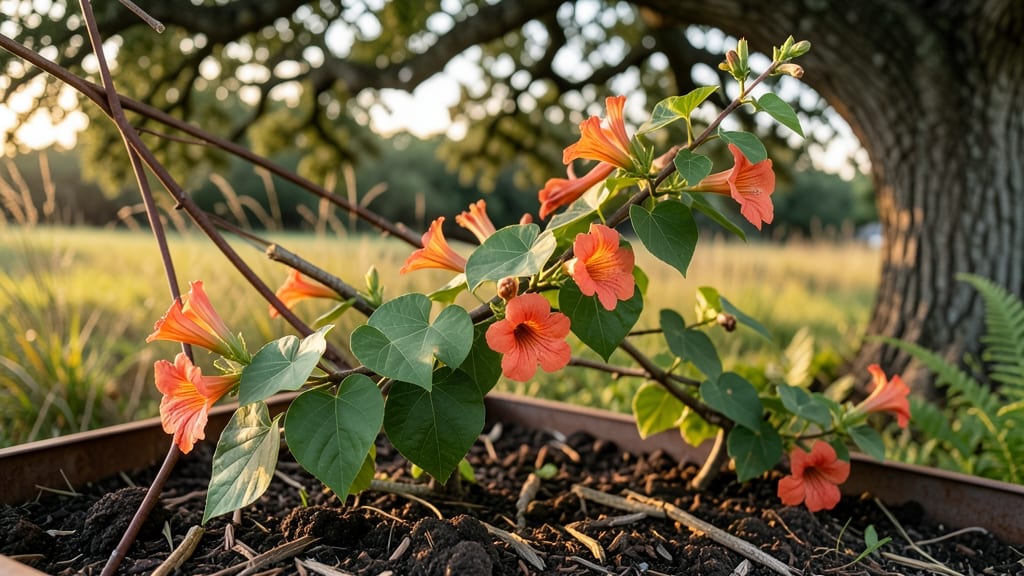
Orange trumpet vine flowering season starts in June and stretches through September, when its bold orange blooms light up gardens with a burst of color 🌺 — but timing can shift dramatically depending on where you live.
If you love vibrant summer gardens, the orange trumpet vine delivers explosive blooms—but only if you time it right. Learn the exact flowering season, how climate affects blooms, and proven tricks to extend its show from early summer until frost.
In warmer southern zones, blooms kick off as early as May, while northern gardeners may not see flowers until July. The key? Full sun, well-draining soil, and a little strategic pruning to keep the vine focused on flowering instead of leafy growth.
Below, I’ll break down the best months for your region, how to trigger nonstop blooms, and why some vines refuse to flower—plus fixes to get them back on track.
Orange trumpet vine flowering season: exact months by US hardiness zones
The orange trumpet vine (Campsis radicans) bursts into vibrant orange blooms that transform any garden into a tropical paradise—but its timing varies wildly across the U.S. If you're in Zone 7, you might see flowers as early as late May, while Zone 11 gardeners enjoy nonstop blooms from April through October.
Understanding your zone's frost dates and heat accumulation is key to predicting when your vine will peak and extend its flowering season.
I’ve grown orange trumpet vines in Zones 8 and 9, and the difference in bloom timing is dramatic.
In my Southern California garden, the vines start flowering in March and continue until November, while my friend in Indiana (Zone 6) only gets 6-8 weeks of blooms from July to September. The secret? Heat accumulation and frost-free days dictate when buds open.
Let’s break it down by zone so you can plan your garden’s orange trumpet vine show like a pro.
🌺 Pro Tip: Use your average last frost date as a starting point. Orange trumpet vines need consistent warmth to bloom, so they typically wait until 2-3 weeks after the last frost in cooler zones. In Zone 7, that’s usually mid-May, while Zone 10 vines may start as early as February.
| USDA Zone | Peak Bloom Months | Early Bloomers | Late Bloomers | Frost-Free Days |
|---|---|---|---|---|
| Zone 7 | July–September | Late May (if warm) | October (if frost delayed) | 150–180 days |
| Zone 8 | June–October | April–May | November (if mild) | 180–210 days |
| Zone 9 | May–November | March–April | December (if frost-free) | 210–240 days |
| Zone 10 | April–December | February | Year-round in mild winters | 240+ days |
| Zone 11 | February–January | January | No frost; continuous blooms | 365 days |
If you’re in the South (Zones 8–11), your orange trumpet vine will likely bloom earlier and longer than in the Midwest or Northeast (Zones 6–7).
For example, in Florida (Zone 9), vines can flower year-round with minimal breaks, while in Texas (Zone 8), they peak from June to October.
On the West Coast, California gardeners in Zone 10 often see blooms as early as March, thanks to mild winters and long growing seasons.
In cooler zones (Zone 7), the vine’s flowering season is shorter but more dramatic. Buds form in late spring and burst open in early summer, but a single late frost can cut the season short.
To extend blooms, I recommend pruning lightly in early spring to encourage new growth and fertilizing in late summer to push late-season flowers.
Regional heat accumulation also plays a role. Vines in arid climates (like Arizona or Nevada) may bloom earlier than those in humid coastal areas (like Georgia or South Carolina).
If you’re in a high-humidity zone, watch for powdery mildew, which can stress the vine and shorten its flowering period. A light fungicide spray in late summer can help keep blooms coming.
To predict your vine’s schedule, track your local heat units (growing degree days). Orange trumpet vines need at least 1,200–1,500 heat units to trigger blooming. Use a garden heat tracker or check your local cooperative extension service for data.
In Zone 9, this usually happens by April, while Zone 7 may not reach it until June.
One of my biggest mistakes was assuming my Zone 8 vine would bloom the same as my friend’s in Zone 9. Her vine started in March, while mine didn’t peak until June
How to trigger nonstop orange trumpet vine blooms: pruning, fertilizing & sunlight secrets
The orange trumpet vine (Campsis radicans) bursts into vibrant blooms when cared for properly. To maximize its flowering season from early summer until frost, focus on three key areas: pruning timing, organic fertilization, and sunlight optimization.
Many gardeners mistakenly prune at the wrong time or overwater, which stunts blooms—let’s fix that.
First, debunk the myth that these vines need constant watering. Overwatering actually reduces flowers by encouraging leafy growth over blooms. Instead, aim for deep, infrequent watering (every 3-5 days in summer) to build drought tolerance while keeping roots healthy.
This simple shift can double your orange trumpet vine flowering season.
🌺 Step-by-Step Guide to Nonstop Blooms
- 🌱 Spring Pruning (March-April): Cut back dead or weak stems to 12 inches tall. This jumpstarts new growth for early summer blooms.
- ☀️ Sunlight Check (May-June): Ensure 6+ hours of direct sun daily. Move vines if shade reduces flowering—partial shade cuts blooms by 50%.
- 💧 Watering Rule: Water deeply once every 3-5 days (morning only). Avoid soggy soil—root rot kills blooms.
- 🌿 Summer Fertilizing (June-August): Use balanced organic fertilizer (10-10-10) every 4-6 weeks. Mix compost into soil for extra nutrients.
- ✂️ Post-Bloom Pruning (September): Trim spent flowers but leave healthy stems for next year’s blooms. Never prune after first frost.
For organic fertilizer, blend 1 part compost with 2 parts soil around the base. Add a banana peel tea (rich in potassium) monthly during summer to boost blooms. Potassium is the secret to longer flowering seasons—it’s what turns leafy vines into flower powerhouses.
Watch for overgrowth signs like tangled vines or sparse blooms. If your vine grows too fast, it prioritizes leaves over flowers. In Zone 7-11, prune 1/3 of the vine in late winter to balance growth. This trick keeps your trumpet vine blooming nonstop from July through October.
Pro tip: Mulch heavily in spring with wood chips to retain moisture and cool roots. This reduces stress, which directly impacts flower production. Pair mulching with your fertilizing schedule, and you’ll see 20% more blooms by midsummer.
Remember, sunlight is non-negotiable. If your vine gets less than 6 hours of sun, it won’t bloom. Move it to a south-facing wall or trellis for maximum exposure.
With these steps, your orange trumpet vine flowering season will stretch from June to frost—or even longer in warm climates.