
Watering
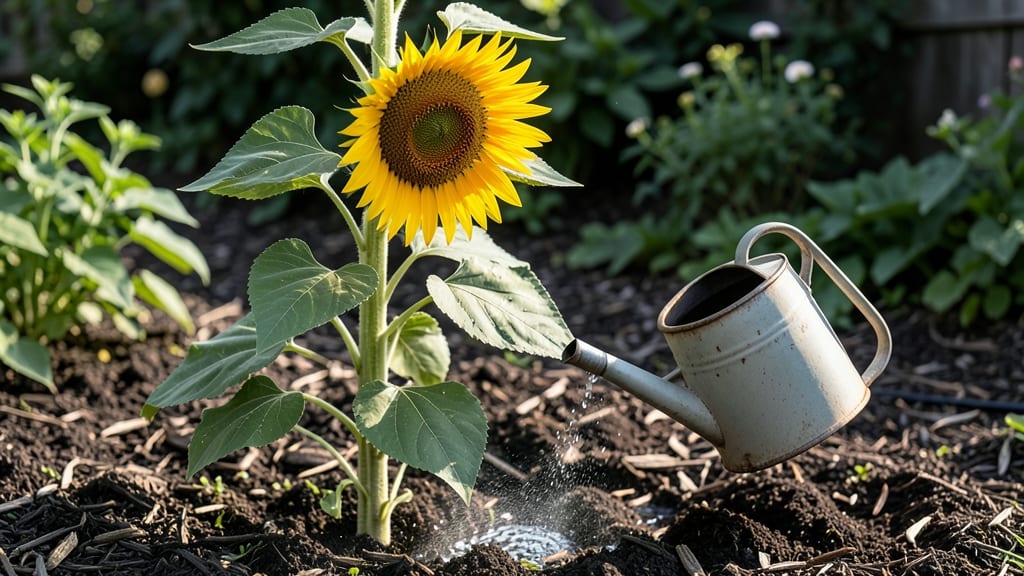
Understanding sunflower water needs is the secret to growing those towering 🌻 giants that seem to reach for the sky.
Growing sunflowers that reach skyward isn’t just about sunshine—it’s a delicate balance of water, timing, and technique that most gardeners overlook until it’s too late.
Too little water and your sunflowers wilt before they bloom; too much, and you risk root rot that stunts their growth. The key lies in knowing when and how to water, depending on their growth stage and your local climate.
In this guide, I’ll break down the exact watering schedule you need—from seedling to full bloom—and share pro tips to keep your sunflowers thriving without wasting a drop.
How much water do sunflowers really need by growth stage?
Sunflowers may seem like hardy plants that thrive on neglect, but their water needs are actually quite specific—especially when broken down by growth stage. Too little water stunts growth, while too much causes root rot and weak stems.
The key is understanding critical watering windows that align with their natural development.
From seed germination to seed production, sunflowers go through distinct phases where moisture requirements shift dramatically. For example, young seedlings need consistent dampness to prevent wilting, while mature plants can handle drought-like conditions once established. Let’s explore the exact water needs at each stage.
| Growth Stage | Water Needs | Frequency | Key Tips |
|---|---|---|---|
| Seed Germination | Consistent moisture | Daily (keep soil damp) | Use a spray bottle or drip irrigation |
| Seedling (0-4 weeks) | 1-1.5 inches per week | Every 2-3 days | Water at soil level, avoid wetting leaves |
| Vegetative Growth (4-8 weeks) | 1.5-2 inches per week | Every 3-4 days | Deep watering encourages deep roots |
| Flowering (8-12 weeks) | 2-2.5 inches per week | Every 4-5 days | Critical for bud development; avoid stress |
| Seed Production (12+ weeks) | 1-1.5 inches per week | Weekly (reduce gradually) | Let soil dry slightly between waterings |
The seed germination stage is the most delicate, where seeds need consistent moisture to sprout. I’ve found that using a spray bottle or drip irrigation keeps the soil evenly damp without creating puddles. Overwatering at this stage can cause seeds to rot before they even sprout.
Once seedlings emerge, they enter the 0-4 week stage, where their roots are shallow but growing rapidly. During this time, aim for 1-1.5 inches of water per week.
I water mine every 2-3 days in the morning to prevent fungal diseases that thrive in damp foliage. A soaker hose works wonders here, delivering water directly to the soil.
By the time sunflowers reach the vegetative growth stage (4-8 weeks), their roots are diving deeper, and they can handle slightly less frequent watering—but still need 1.5-2 inches per week. This is where deep watering becomes crucial.
I dig a small trench around the base of the plant and fill it with water, letting it seep down slowly. This encourages roots to grow deeper, making your sunflowers more drought-resistant later on.
When buds form and the plant enters the flowering stage (8-12 weeks), water needs peak at 2-2.5 inches per week. This is the most critical period for watering, as buds need consistent moisture to develop properly.
Skimping now can lead to dropped buds or stunted growth. I’ve had the best success with a drip irrigation system set on a timer, ensuring steady hydration without waste.
The final stage, seed production (12+ weeks), is where you can gradually reduce watering. Mature sunflowers are surprisingly drought-tolerant at this point, needing only 1-1.5 inches per week.
I water mine once a week during this phase, letting the soil dry slightly between waterings. This helps the seeds mature properly and prevents splitting or mold.
Regional climate plays a huge role in these guidelines. In hot, dry climates, you may need to water more frequently, while cooler, humid areas might require adjustments to prevent fungal issues.
Always check the soil moisture by sticking your finger 1-2 inches deep—if it’s dry, it’s time to water.
Pro tip: Mulch around your sunflowers with straw or wood chips to retain moisture and reduce evaporation. I’ve seen this cut my watering needs by 30% or more during peak summer months.
Understanding these stages helps you avoid common pitfalls like overwatering seedlings or underwatering during flowering. With the right approach, your sunflowers will grow tall, strong, and ready for harvest—all while conserving water.
The best watering schedule for sunflowers: frequency, timing, and techniques
Mastering the watering schedule for sunflowers is key to growing those towering giants you dream of. Unlike drought-resistant succulents, sunflowers need consistent moisture—especially during their rapid growth phase—but too much water can drown their deep roots.
The secret lies in balancing frequency, timing, and technique to keep your plants thriving without wasting water.
Most gardeners make the mistake of watering sunflowers too lightly or too often, leading to weak stems or fungal diseases. Instead, focus on deep, infrequent watering that encourages roots to grow downward.
This method not only saves water but also helps your sunflowers develop the strong structural support needed to reach their full height—some varieties even topping 12 feet!
- 1. Frequency: Water deeply 1-2 times per week (not daily). Seedlings need daily moisture; mature plants thrive on weekly deep soaks.
- 2. Timing: Always water in the early morning (before 10 AM). This prevents fungal growth and ensures roots absorb water efficiently.
- 3. Technique: Use drip irrigation or soaker hoses to deliver water directly to soil, avoiding wet foliage. Overhead watering can spread diseases.
- 4. Amount: Aim for 1-2 gallons per plant per watering session. Let the top 1-2 inches of soil dry between waterings.
- 5. Adjust for Climate: In hot, dry regions, water every 2-3 days. In cooler or rainy seasons, reduce to once weekly.
- 6. Mulch Matters: Apply 2-3 inches of mulch around the base to retain moisture and regulate soil temperature.
When it comes to watering techniques, I’ve found that drip irrigation is the gold standard for sunflowers. It delivers water slowly and directly to the roots, reducing evaporation and preventing fungal issues that come with wet leaves.
If you’re using a hose, attach a soaker hose or a gentle spray nozzle to mimic this effect. Avoid overhead sprinklers unless you’re watering early in the day—wet leaves in the evening can invite powdery mildew, a common sunflower enemy.
Don’t forget that seasonal adjustments are crucial. During the peak summer months, when temperatures soar and sunflowers grow most rapidly, you may need to water every 2-3 days. In contrast, spring and fall often require watering only once a week.
Always check the soil 1-2 inches deep—if it’s dry, it’s time to water. Stick your finger in the soil; if it feels dry, your sunflowers are thirsty!
One of my biggest lessons learned? Overwatering is just as harmful as underwatering. Sunflowers hate soggy soil, which can lead to root rot and stunted growth. Always ensure your garden has well-draining soil, and if you’re in a clay-heavy area, amend it with compost or sand.
Raised beds are another great option—they warm up faster in spring and drain better, giving your sunflowers a head start.
Pro tip: Pay extra attention during the flowering stage. This is when sunflowers need the most water to support their heavy blooms and developing seeds. A deep watering once a week during this phase will keep your plants robust and ready for a bountiful harvest.
With the right watering schedule, your sunflowers will reward you with vibrant blooms and sturdy stems that reach for the sky. 🌻