
Blooming
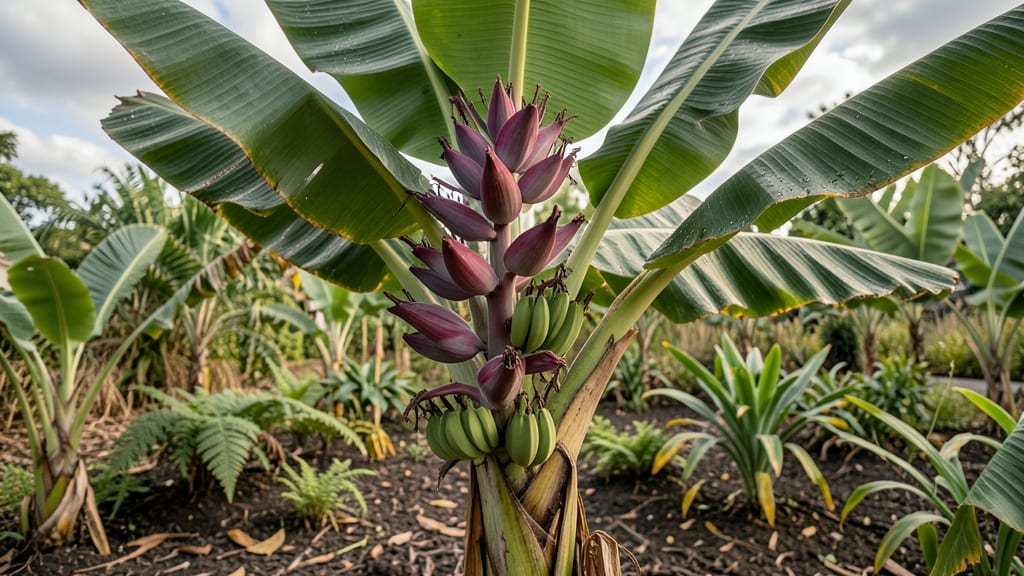
Recognizing the banana flowering stage is your first clue that a 🍌 harvest is on the way—often just months after you’ve given up hope.
Picture this: your towering banana plant, which has spent years sending up broad leaves, suddenly develops a split in its pseudostem or a strange, furry-looking growth at its center. That’s not just a weird mutation—it’s the plant’s way of telling you it’s ready to fruit.
Miss these signs, and you might be waiting another year (or longer) for those sweet, creamy bananas.
In tropical regions like Hawaii or Florida, where bananas thrive year-round, the flowering stage kicks off with specific environmental triggers—like warmer days, consistent moisture, and just the right amount of potassium in the soil. But even in ideal conditions, not every plant follows the script.
Some stall, others abort their flowers, and a few just refuse to cooperate. The good news? You can nudge your banana along with a few simple adjustments.
In this guide, I’ll walk you through the 4 key signs of flowering, how to create the perfect conditions for fruit development, and what to do if your plant throws a curveball.
By the end, you’ll know exactly when to start watching for those first tiny banana hands peeking out of the protective sheath.
4 Unmistakable signs your banana plant is entering flowering stage
Banana plants are masters of disguise—they can grow for months before showing any signs of flowering. But once they start, the changes are dramatic and unmistakable. As someone who’s watched my own banana plants transform from leafy giants to fruit-bearing powerhouses, I’ve learned to spot these key indicators early.
The moment your plant begins flowering, it’s a race against time to support its energy needs and protect the delicate inflorescence (that’s the fancy term for the flower cluster).
Most gardeners miss the first two signs because they happen gradually. The pseudostem—a false trunk made of tightly packed leaves—starts splitting weeks before you see any flowers. Meanwhile, the plant’s root system shifts into high gear, preparing to feed the massive energy demands of flowering.
If you catch these early clues, you’ll be ready to adjust your care routine and give your banana the best chance at producing healthy fruit bunches. Let’s break down what to watch for.
🌱 4 Signs Your Banana Plant Is Flowering
-
1. Pseudostem Splitting
The pseudostem (false trunk) develops a visible vertical crack down the center, often accompanied by a slight bulge. This happens as the inflorescence pushes upward from the center. -
2. Inflorescence Emergence
A purple or maroon flower spike (called a bract) bursts through the center of the pseudostem. This is the most obvious sign and usually appears 2-4 weeks after the first split. -
3. Leaf Changes
The youngest leaves (near the top) start growing slower or even yellow at the tips, while older leaves may wilt slightly as the plant redirects energy to flowering. -
4. Root Activity Increase
Roots near the base of the pseudostem grow more aggressively, and you may notice new root hairs or water draining faster from the soil as the plant absorbs more nutrients.
The pseudostem splitting is often the first sign, but it’s easy to overlook if you’re not checking your plant regularly. I’ve seen gardeners mistake this for disease or pest damage—until they notice the purple flower spike peeking out days later.
The inflorescence itself is a stunning sight, with layers of bracts unfolding like a tropical flower. In my experience, this stage usually happens when the plant is 2-3 years old, but dwarf varieties may flower earlier.
Once the inflorescence emerges, the plant’s energy shifts dramatically. The youngest leaves (called heart leaves) may stop unfurling entirely, and you’ll notice a distinct droop in the older leaves. This isn’t a cause for alarm—it’s the plant’s way of conserving resources for the fruit development.
However, if the leaves turn completely brown or crispy, your banana might be stressed from underwatering or nutrient deficiency.
Root behavior is another tell-tale sign that often gets ignored. During flowering, banana plants double their root activity to support the heavy fruit bunch. If you’ve been growing your banana in a container, you might see roots circling the pot or even poking out of drainage holes.
This is a clear signal that your plant is ready to flower or fruit. In-ground plants may show increased water uptake, so you’ll need to water more frequently to keep up with the demand.
Timing is everything when it comes to banana flowering. In tropical climates, flowering can happen year-round, but in cooler regions (like USDA Zone 10), it often occurs in spring or early summer when temperatures rise above 70°F (21°C).
My Cavendish bananas in Florida typically flower in May or June, while dwarf varieties might start as early as March. Pay attention to your local climate—temperature drops or strong winds during this stage can cause the flower to abort, which is devastating after all your patience.
If you’re growing bananas in containers, watch for root-bound conditions—a common reason flowering gets delayed. When roots fill the pot, the plant focuses on survival rather than reproduction. I once had a potted banana that took 18 months to flower because it was root-bound.
Upgrading to a larger container (20+ gallons) with well-draining soil and high potassium fertilizer triggered flowering within 3 months. The lesson? Give your banana room to grow—both above and below the soil.
One of the most misunderstood aspects of banana flowering is the role of the inflorescence. Many gardeners assume the purple bracts are the flowers, but they’re actually protective layers. The true flowers develop inside, starting from the bottom of the spike and working upward.
This means the first fruits to form are at the base, while the top remains flower-only for weeks. If you see the top bracts drying out before the bottom fruits are ripe, your plant might be nutrient-deficient or underwatered.
Finally, don’t forget to protect your flowering banana from pests and wind. The inflorescence is delicate, and strong breezes can damage the flower before it even opens. I’ve used bamboo stakes and twine to support mine during hurricane season, and it’s made all the difference.
With the right care, your banana will reward you with a bountiful harvest in as little as 6-12 months after flowering. Keep an eye out for those 4 unmistakable signs,
How to accelerate banana flowering: pro tips for faster fruit production
Once your banana plant reaches maturity, you’ll want to give it every advantage to enter the banana flowering stage faster. The key lies in mimicking its natural tropical environment while addressing specific needs like sunlight exposure, nutrient balance, and water consistency.
Even small adjustments can trigger flowering months sooner than waiting for nature’s timeline.
Start by ensuring your banana plant receives 6-8 hours of direct sunlight daily. While they thrive in full sun, partial shade during peak afternoon heat can prevent stress, especially in hot climates.
If growing in containers, rotate them every few weeks to guarantee even sun exposure across all sides of the pseudostem.
Watering plays a crucial role—banana plants need consistent moisture, but soggy soil can cause root rot. Aim for 1-2 gallons per watering (for mature plants) in the morning to allow roots to absorb moisture before evaporation.
During dry spells, mulch around the base with straw or wood chips to retain humidity and cool the soil.
Temperature also matters: bananas thrive in 75-85°F ranges. If nights drop below 60°F, use a row cover or greenhouse to protect the plant. Cold stress delays flowering, so avoid sudden temperature swings—especially when the plant is nearing maturity.
For potted bananas, consider transplanting to a larger container (15+ gallons) if roots are circling. Root-bound plants often delay flowering, and giving them extra space encourages faster growth and earlier blooming. Add perlite or sand to improve drainage while keeping the soil rich in organic matter.
Finally, monitor for pests like aphids or spider mites, which can stress the plant. A weekly spray of neem oil keeps them at bay without harming beneficial insects. With these adjustments, you’ll see that banana flowering stage arrive sooner—often within 6-12 months of proper care. 🌱