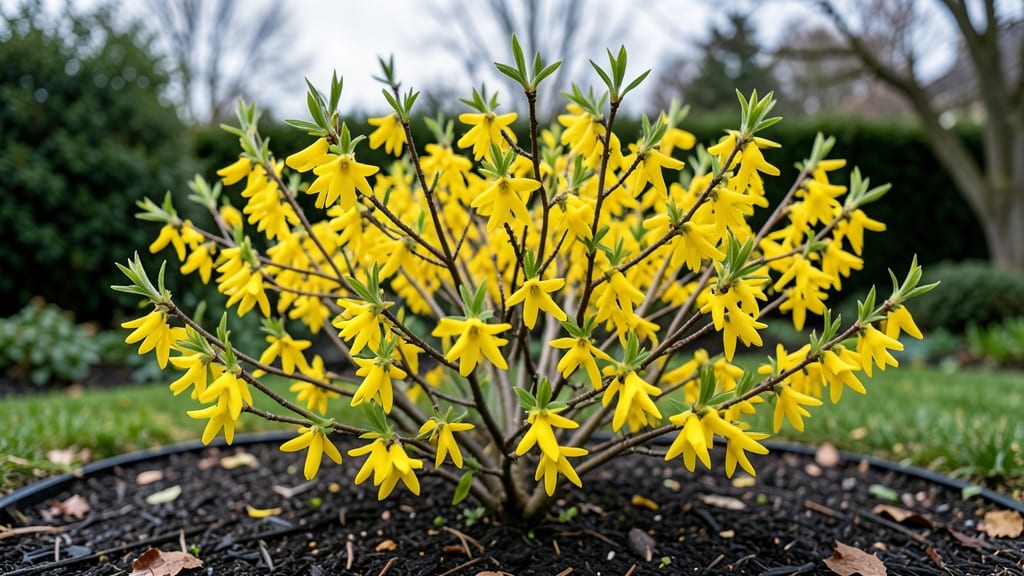
The demonstrative flowering time of forsythia in early spring 🌸 depends on your USDA zone and how you care for it.
If you’ve ever wondered why your forsythia bushes bloom earlier—or later—than your neighbor’s, the answer lies in your USDA zone. Timing these bright yellow blooms isn’t just about luck; it’s science. Here’s how to predict when your forsythia will burst into color based on where you live.
In Zone 6a, like many gardeners, you can expect forsythia to flower between late March and early April, but cooler zones may see blooms as early as February.
Warmer climates could push flowering into May, so knowing your zone helps you plan when to pair it with other early bloomers like crocus or daffodils.
Below, I’ll break down how to adjust flowering time with pruning, sunlight, and seasonal care—plus common mistakes that delay blooms. By the end, you’ll know exactly when to expect those cheerful yellow clusters and how to keep them coming back year after year.
Forsythia flowering time by USDA zone: exact months to expect blooms
Forsythia bushes are famous for their cheerful yellow blooms that signal spring’s arrival. But did you know your USDA zone determines exactly when those flowers will appear? From the deep south to cold northern climates, timing varies by 2-4 weeks.
Understanding these patterns helps you plan your garden and pair forsythia with complementary spring bloomers like daffodils or crocuses.
The key factor is chilling hours—forsythia needs 500-1,000 hours below 45°F to trigger blooming. Warmer zones (like USDA Zone 9) may see earlier flowers, while colder zones (like Zone 3) wait until late spring.
Even within the same zone, microclimates—like urban heat islands—can shift bloom times by 10 days or more.
Below is a zone-by-zone breakdown of when to expect early, peak, and late blooms, along with climate tips to fine-tune your expectations. Use this as your garden planning calendar for spring color.
| USDA Zone |
Early Blooms |
Peak Blooms |
Late Blooms |
Climate Notes |
| Zone 3 |
Late April |
Mid-May |
Early June |
Cold winters delay blooms; plant in sheltered spots. |
| Zone 4 |
Early April |
Late April |
Early May |
Frost risk extends bloom season; mulch for soil warmth. |
| Zone 5 |
Mid-March |
Early April |
Late April |
Variable; urban areas bloom 1-2 weeks earlier. |
| Zone 6 |
Late February |
Mid-March |
Early April |
Mild winters may cause patchy blooms; prune in late winter. |
| Zone 7 |
Early February |
Late February |
Mid-March |
Early blooms; pair with winter jasmine for extended color. |
| Zone 8 |
January |
Early February |
Late February |
Blooms overlap with camellias; protect from late frosts. |
| Zone 9 |
December |
January |
Early February |
Late blooms; provide
How to adjust forsythia flowering time with pruning and care
Want your forsythia to burst into bright yellow blooms right when you want? The secret lies in pruning timing and seasonal care. Forsythia blooms on old wood, meaning last year’s growth produces this year’s flowers.
If you prune at the wrong time, you might delay—or even lose—those cheerful spring displays entirely.
Your USDA zone plays a huge role too. In cooler zones (3-5), forsythia often blooms in late March or April, while warmer zones (7-9) may see flowers as early as February.
With the right techniques, you can nudge those blooms earlier or later by 2-4 weeks, depending on your goals.
1.
Prune right after flowering (late April–May) to encourage next year’s blooms. This gives stems time to harden off before winter.
2.
For earlier blooms, prune lighter in early spring (before buds swell) to reduce stress. Avoid heavy cuts that remove old wood.
3.
To delay blooms, prune heavily in late summer (August) to force new growth. This shifts energy to foliage over flowers.
4.
Maximize sunlight exposure (6+ hours daily) to trigger earlier flowering. South-facing locations work best in northern zones.
5.
Fertilize with balanced 10-10-10 in early spring (after last frost) to boost flower production. Avoid fall feeding.
6.
Mulch with organic matter in late fall to insulate roots. This helps warmer zones delay blooms until late spring.
Adjusting forsythia flowering time also means paying attention to watering patterns. Deep watering once weekly during dry spells keeps roots healthy, while overwatering in winter can stress the plant and delay blooms.
In cooler climates, a thick mulch layer (3-4 inches) helps protect roots from temperature swings, which can push blooms earlier.
If your forsythia hasn’t bloomed in years, it might be overgrown. Rejuvenate by cutting back 1/3 of old stems in early spring—this stimulates new growth and restores flowering. Just remember: never prune in fall, as this removes next year’s flower buds.
For container-grown forsythia, timing matters even more. Since pots dry out faster, water every 3-5 days in summer and reduce to weekly in cooler months. Place containers in full sun and fertilize monthly during growing season to encourage vibrant, timely blooms. 🌸
★★★★★4.5(10 reviews)
|