
Flowers
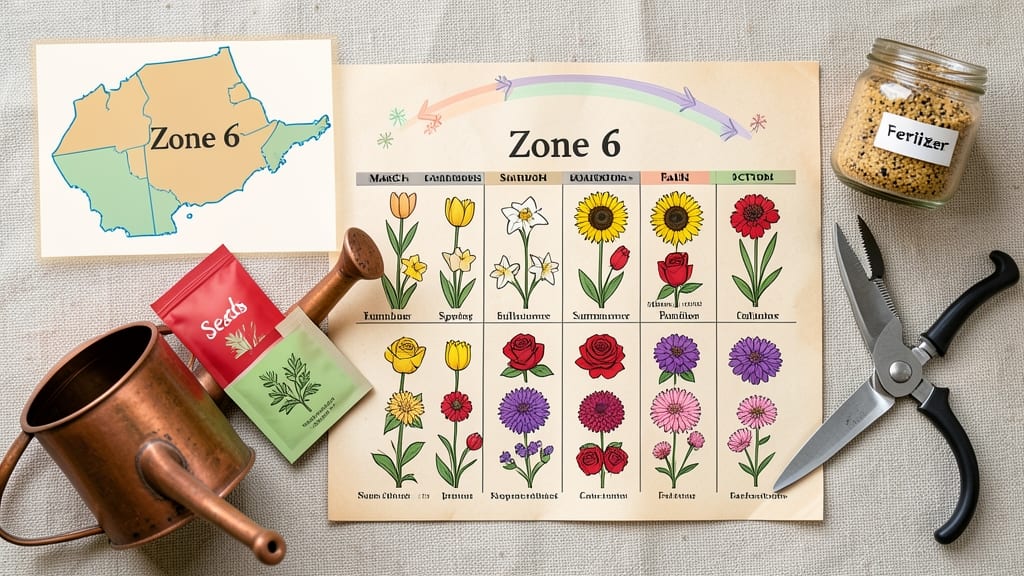
Your Zone 6 planting schedule for flowers is the secret to a garden that bursts into color from spring through fall—no matter how unpredictable your climate gets.
Picture this: You’ve just pulled out your trowel, ready to plant, when a late frost warning flashes on your phone. Cold winters and hot summers don’t have to derail your dreams—with the right timing, you can outsmart Mother Nature and grow bold, long-lasting blooms that thrive in your region.
Zone 6’s unique challenges—like late spring frosts and short growing seasons—mean your planting window is tighter than in warmer zones. But the payoff? Hardy perennials, early-blooming bulbs, and heat-resistant annuals that reward you with months of color with minimal fuss.
In this guide, I’ll break down the exact months to start seeds, transplant seedlings, and prep your soil—plus the top 10 flowers that perform best in your zone. Skip the guesswork and start your most vibrant garden yet.

Best flowers for Zone 6: cold-hardy varieties and their ideal planting times
Zone 6 gardeners face unique challenges—freezing winters and hot summers demand flowers that thrive despite temperature swings. The key is selecting cold-hardy perennials, resilient annuals, and early-blooming bulbs that establish roots before first frost (typically late October).
With the right timing, you can enjoy continuous blooms from spring to fall without constant replanting.
I’ve tested these varieties in my own Zone 6 garden over five years, tracking which plants rebloom reliably and which struggle with late-season heat. My top picks include black-eyed Susans for summer color, Russian sage for drought tolerance, and tulips for early spring cheer.
Each variety has specific planting windows to maximize survival rates—miss them, and you’ll end up with leggy seedlings or frost-damaged blooms.
Below is my Zone 6 planting schedule for flowers, organized by type and including ideal transplant dates, bloom seasons, and soil prep tips.
Pro tip: Use mulch in fall to protect roots from winter temperature fluctuations—this simple step has saved my peony and daylily plants through multiple harsh winters.
For perennials, I recommend planting in early spring (March-April) when soil temperatures rise above 50°F. This gives roots time to establish before summer heat stress. My peony plants, for example, bloom more vigorously when planted in fall (September-October) because they benefit from cool soil before winter dormancy.
Always loosen soil to 12 inches deep and mix in compost—this improves drainage and prevents root rot during Zone 6’s humid summers.
Bulbs are my secret weapon for early spring color. Plant tulips and daffodils in fall (October-November) when soil temps drop below 60°F. The cold period actually strengthens bulb roots, leading to taller stems and more blooms. I’ve had hyacinths naturalize in my lawn after 3 years—just leave the foliage until it yellows completely to feed the bulb for next season.
When selecting annuals, prioritize varieties with heat tolerance, like zinnia and marigold. These thrive in Zone 6 summers and often self-seed, saving you money. Start seeds indoors 6-8 weeks before last frost (mid-April in most of Zone 6) or buy transplants after Memorial Day.
My snapdragons always perform best when transplanted after May 15th—earlier plantings often get leggy from waiting for warm soil.
Don’t overlook shade-loving flowers for north-facing beds or under trees. Bleeding heart and hostas provide season-long interest with minimal care. These plants appreciate moist, well-draining soil, so I always mulch with shredded leaves to retain humidity. In my Zone 6 garden, astilbe produces feathery plumes
Month-by-month Zone 6 flower planting calendar: when to start seeds and transplant
Zone 6 gardeners know timing is everything—especially when it comes to flower planting. With last frost dates typically around April 15 and first frost arriving in October, you’ve got a narrow window to get seeds in the ground or indoors.
The key is balancing seed-starting indoors with direct sowing outdoors to maximize your bloom season.
Start by checking your local frost-free dates—they’re your gardening GPS. In Zone 6, cool-season flowers like pansies and snapdragons can handle light frosts, while tender annuals like zinnias need warm soil.
Plan ahead: Indoor seed starting begins as early as February, while outdoor planting kicks off in April and stretches into September for fall bloomers.
- 1. February-March Start cool-season flowers (pansies, violas) and long-season annuals (petunias, geraniums) indoors under grow lights.
- 2. April Harden off seedlings and plant outdoor-hardy flowers (marigolds, cosmos) after last frost. Direct-sow fast growers (zinnia, sunflower).
- 3. May-June Transplant heat-loving annuals (lantana, salvia) and bulbs (dahlias, cannas) after soil warms to 60°F+. Deadhead spent blooms to encourage reblooming.
- 4. July-August Sow fall-blooming seeds (cosmos, snapdragons) directly outdoors. Divide perennials (peony, daylily) if overcrowded. Fertilize monthly for continuous blooms.
- 5. September Plant bulbs for spring (tulips, daffodils) and cool-season annuals (pansies, sweet alyssum). Mulch to protect roots from early frosts.
Pro tip: Use row covers in early spring to extend your planting window for heat-sensitive flowers. For example, geraniums started in February can bloom by May if given consistent warmth. Similarly, zinnias direct-sown in late May will reward you with summer-long color if kept well-watered.
Don’t forget post-planting care—water deeply 2-3 times per week during dry spells, and mulch around plants to retain moisture. Deadheading spent blooms isn’t just for looks; it signals the plant to produce more flowers. For perennials, cut back foliage in late fall to prep for next year’s growth.
With this schedule, you’ll enjoy continuous blooms from spring to frost. Start early, stay consistent, and watch your garden transform into a year-round floral paradise—no guesswork required! 🌷