
Vegetables
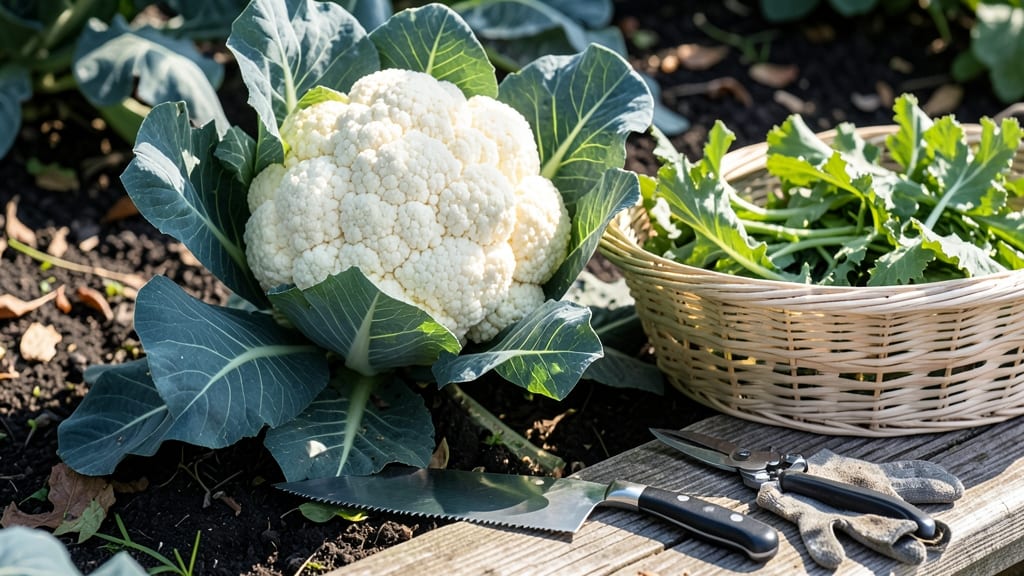
Knowing the perfect harvest time for cauliflower 🥬 means the difference between a tender, flavorful curd and a tough, bitter mess.
Missing that window can mean either tough, fibrous curds or wasted energy as your plant bolts prematurely—here’s exactly how to spot the ideal moment to pick your crop.
Most varieties reach maturity in 70–100 days, but heat, humidity, and even the wrong soil can push them off schedule. I’ll walk you through the visual cues—head size, leaf color, and texture—that tell you when to grab your knife.
By the end, you’ll know not just when to harvest, but also how to extend your cauliflower’s prime season and avoid common pitfalls like bolting or underdeveloped heads.

How to identify the perfect cauliflower curd stage for harvesting
Cauliflower is one of those crops where timing is everything—harvest too early, and you’ll get small, underdeveloped heads. Wait too long, and your tender curds turn bitter or the plant bolts prematurely.
The key is learning to read your plant’s visual cues, from head size to leaf health, so you can pick at peak perfection. I’ve harvested dozens of cauliflower heads, and these are the exact signs I watch for every season.
First, check the head size against your variety’s expectations. Most standard cauliflowers should reach 6-8 inches in diameter at harvest, while dwarf varieties like ‘Snowball Y Improved’ stay smaller (4-6 inches).
If your head feels light for its size, it’s likely not ready—think of it like testing a ripe watermelon by tapping it. A firm, heavy head means it’s packed with flavor and nutrients.
Next, examine the curd color and texture. Perfectly ripe cauliflower curds are uniformly colored—white for standard varieties, purple for ‘Purple of Sicily’, or green for Romanesco. The surface should feel smooth and slightly bumpy, not rough or spongy.
Run your fingers over the curds: if they give slightly under gentle pressure but don’t feel mushy, you’re in the sweet spot. Overripe curds develop a woody texture and yellowing spots.
Don’t ignore the outer leaves—they’re your plant’s health report. Healthy leaves should be vibrant green and tightly wrapped around the head. If you see yellowing or browning edges, it’s a sign of stress, often from heat or drought.
Wilted leaves can also indicate the plant is bolting (sending up a flower stalk), which means your harvest window is closing fast. In this case, harvest immediately, even if the head isn’t fully sized.
| Cue | Ready for Harvest | Not Ready | Action |
|---|---|---|---|
| Head Size | 6-8" diameter (varies by type) | Small or uneven | Wait 2-3 days; check daily |
| Curd Color | Uniform white/purple/green | Pale, discolored, or spotted | Harvest now if color is stable |
| Texture | Firm, slightly bumpy | Spongy or woody | Harvest immediately if texture degrades |
| Leaf Health | Green, tight, no yellowing | Yellowing, wilted, or dying | Harvest ASAP to prevent bolting |
| Flower Buds | None visible | Tiny buds forming | Harvest within 24 hours |
For purple or orange varieties, the color deepens as they mature, but the texture remains the most reliable indicator. Gently squeeze the curd: it should yield slightly but not feel mushy.
If you see tiny yellow flowers peeking from the center, your window is closing—harvest within 24 hours or risk a bitter, fibrous head. I once missed this cue with a ‘Graffiti’ cauliflower and ended up with a head that tasted like cardboard. Lesson learned!
Pro tip: Use a sharp chef’s knife or pruning shears to cut the stem 1-2 inches below the head. Avoid twisting or pulling, which can damage the plant.
If you’re growing multiple heads (like with ‘Cheddar’ or ‘Mozerella’ varieties), the main head will form first, followed by smaller side shoots. These baby heads mature faster—check them every 2-3 days once the primary head is harvested.
Climate plays a role too. In hotter regions (Zones 8-10), cauliflower bolts faster, so monitor heads daily in peak summer. In cooler climates (Zones 3-6), you’ve got a little more flexibility, but don’t wait past 75-100 days from transplanting.
I’ve had success in Zone 7 by shading plants with cheesecloth during heatwaves to delay bolting and extend the harvest window.
Finally, store harvested cauliflower properly to preserve its freshness. Wrap the head in a damp paper towel and place it in a plastic bag in the fridge for up to 5 days.
For longer storage, blanch and freeze the curds. But the real reward? That first bite of crisp, sweet cauliflower picked at the perfect moment—worth every bit of patience!
What happens if you harvest cauliflower too early or too late?
Timing is everything when harvesting cauliflower. If you pick too early, you’ll end up with small, loose curds that lack flavor and texture. These underdeveloped heads won’t firm up properly, leaving you with a disappointing meal.
On the other hand, waiting too long means dealing with bitter, woody florets or even bolting—when the plant sends up a flower stalk and becomes inedible.
I’ve learned the hard way that cauliflower heads mature at different rates depending on the variety and growing conditions. For example, Romanesco takes slightly longer to reach harvest readiness than Snowball types.
Missing the window can mean wasted effort or a crop that’s past its prime. Let’s break down what happens in each scenario and how to fix it.
Harvesting Too Early
- ✖️ Small, loose curds – Underdeveloped and spongy
- ✖️ Pale, discolored – Lacks vibrant color
- ✖️ Poor flavor – Bland and watery texture
Fix It:
- ✅ Wait 2-3 days and recheck
- ✅ Monitor leaf color – Should stay green
- ✅ Check head firmness – Should feel solid
Harvesting Too Late
- ✖️ Woody, bitter – Tough texture and strong taste
- ✖️ Yellowing leaves – Sign of bolting
- ✖️ Open florets – Plant sends up stalk
Fix It:
- ✅ Harvest side shoots – Smaller curds may form
- ✅ Use for cooking – Blanch or freeze for later
- ✅ Prevent bolting next time – Shade cloth or cooler temps
If you harvest cauliflower too early, the heads won’t develop their signature firm, dense texture. I’ve seen gardeners pull heads that were barely 4 inches wide—way too small for even a single serving.
The good news? Most varieties give you a 3-5 day grace period to let them mature. Just keep an eye on the leaf color and head size.
On the flip side, waiting too long turns your cauliflower into a tough, fibrous mess. The florets become yellowish-brown and develop a bitter aftertaste that’s hard to mask. Even worse, the plant may bolt, sending up a tall stalk with tiny flowers.
This happens when days get longer or temps rise, triggering the plant’s natural reproductive cycle.
For late-harvested cauliflower, don’t toss it entirely. The side shoots (smaller heads that form after the main harvest) can still be eaten—just blanch them first to soften the texture.
If bolting happens, you can try harvesting the flower buds young for pickling or stir-fries, though they won’t be as tender as fresh curds.
To avoid these mistakes, I now mark my calendar based on the 70-100 day maturity range for my varieties. For cool-season gardens, aim to harvest in late spring or early summer before temperatures climb.
In warmer climates, opt for heat-tolerant varieties like ‘Cheddar’ or ‘Graffiti’ to extend your harvest window.