
Container Gardens
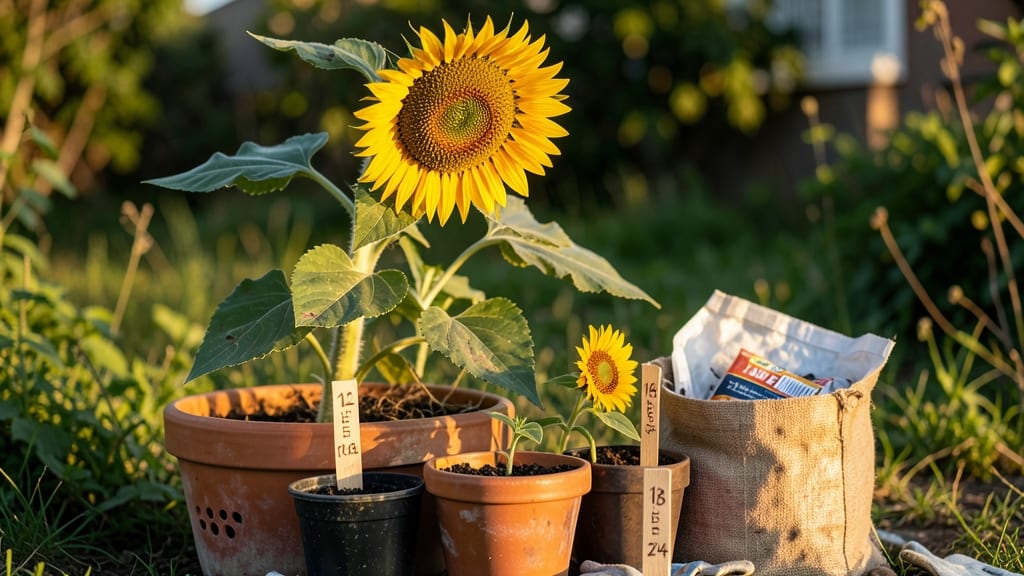
Sunflowers need pots that match their towering ambitions — at least 12 inches wide and deep for dwarf varieties, but 24 inches or more for giants like 'Russian Giant' to support their roots and keep them stable.
Picture this: your 🌻 sunflower seedling starts strong, but by mid-summer, its pot feels like a shoebox. Roots spiral around the edges, the stem leans precariously, and suddenly, your dream bloom is struggling just to stand upright. That’s the reality when pot size doesn’t match growth potential.
Container gardening lets you grow sunflowers almost anywhere, but the right pot makes all the difference. Too small, and you’ll fight stunted growth, yellowing leaves, or worse—toppling stems. Too large, and you waste space while roots sit in soggy soil.
The key? Balancing root space with drainage, especially in USDA Zone 6a where spring planting kicks off in April.
Below, I’ll break down exact pot sizes by sunflower height, share 5 warning signs your container is too cramped, and even suggest DIY fixes to give your sunflowers the stable foundation they deserve—without breaking the bank.
Sunflower pot size guidelines by variety and height
Choosing the right pot size for your sunflowers is like giving them a sturdy foundation for their towering growth. Too small, and their roots will circle like a caged animal—leading to stunted growth and floppy stems. Too large, and you risk overwatering or wasted space.
The key is matching the pot to your sunflower’s mature height and root system.
Sunflowers come in three main height categories: dwarf (2-4 ft), medium (5-8 ft), and giant (8-16 ft). Each needs different pot dimensions to support its growth without toppling over.
For example, a ‘Teddy Bear’ sunflower (dwarf) thrives in a 12-inch pot, while a ‘Russian Giant’ (giant) demands a whopping 24-inch diameter pot to anchor its 12-foot stem.
Root space is just as critical as pot size. Sunflowers develop taproots that can grow 3-4 feet deep, so depth matters too. A pot that’s too shallow will strangle their growth. For instance, a ‘Moulin Rouge’ (medium-height) needs at least 18 inches of depth to prevent root binding.
Here’s the breakdown you need to avoid common mistakes:
Pro tip: If you’re growing multiple sunflowers in one pot, space them at least 12 inches apart to avoid competition for nutrients. For example, two ‘Teddy Bear’ sunflowers can share a 18-inch pot, but a ‘Russian Giant’ should never be crowded—it needs its own 24-inch space to avoid toppling.
Don’t forget about drainage. Sunflowers hate soggy roots, so ensure your pot has drainage holes. If using decorative pots without holes, add a layer of gravel or perlite at the bottom. For giant varieties, consider a fabric grow bag to prevent root circling while allowing flexibility.
For balcony or patio gardens, opt for lightweight but sturdy pots with wide bases. A 5-gallon bucket works for dwarf varieties, but for medium or giant sunflowers, invest in heavy ceramic or fiberglass pots to prevent tipping.
I once watched a ‘Russian Giant’ topple over in a flimsy plastic pot—it was a heartbreaking lesson in stability!
Lastly, monitor your sunflower’s growth and adjust care as needed. If leaves start yellowing or stems lean excessively, it’s a sign the pot is too small. Repot into a larger container immediately to save the plant.
With the right pot size, your sunflowers will grow tall, proud, and full of sunshine—just like they’re meant to.
5 Critical signs your sunflower pot is too small (and how to fix it)
Sunflowers are nature’s cheerful giants—but their towering stems need the right foundation to thrive. When roots outgrow their container, your plant sends distress signals. I’ve seen stunted growth, yellowing leaves, and leaning stems all because a pot was too small.
These signs mean it’s time to act before your sunflower’s potential is lost forever.
Root-bound sunflowers can’t absorb nutrients or water efficiently, leading to poor health. The good news? Recognizing these 5 critical signs early gives you time to fix the problem. Whether you’re growing dwarf varieties or giant sunflowers, container size matters more than you might think.
Let’s diagnose the issue and explore solutions—from repotting to temporary fixes—that’ll get your sunflower back on track.
- 🌱 Sign 1: Roots Circling the Pot
Peek at the drainage holes—if roots are spiraling or poking out, they’ve filled the pot. This restricts growth and nutrient uptake. - 💧 Sign 2: Soil Dries Out Too Fast
Small pots lose moisture quickly. If you’re watering every 2 days in summer, your container is likely too snug. - ☀️ Sign 3: Leaning or Top-Heavy Stems
Sunflowers lean away from light when roots can’t anchor properly. A 5-gallon pot or larger prevents this instability. - 🌿 Sign 4: Yellowing Lower Leaves
Chlorosis (yellowing) on older leaves signals nutrient starvation from crowded roots. Start at the bottom and works upward. - ✂️ Sign 5: Stunted Growth or No Blooms
If your sunflower stops growing or fails to flower, it’s prioritizing root survival over vertical growth. Upgrade to a 10-15 gallon pot for standard varieties.
If you spot these signs, don’t panic—your sunflower can recover with the right care. Start by repotting into a larger container with fresh, well-draining soil. For temporary fixes, add a slow-release fertilizer to compensate for nutrient competition.
I’ve had success with fabric grow bags, which allow roots to expand more naturally than rigid pots.
For dwarf varieties like ‘Teddy Bear,’ a 3-gallon pot may suffice, but standard sunflowers need at least 5 gallons. Giant varieties like ‘Russian Giant’ require 15+ gallons to support their 10-16 foot stems.
Always choose a pot 2-3 inches wider than your plant’s current root ball to allow room for growth.
Pro tip: Stake your sunflower immediately after repotting to provide stability while roots adjust. Water deeply every 2-3 days until new growth appears, then taper off to every 4-5 days once established.
With the right pot size and care, your sunflower will rebound—and you’ll be rewarded with those iconic bright yellow blooms you’ve been dreaming of.
Remember, sunflowers are resilient. Even if your plant shows multiple signs of root stress, giving it the space it needs can turn things around. Next time you’re shopping for containers, measure twice—your sunflower’s future depends on it! 🌻