
Planting
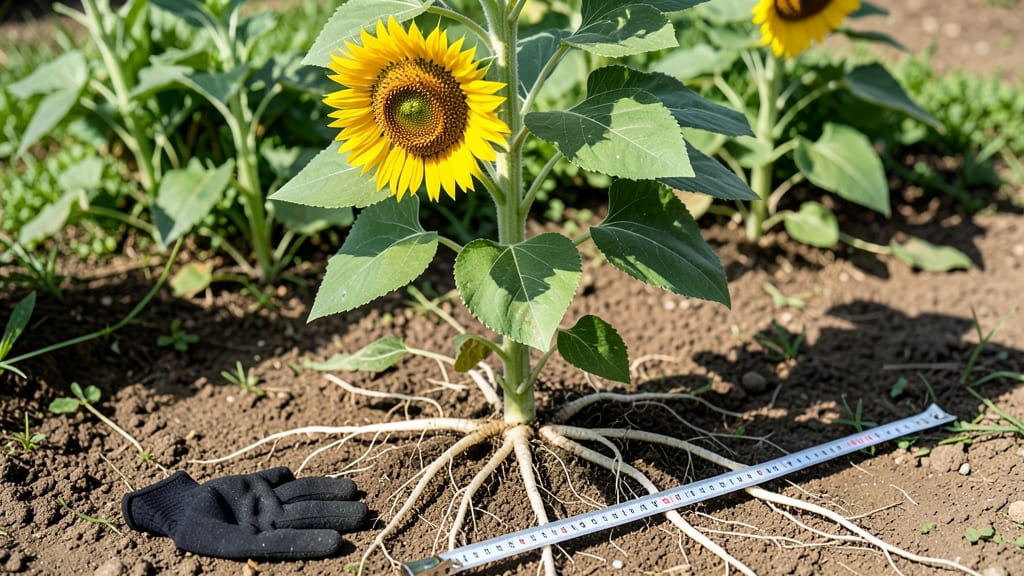
Sunflower roots grow surprisingly deep—often reaching 3 to 6 feet—to anchor those towering 🌻 stalks and access water in dry spells.
You might assume their massive height means shallow roots, but the opposite is true: their deep taproots make them drought-resistant and wind-firm once established. Understanding this depth can change how you plant, water, and even mulch your sunflowers.
From soil prep to spacing, root depth influences everything—including how often you need to water and whether your garden bed can handle their size. Let’s break down what this means for your 6a zone garden and how to give your sunflowers the best shot at thriving.
By the end, you’ll know exactly how deep to plant, when to step up your watering game, and how to troubleshoot if your sunflowers lean or wilt despite your best efforts.
Sunflower root depth explained: how deep do they grow?
Sunflowers may seem like they're all about their towering flower stalks, but their root systems are just as fascinating—and crucial for their growth. While the above-ground stems can reach heights of 3-15 feet, their roots dive just as deep, sometimes even deeper, to anchor the plant and access nutrients.
Understanding this root depth helps you optimize planting, watering, and soil prep for healthier sunflowers.
The average sunflower root depth ranges from 3 to 6 feet, though some varieties can extend even deeper, especially in loose, well-drained soils. Their root structure includes a primary taproot that grows straight down, supplemented by lateral roots spreading outward.
This dual system allows sunflowers to stabilize themselves while accessing water and nutrients from deep soil layers.
| Sunflower Type | Root Depth | Key Factors |
|---|---|---|
| Dwarf Varieties | 1.5–3 feet | Compact growth, shorter taproot |
| Semi-Dwarf Varieties | 3–5 feet | Balanced root-length ratio |
| Standard/Giant Varieties | 4–6+ feet | Deep taproot for stability |
| All Varieties | Lateral roots spread 2–3 feet wide | Absorb moisture from topsoil |
The taproot dominates the sunflower's root system, growing downward at a 45-degree angle in younger plants before straightening as it matures. This root can penetrate hardpan layers if the soil is loose enough, but compacted or rocky soil can restrict its growth.
Meanwhile, the lateral roots spread horizontally, forming a network that absorbs moisture and nutrients from the upper soil layers.
Soil moisture levels play a critical role in root development. Sunflowers thrive in well-drained soils with adequate moisture, as their roots need to penetrate deeply without encountering waterlogged conditions. In sandy soils, roots may grow deeper and faster, while clay soils can slow penetration due to compaction.
Amending clay with organic matter like compost can improve root growth by enhancing aeration.
As sunflowers mature, their roots continue to deepen, especially during the flowering stage when the plant demands more nutrients and water. By the time they reach full height, their roots can extend up to 6 feet deep, providing stability against wind and access to deep soil nutrients.
This is why sunflowers are often recommended for phytoremediation—they can pull contaminants from deep soil layers.
For gardeners, understanding root depth means adjusting your planting techniques. Space sunflowers at least 12–24 inches apart to allow their lateral roots room to spread without competing. Avoid planting in shallow containers unless you're growing dwarf varieties, as their roots will quickly outgrow the space.
Instead, opt for deep containers (18+ inches) or garden beds with loose, fertile soil.
Another key consideration is watering depth. Since sunflower roots dive deep, shallow watering won’t reach them. Instead, deep watering 1–2 times per week encourages roots to grow downward. Use a soaker hose or drip irrigation to deliver water directly to the root zone, avoiding surface evaporation.
Mulching around the base of the plant with straw or wood chips helps retain moisture and regulates soil temperature, further supporting root health.
If you're growing sunflowers in urban gardens or containers, choose dwarf or semi-dwarf varieties to match the limited root space. These varieties still develop deep roots relative to their size, making them ideal for smaller gardens.
For example, the 'Teddy Bear' variety grows only 1–3 feet tall but still sends roots 1.5–2 feet deep, making it perfect for patio planters.
Finally, pay attention to soil aeration. Compacted soil restricts root growth, so loosen the soil to a depth of 12–18 inches before planting. If your garden soil is heavy clay, consider raising beds or mixing in sand and compost to improve drainage and root penetration.
Healthy roots mean healthier sunflowers—so give them the depth they deserve!
Optimal soil conditions for sunflower root development
Sunflowers thrive when their roots can explore deep, nutrient-rich soil without restrictions. The ideal soil depth for sunflower roots should be at least 24-36 inches, allowing their taproots to penetrate freely.
Shallow soil or compacted layers can stunt growth, leaving your towering sunflowers vulnerable to wind damage and poor nutrient access.
Loamy soil is the gold standard for sunflower roots because it balances drainage and moisture retention. Sandy soils drain too quickly, while clay can suffocate roots by becoming waterlogged. The key is creating a well-aerated environment where roots can spread both vertically and laterally without resistance.
Sunflower roots can grow 3-6 feet deep, but if your soil is only 12 inches deep, roots will struggle to anchor. This leads to:
- Top-heavy plants that fall over in wind
- Stunted growth from limited nutrients
- Water stress during drought
Solution: Amend soil with compost and avoid tilling deeply to preserve root pathways.
Before planting, test your soil's drainage by digging a hole and filling it with water. If it drains within 1-2 hours, your soil is ideal.
If water pools after 4+ hours, add organic matter like compost or aged manure to improve structure. Permeable soil prevents root rot while ensuring consistent moisture for deep penetration.
To encourage deep root growth, avoid heavy fertilization early in the season. Instead, focus on mycorrhizal fungi—natural soil helpers that boost root exploration. Mix 1 cup of compost into the planting hole and water deeply after sowing.
This creates an inviting environment for roots to grow downward rather than spreading superficially.
Mulching with straw or wood chips helps maintain even soil moisture and temperature, which is crucial for root development. Apply a 3-inch layer around plants, keeping it 6 inches away from stems to prevent rot. This mimics natural conditions where sunflowers grow in prairie ecosystems with loose, fertile topsoil.
For container-grown sunflowers, choose pots with at least 18-inch depth and use a lightweight potting mix blended with perlite. This mimics the loose soil structure sunflowers need to thrive. Regularly check for root circling—a sign roots can't penetrate further—and repot if necessary to prevent stress.