
Flowers
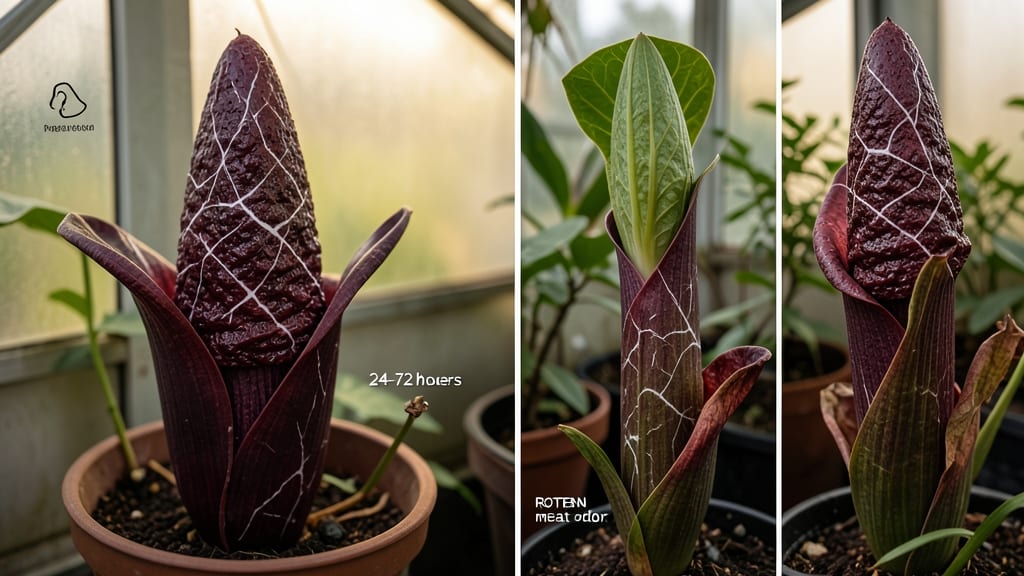
The corpse flower blooms for just 24 to 48 hours at its peak—though the full cycle from first scent to final wilt spans 5 to 7 days, making it one of nature’s most fleeting wonders.
Picture this: a towering 🌺 plant in your greenhouse, its massive leaf unfurling overnight, then—_BAM_—a putrid, rotting-carcass stench fills the air. That’s your one shot to witness the corpse flower in all its glory, and timing is everything.
Miss the window, and you’ll be left staring at a wilted spathe for months.
What makes this bloom so unpredictable? Unlike annuals or perennials, the corpse flower’s schedule depends on temperature, humidity, and even the plant’s age. A 6a zone grower might get a spring bloom, while others wait years—or never see one at all.
But if you’re lucky enough to have one, knowing the exact stages helps you plan your observation like a pro.
In this guide, I’ll break down the hour-by-hour timeline of each phase—from the first scent to the final collapse—plus the secret tricks to coax a longer (or at least more reliable) display. Ready to become the corpse flower whisperer?
Corpse flower bloom duration: exact stages and their timing
The corpse flower (Amorphophallus titanum) blooms for a remarkably short window—typically just 24 to 72 hours—but each phase is packed with dramatic changes. Unlike most flowers, its bloom cycle includes a pre-flowering buildup and a powerful, rotting scent that attracts pollinators.
Understanding these stages helps you prepare for the spectacle, whether you’re growing one or visiting a botanical garden during bloom season.
Most gardeners assume the flower stays open for days, but the visible bloom phase is often just 48 hours or less. The real show begins weeks earlier with the spathe swelling and the inflorescence emerging from the soil.
Even the infamous odor doesn’t last forever—it peaks during the 24-hour window when the flower is fully open and ready for pollination.
Here’s the exact timeline of a corpse flower’s bloom, from the first signs to the final wilt:
The inflorescence emergence is the first dramatic sign—a 3–6 foot stalk bursts from the soil like a spear. This happens 12–24 hours before the spathe fully unfurls. If you’re growing a corpse flower, this is your cue to monitor closely, as the bloom window is incredibly short.
Many gardeners miss the event entirely because they assume the plant is still dormant.
Once the spathe opens, the flower releases its cadaver-like odor, often compared to rotting meat or gym socks. This peak scent phase lasts just 12–24 hours and is the plant’s way of luring flies for pollination.
The smell can linger in a room for days, so if you’re observing one indoors, crack windows or use fans to ventilate the area.
After the scent peaks, the wilting phase begins within 12–36 hours. The spathe starts to droop, turning brown at the edges. This is when the flower’s pollination window closes, and the plant begins to shut down.
Some growers report the entire bloom collapses in as little as 6 hours if conditions aren’t ideal.
What surprises many is the post-bloom recovery. Even though the flower is gone, the plant isn’t dead—it’s recharging. Over the next 2–4 weeks, the corpse flower produces new leaves to store energy for its next (hopefully) bloom.
Since these plants often take 5–10 years to flower again, proper care during this recovery phase is critical for future blooms.
If you’re planning to witness a corpse flower in person, arrive early—many botanical gardens announce bloom dates weeks in advance. The National Tropical Botanical Garden in Hawaii, for example, has hosted corpse flower blooms where visitors could smell the flower from 50 feet away.
Pro tip: Bring a mask or strong air freshener—the scent is an acquired taste!
For those growing corpse flowers at home, document every stage with photos or videos. The pre-flowering buildup is just as fascinating as the bloom itself, with the spathe swelling like a balloon and the inflorescence stalk hardening overnight.
Some growers even weigh their plants daily during this phase to track the rapid growth spurt.
Remember, the corpse flower’s bloom is unpredictable—even in ideal conditions, some plants skip blooming entirely. But when it does happen, knowing the exact timing of each stage ensures you don’t miss a single moment of this once-in-a-lifetime event. 🌺
Factors that influence corpse flower bloom length
The corpse flower (Amorphophallus titanum) bloom duration can vary dramatically based on environmental conditions and care practices. While the average bloom lasts 24-72 hours, some factors can extend this to 3-5 days or shorten it to just 12 hours.
Understanding these variables helps you maximize your chances of witnessing the full spectacle if you're growing one yourself.
One of the most critical factors is temperature. These tropical plants thrive in 75-85°F (24-29°C) conditions. Cooler temperatures below 65°F (18°C) can slow down the blooming process, while extreme heat above 90°F (32°C) may cause the flower to wilt prematurely.
Mimicking their native Indonesian rainforest environment is key to prolonging the bloom.
Here are the top 5 factors that directly impact how long your corpse flower stays in bloom:
- 1. Temperature: Ideal 75-85°F (24-29°C) extends bloom by 24-48 hours. Below 65°F (18°C), blooms may last only 12-24 hours.
- 2. Humidity: 70-80% humidity prevents rapid wilting. Below 50% humidity, blooms may last only half as long.
- 3. Soil Moisture: Consistently moist (not soggy) soil supports longer blooms. Drought stress can shorten bloom time by 50%.
- 4. Plant Age: Mature plants (5+ years old) bloom 2-3 days longer than younger specimens. First blooms often last only 12-24 hours.
- 5. Light Conditions: Bright indirect light (40% sunlight) optimizes bloom duration. Direct sun can cause premature wilting within 12 hours.
Another often-overlooked factor is soil composition. Corpse flowers require well-draining, slightly acidic soil (pH 5.5-6.5) rich in organic matter. Poor drainage or alkaline soil can stress the plant, causing blooms to last less than 24 hours.
I recommend mixing 50% peat moss with 30% perlite and 20% compost for optimal results.
If you're growing a corpse flower indoors, humidity control becomes even more critical. Use a pebble tray with water or a humidifier to maintain 70-80% humidity around the plant. Without this, the bloom may last only 12-18 hours instead of the full 3-5 days possible under ideal conditions.
Finally, avoid physical disturbances during blooming. Even gentle touching can release pollen prematurely and shorten the bloom. If you're documenting the event, use a tripod with a remote shutter to capture photos without interrupting the flower's natural cycle.