
Watering
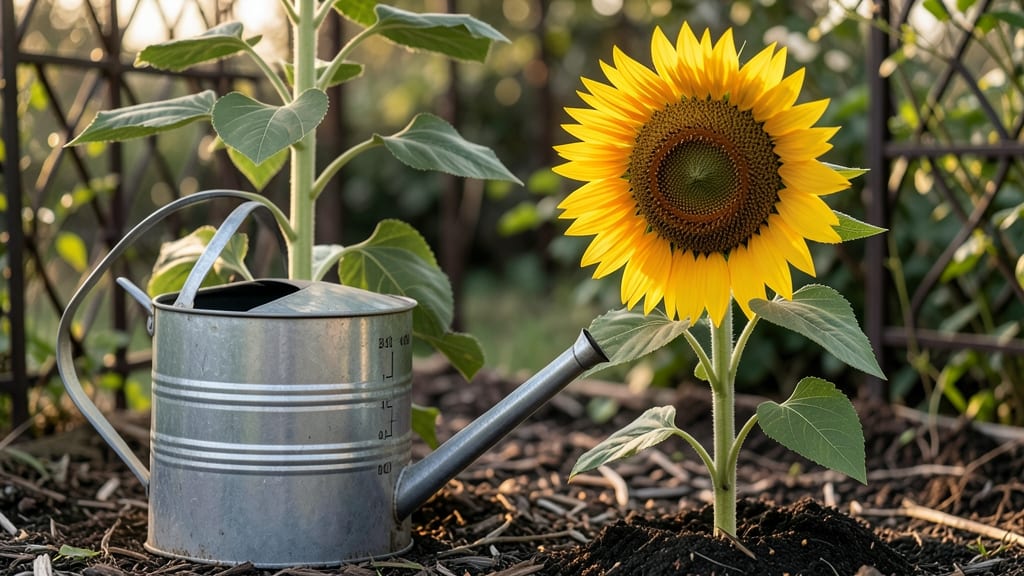
A sunflower needs about 1 inch of water per day during its active growing months to keep its roots happy and its blooms bright.
Picture this: your towering 🌻 sunflower wilting by noon, even though you watered it yesterday. That’s not laziness—it’s likely a thirsty root system begging for deeper hydration. Too much water, though, and you’ll smother those same roots, leaving your plant struggling to stand tall.
Whether you’re in USDA Zone 6a or a hotter climate, the key is consistency. Young seedlings need frequent, shallow drinks, while mature plants crave deep, infrequent soaks.
Below, I’ll break down the exact schedule for every growth stage, plus how to tell when your sunflowers are begging for a sip—or a break from the watering can.
You’ll learn how to adjust for sandy soil, clay, or heatwaves, spot the first signs of overwatering (yellow leaves, anyone?), and even automate your watering for hassle-free maintenance. No guesswork—just science-backed tips to keep your sunflowers thriving from seedling to showstopper.
Daily water requirements for sunflowers by growth stage: exact measurements
Sunflowers are thirsty plants, but their water needs change dramatically from seedling to full bloom. Understanding these stages helps you avoid underwatering (which stunts growth) or overwatering (which causes root rot).
Let’s break down the exact daily water requirements for each phase, including adjustments for soil type and climate conditions.
For seedlings, consistency is key. Their shallow roots need moist but not soggy soil. Overhead watering can spread disease, so aim for a gentle stream at the base.
In sandy soil, water evaporates faster, so you may need to water twice daily during heatwaves. Meanwhile, clay soil holds moisture longer, reducing frequency to every other day.
Here’s a precise breakdown of how much water sunflowers need at each stage, including environmental adjustments:
| Growth Stage | Daily Water Needs (inches) | Frequency | Soil Adjustments | Environmental Factors |
|---|---|---|---|---|
| Seedling (0-4 weeks) | 0.5–1 inch | Every 1-2 days | Sandy: +0.25 inch; Clay: -0.25 inch | Wind: +0.25 inch; Heat: +0.25 inch |
| Vegetative (4-8 weeks) | 1–1.5 inches | Every 2-3 days | Sandy: +0.5 inch; Clay: -0.5 inch | Wind: +0.5 inch; Heat: +0.5 inch |
| Flowering (8-12 weeks) | 1.5–2 inches | Every 3-4 days | Sandy: +0.75 inch; Clay: -0.75 inch | Wind: +0.75 inch; Heat: +0.75 inch |
| Seed Development (12+ weeks) | 2–2.5 inches | Every 4-5 days | Sandy: +1 inch; Clay: -1 inch | Wind: +1 inch; Heat: +1 inch |
Use the finger test to check soil moisture: Stick your finger 1–2 inches deep. If it feels dry, water immediately. For container-grown sunflowers, check daily—they dry out faster. In hot climates, increase water by 30–50% to prevent wilting. Mulch with straw to retain moisture and reduce evaporation.
Adjust for rainfall: If you get 0.5 inches of rain, skip watering that day. Use a rain gauge to track natural hydration. Overcast days? Reduce water by 20–30% since evaporation slows. Always water early morning to minimize fungal risks and maximize absorption.
Watch for leaf curl or yellowing, which signal underwatering. Conversely, mushy stems or mold mean overwatering. Sunflowers are resilient, but precise hydration ensures they reach their full height potential—some varieties grow over 12 feet!
Pro tip: Group sunflowers with companion plants like beans or marigolds. These help retain soil moisture while deterring pests. For drought-prone areas, consider drought-tolerant varieties like 'Moulin Rouge', which needs slightly less water.
Remember, deep watering is better than frequent shallow drinks. Aim for 6–8 inches deep per session to encourage strong root growth. With this schedule, your sunflowers will stand tall, vibrant, and ready to brighten your garden all season long. 🌻
Signs your sunflowers are overwatered or underwatered (and how to fix it)
Sunflowers 🌻 thrive on balance—too little water and their leaves droop like sad balloons, while too much turns their roots into soggy sponges. Learning to read their signals is key to keeping them happy and blooming.
Start by checking the soil moisture with your finger: it should feel damp but not dripping wet. If you’re unsure, observe their leaves and stems for subtle clues.
Yellowing leaves, especially on older foliage, often signal overwatering, but they can also indicate underwatering. The difference? Overwatered sunflowers develop mushy stems and a foul smell near the base, while underwatered ones feel crispy and dry. Pay attention to these early warning signs before they become irreversible problems.
Seedlings: ½ inch of water every 2-3 days (keep soil consistently moist). Mature plants: 1-1.5 inches of water every 3-5 days (deep soak, not frequent light watering). Flowering stage: Increase to 1.5-2 inches weekly (critical for bud development).
Pro Tip: Water at the base, not the leaves, to prevent fungal diseases like powdery mildew. Early morning is best—it gives foliage time to dry before nightfall.
If your sunflowers show yellowing leaves with green veins, they’re likely underwatered. This classic sign means the plant is struggling to transport water and nutrients. To fix it, give them a deep watering—aim for 6-8 inches deep—and mulch around the base to retain moisture.
Avoid shallow watering, which only wets the surface and encourages shallow roots.
Overwatered sunflowers, on the other hand, develop dark, mushy stems and drooping leaves that don’t perk up, even after watering. This is a red flag for root rot, a fungal infection caused by soggy soil.
Stop watering immediately and let the soil dry out for 2-3 days. If the stem feels soft or smells foul, prune the affected area with sterilized scissors to prevent spread.
For both issues, soil drainage is your best friend. Amend heavy clay soil with compost or perlite to improve aeration, and avoid planting sunflowers in low-lying areas where water pools. If you’re using containers, ensure pots have drainage holes and never let them sit in saucers of standing water.
Recovery takes patience. After correcting hydration, monitor your sunflowers closely for new growth. Healthy leaves should be deep green and firm, with no wilting or discoloration.
If you’ve lost a plant to overwatering, don’t despair—sunflowers grow quickly, and new seeds can be sown in 4-6 weeks for a second bloom cycle. 🌱