
Flowers
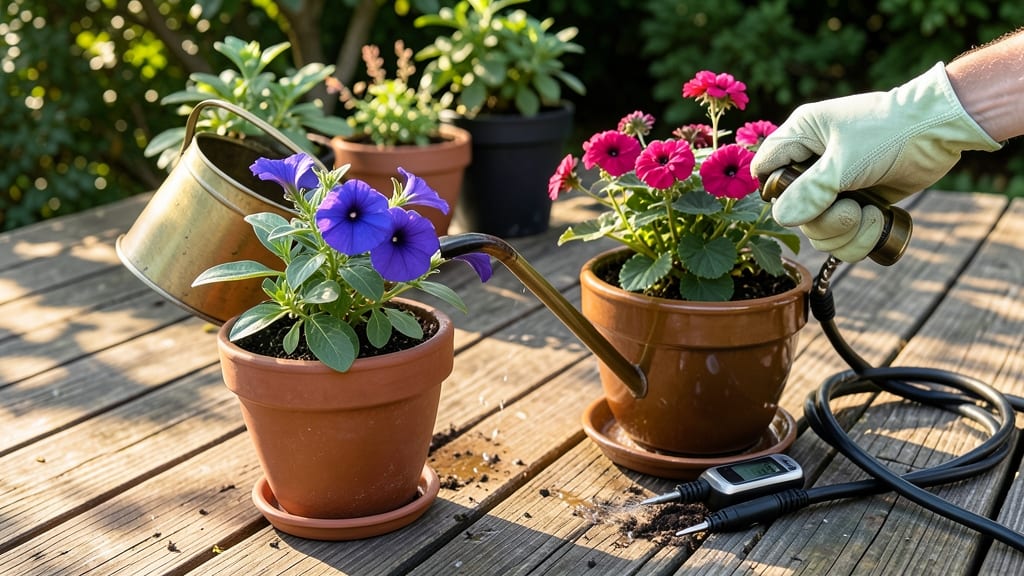
Watering potted flowers the right way means knowing how often to water flowers in pots—because too much or too little can send your plants straight to the compost pile.
Overwatering or underwatering potted flowers can kill them faster than pests or disease—yet most gardeners guess their watering schedule instead of following a science-backed approach.
Here’s the secret: it’s not about a rigid schedule but checking soil moisture at the right depth and adjusting for your plant’s needs, pot size, and even the season.
In this guide, I’ll walk you through the 3-zone soil test to nail your watering rhythm, seasonal tweaks, and how to spot when you’re doing it wrong before it’s too late.
The 3-Zone soil test method for perfect potted flower watering
Watering potted flowers feels like a guessing game—too much and roots rot, too little and blooms wilt. The 3-Zone Soil Test Method cuts the guesswork by checking moisture at the root level, where it matters most.
Unlike surface checks, this method accounts for pot size, soil type, and environmental factors like sun exposure and humidity. I’ve used this technique for years with geraniums, petunias, and even finicky orchids, and it’s saved more plants than I can count.
Here’s the secret: Most gardeners water based on a schedule, but plants don’t follow calendars—they respond to their immediate environment.
The 3-Zone Method divides your pot into three horizontal layers: the top 1 inch (surface), the middle 1-2 inches (active root zone), and the bottom 2-3 inches (critical root zone). By testing moisture in all three, you’ll know exactly when to water and how much to give.
This method works for clay pots, plastic containers, and even hanging baskets.
Before you start, grab a wooden skewer or moisture meter—both work. Insert the skewer into the soil at each zone and pull it out. If it comes out clean, the soil is dry. If it’s damp or wet, hold off on watering.
For small pots (under 6 inches), check daily in summer; for large pots (12+ inches), weekly checks often suffice. The key is consistency: always test the same zones at the same time of day.
Let’s break down the zones and what they tell you about your plant’s needs. The surface zone (0-1 inch) is where evaporation happens fastest. If it’s dry, it’s normal—this layer dries out quickly even in healthy pots.
The middle zone (1-2 inches) is where most roots thrive, and this is where you’ll find the sweet spot for moisture. The bottom zone (2-3 inches) is critical: if this stays soggy, roots suffocate; if it’s bone-dry, your plant is thirsty.
For succulents or drought-tolerant flowers, let the bottom zone dry completely before watering.
| Zone | Depth | Moisture Goal | What It Indicates | Action |
|---|---|---|---|---|
| Surface Zone | 0-1 inch | Dry (normal) | Evaporation layer | Ignore for watering |
| Middle Zone | 1-2 inches | Slightly moist | Active root zone | Water if dry |
| Bottom Zone | 2-3 inches | Moist but not soggy | Critical root zone | Water deeply if dry |
| All Zones | N/A | Soggy in bottom | Overwatering risk | Let dry; check drainage |
Environmental factors throw off even the best-laid plans. If your pots sit in full sun, the middle and bottom zones dry out faster—check them every other day in summer. Conversely, shady spots or high humidity slow evaporation, so you might only need to water every 5-7 days.
I once killed a fuchsia by overwatering in a humid bathroom; the 3-Zone Method would’ve caught the soggy bottom zone before it was too late. Pro tip: Group pots by size and sun exposure to streamline your checks.
Pot material changes the game. Terracotta pots dry out faster because they’re porous, while plastic pots retain moisture longer. For terracotta, test zones more frequently; for plastic, you can space out your checks.
If you’re using self-watering pots, the 3-Zone Method still applies—just skip the bottom zone test, as these pots are designed to keep that layer consistently moist. The middle zone is your best friend here; it tells you when to refill the reservoir.
Seasonal shifts demand adjustments. In spring and fall, when temperatures moderate, your watering frequency will naturally slow down.
I reduce checks to every 3-4 days during these seasons, even for sun-loving flowers. Winter watering is a whole other ballgame: most potted flowers enter dormancy, so I cut back to once a week or only when the surface zone feels dry.
The 3-Zone Method helps you avoid the pitfall of keeping winter pots too wet, which invites root rot and fungal diseases.
Signs of over- or under-watering often appear before your soil test reveals
Watering frequency chart for common potted flowers by season
Seasonal changes dramatically affect how often you should water your potted flowers. Outdoor pots in summer heat dry out faster than indoor pots in winter, while clay pots evaporate moisture quicker than plastic pots.
Let's break down the ideal watering schedule for popular flowers like petunias, geraniums, and fuchsias based on season and pot type.
For outdoor pots, morning watering is best to reduce evaporation and fungal risks. Indoor plants near windows or under grow lights need consistent moisture, while those in shaded rooms can go slightly longer between waterings.
Always check the top 1-2 inches of soil—if dry, it's time to water. Overwatering is the #1 killer of potted flowers, so never let pots sit in saucers of water.
Notice how clay pots require more frequent watering than plastic pots? Clay's porous nature wicks away moisture faster, while plastic retains it longer. For indoor flowers, reduce watering in winter when humidity drops and heating systems dry out the