
Watering
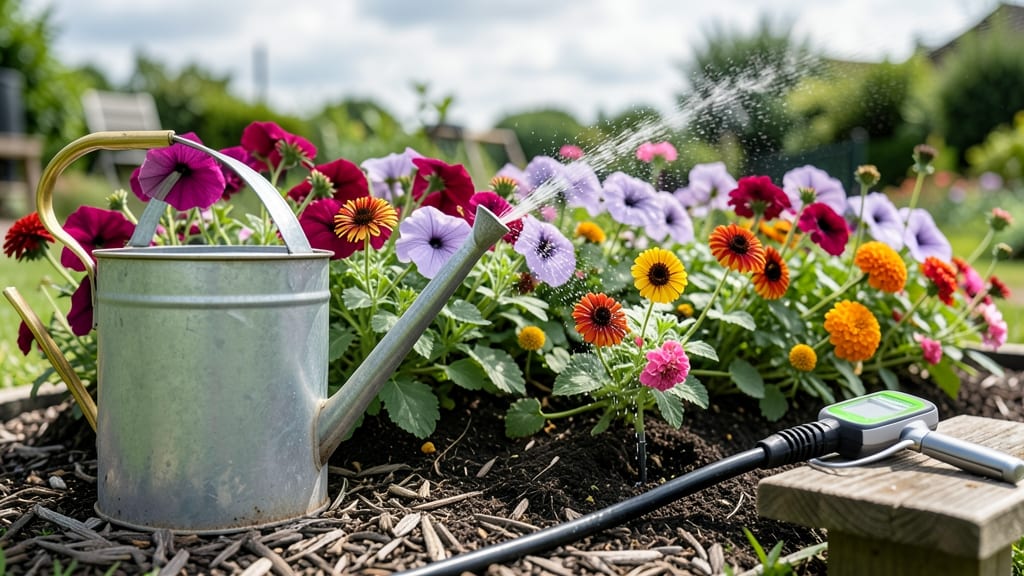
Watering your outdoor flowers the right way means knowing how often to water flowers outside—not guessing—because overwatering or underwatering can kill them faster than pests or disease.
Picture this: you’ve just planted 🌸 your dream garden, only to watch it wilt or rot because you didn’t know whether to water daily or every few days. The truth? Most flowers thrive on a schedule based on their type, soil, and climate—not a one-size-fits-all rule.
In this guide, I’ll break down the science-backed watering frequency for common outdoor flowers, from drought-resistant succulents to thirsty annuals. You’ll learn how to adjust for your 6a zone, spot signs of over- or under-watering, and save time with efficient methods like mulching and drip irrigation.
By the end, you’ll have a custom watering plan that keeps your flowers blooming all season—no more guesswork, just healthy, vibrant plants.
Science-backed watering schedule for 10 common outdoor flowers (by type)
Watering outdoor flowers isn't one-size-fits-all—your petunias need daily hydration while lavender thrives on neglect. The key lies in understanding each plant's root depth, bloom cycle, and drought tolerance.
Below, I’ve broken down the science-backed watering schedule for 10 popular flowers, including how often to water them based on their unique needs. This ensures your garden stays vibrant without wasting water or risking root rot.
Most gardeners overwater by default, assuming more is better. But annuals like marigolds wilt faster from soggy soil than from thirst, while perennials like coneflowers store moisture in deep roots. The solution? Water deeply but infrequently for established plants, and focus on consistent moisture for young seedlings.
Let’s dive into the specifics, starting with a quick comparison of high-water vs. low-water plants to set your expectations.
For annual flowers like petunias, aim for 1-2 inches of water per week during summer, splitting it into daily shallow waterings to keep the soil surface moist. These plants have shallow roots and can’t store moisture, so consistency is critical.
If you notice the leaves wilting by late afternoon, increase frequency to twice daily—but always water at the base, not the foliage, to prevent fungal diseases like powdery mildew.
Perennials like coneflowers and black-eyed Susans are far more forgiving. Their deep taproots (12-24 inches) allow them to access water stored underground, so you can reduce frequency to every 2-3 days once established.
The key here is deep watering: Use a soaker hose or drip irrigation to deliver 1.5 inches of water per session, encouraging roots to grow downward. Mulch with 2-3 inches of organic matter (like shredded bark) to retain moisture and suppress weeds.
If you’re growing drought-tolerant flowers like lavender, you’ll love how little attention they demand. These plants thrive on infrequent, deep waterings—every 7-10 days in summer—because their roots dive 24+ inches deep to find moisture.
Overwatering is their biggest enemy, so always check soil moisture 2 inches below the surface before watering. Pro tip: Group lavender with sedum or yarrow to create a low-maintenance, water-wise garden bed.
Bulbs like tulips and daffodils have a unique watering schedule tied to their growth cycle. After planting in fall, keep the soil slightly moist until roots establish (about 6 weeks). Once sprouts appear in spring, water **every 5-7
How to adjust your watering frequency for soil, climate, and season
Your outdoor flowers don’t need a one-size-fits-all watering schedule—soil type, climate, and season dramatically change their thirst levels. For example, sandy soil drains like a sieve, while clay soil holds moisture like a sponge.
Even the same plant in arid Arizona and humid Florida will demand different care. Let’s break down how to fine-tune your watering routine for peak bloom health.
Start by testing your soil moisture with your finger. Stick it 1-2 inches deep—if it feels dry, it’s time to water. In hot, dry climates, you might water daily in summer, while cool, rainy seasons could stretch watering to once a week.
The key is consistency: shallow, frequent watering stresses roots, but deep, infrequent watering encourages strong growth.
Adjust Your Watering by:
- 🌱 Soil Type: Sandy (water every 1-2 days), Clay (water every 3-5 days), Loam (water every 2-3 days)
- ☀️ Climate: Hot/Dry (morning watering), Humid (evening watering), Coastal (daily misting for delicate blooms)
- 🌡️ Season: Spring (increase frequency for new growth), Summer (daily deep watering), Fall (reduce gradually), Winter (minimal watering)
- 🌸 Plant Type: Succulents (every 7-10 days), Annuals (every 1-2 days), Perennials (every 3-4 days)
Seasonal shifts are critical. In spring, young flowers need frequent watering to establish roots, but by late summer, heat waves can dry soil in hours. My go-to trick? Use a moisture meter or the knuckle test—press your knuckle into the soil. If it springs back, water again.
Watch for wilting leaves or yellowing edges—these are red flags. Wilting in the morning signals underwatering, while yellowing at the base means overwatering. Adjust immediately: underwatered? Water deeply and mulch. Overwatered? Let the soil dry out completely before watering again.
Climate plays a huge role. In desert regions, water early in the morning to prevent evaporation, while humid areas may need evening watering to avoid fungal diseases. And don’t forget mulch—it’s like a free water-saving blanket that locks in moisture and regulates soil temperature.
For container-grown flowers, the rules change. Potted plants dry out 3x faster than in-ground ones, so check soil daily in summer. Group containers together to create a microclimate that retains moisture longer. Pro tip: Use self-watering pots or drip irrigation for hands-off care.