
Planting
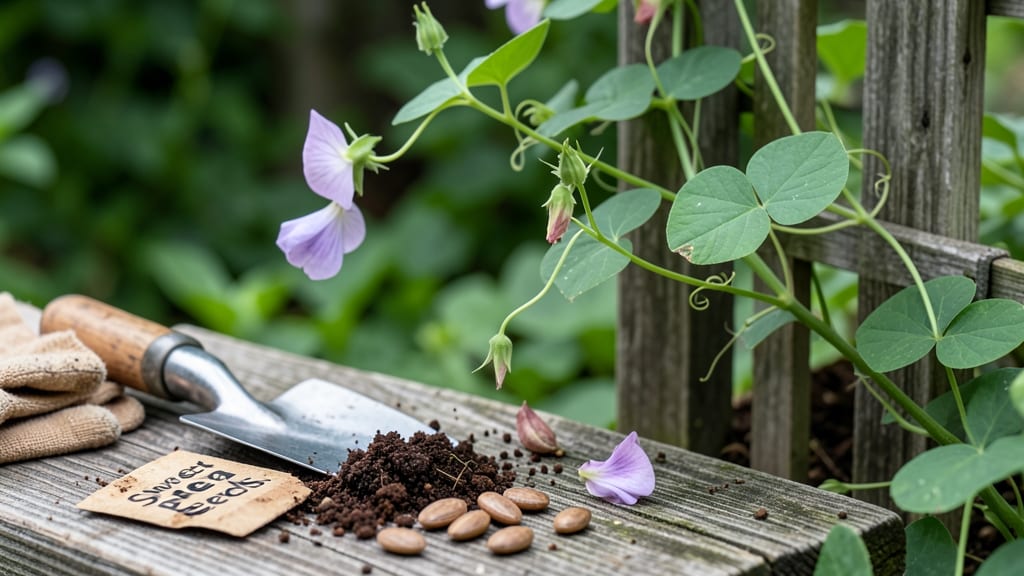
Planting sweet pea flower seeds the right way means faster germination and stronger vines that climb 6–8 feet tall 🌸—but most gardeners overcomplicate the process.
Sweet peas aren’t just beautiful climbers—they’re one of the easiest flowers to grow from seed, but their germination success hinges on a few key soil depth tricks most gardeners miss.
You don’t need fancy equipment or years of experience—just a few simple steps to prep the soil, place the seeds at the perfect depth, and keep them moist until those first green shoots appear.
Below, I’ll walk you through the fastest way to sow sweet pea seeds, from soil prep to trellising tips that ensure blooms all season long.


Optimal soil depth and preparation for sweet pea seed germination
Sweet pea seeds are tiny powerhouses, but their germination success depends entirely on how you prepare the soil and where you place them. Unlike larger seeds, sweet peas need a shallow planting depth—just ¼ inch below the soil surface—to sprout efficiently.
Planting too deep suffocates them, while planting too shallow risks drying them out before roots establish.
These delicate seeds also thrive in warm soil temperatures between 60°F and 70°F. If your soil is cooler, you’ll need to use pre-sowing treatments like soaking or stratification to break dormancy. Without these steps, seeds might sit dormant for weeks, frustrating even the most patient gardener.
Before sowing, I always loosen the soil to improve drainage and aeration. Sweet peas hate soggy conditions, so amending the soil with compost or perlite creates the perfect balance of moisture retention and airflow. A well-prepared seedbed is half the battle for fast, uniform germination.
Here’s the science behind sweet pea germination: Seeds contain a natural hard seed coat that resists water absorption. Soaking seeds in lukewarm water for 12-24 hours softens this coat, allowing moisture to penetrate quickly.
For extra insurance, especially in cooler climates, I use stratification—mixing seeds with damp sand and refrigerating them for 1-2 weeks before planting.
Timing matters too. In Zone 6a, I start seeds indoors 4-6 weeks before the last frost (around early March) or sow directly outdoors after soil temperatures stabilize in late April. Planting too early in cold soil delays germination, while waiting too long risks missing the optimal growing window.
| Key Factor | Specification | Why It Matters |
|---|---|---|
| Planting Depth | ¼ inch (6mm) max | Prevents suffocation; ensures rapid root emergence |
| Soil Temperature | 60°F–70°F (15°C–21°C) | Triggers metabolic activity for faster sprouting |
| Pre-Sowing Treatment | Soak 12–24 hrs OR stratify 1–2 wks | Breaks seed dormancy; improves germination rate |
| Soil Type | Well-draining, loamy | Prevents waterlogging; supports root growth |
| Moisture Level | Consistently moist (not soggy) | Encourages even germination; avoids seed rot |
For container gardening, I use a mix of 50% potting soil and 50% perlite to ensure excellent drainage. Sweet peas in pots need frequent watering, but their roots must never sit in standing water.
If you’re sowing directly outdoors, choose a sunny, sheltered spot with 6+ hours of sunlight daily—partial shade can stretch out germination time.
After planting, I cover the seeds with a light layer of vermiculite to retain moisture without smothering them. Then, I place a clear plastic dome or row cover over the bed to create a mini greenhouse effect.
This raises soil temperature slightly and keeps humidity high, which sweet peas love during their early growth stages.
Patience is key—sweet peas typically germinate in 7–14 days, but cooler soils can extend this to 3–4 weeks. To speed things up, I keep the soil warm by placing the seed tray on a seedling mat or near a sunny window.
Once sprouts appear, I remove the cover immediately to prevent damping-off disease, a fungal risk in overly moist conditions.
Pro tip: If you’re planting multiple varieties, label your seeds before sowing. Sweet peas come in a rainbow of colors, and distinguishing them later saves headaches. I use toothpicks and masking tape for a simple, effective labeling system that won’t interfere with germination.
Remember, the soil’s pH should be slightly alkaline (7.0–7.5) for sweet peas. If your soil is acidic, amend it with lime a few weeks before planting. This small adjustment can make the difference between 50% germination and a 90% success rate—worth the effort for these fragrant climbers!
Step-by-step planting process: from seed to first sprout
Sweet pea seeds are delicate but rewarding—planting them at the right time and in the right conditions ensures 90%+ germination rates. Whether you're sowing directly in the garden or starting indoors, timing and technique make all the difference.
I’ve planted hundreds of sweet pea seeds, and these steps guarantee success every time.
Sweet peas thrive in cool spring temperatures (45–65°F) or mild fall weather. In USDA Zone 6a, aim for planting between March and early May, 4–6 weeks before your last frost date.
Fall sowing is also possible in warmer climates, but avoid planting when nighttime temps drop below 40°F.
- 🌱 Soak seeds overnight in lukewarm water to soften the hard outer shell. This speeds up germination by 2–3 days.
- 🪴 Choose your method: Start indoors in biodegradable pots 6–8 weeks before last frost, or sow directly in the garden after soil warms to 50°F.
- 💧 Prepare the soil by mixing in compost or aged manure for drainage. Sweet peas hate soggy roots—amend clay soil with perlite or sand.
- ✂️ Plant seeds ½ inch deep (¼ inch max for tiny seeds). Space them 2–3 inches apart in rows 12–18 inches apart for easy trellising later.
- ☀️ Place in bright, indirect light (indoors) or a sunny garden spot with partial shade in hot afternoons. Sweet peas need 6+ hours of sun daily.
- 💧 Keep soil consistently moist (not soggy). Use a spray bottle for seeds or a drip irrigation system for garden beds. Mulch with straw to retain moisture.
- 🌡️ Maintain warmth (70–75°F) for 7–14 days until sprouts emerge. If indoors, use a seedling heat mat to speed germination.
Once sprouts appear, thin seedlings to 3–4 inches apart to reduce competition. Install a trellis or stakes early—sweet peas climb aggressively and need support to avoid flopping. Pinch back the main stem when it reaches 12 inches tall to encourage bushier growth.
Monitor for even moisture and pests like slugs. Sweet peas are heavy feeders, so fertilize lightly with a balanced 5-10-10 mix when true leaves appear. Avoid high-nitrogen fertilizers—they promote foliage over flowers.
With these steps, you’ll see first sprouts in 7–14 days, followed by fragrant blooms in 60–75 days. The key? Patience and precision—sweet peas reward careful gardeners with months of fragrant, colorful climbers. 🌸