
Flowers
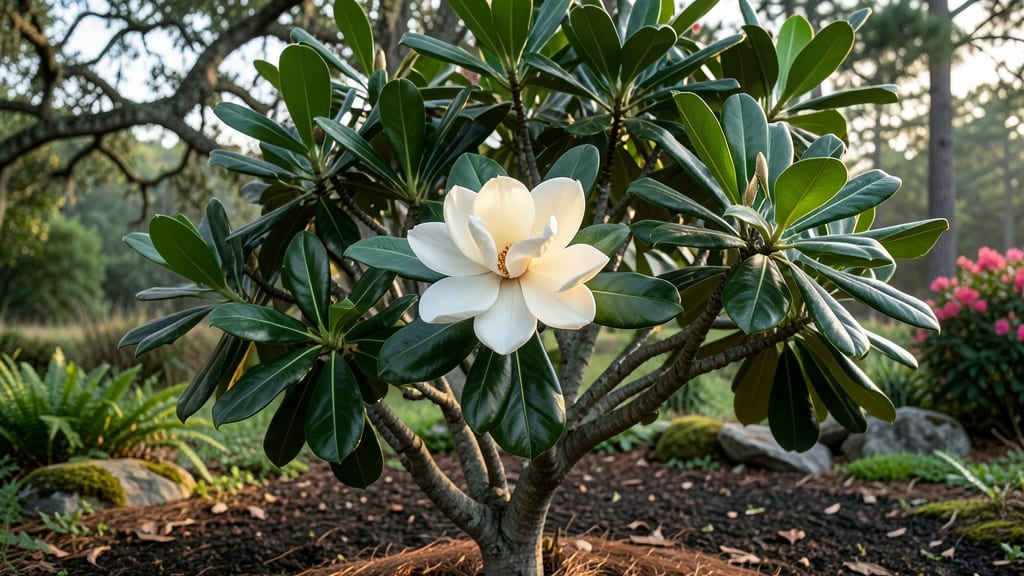
The Southern Magnolia flower size can reach up to 12 inches wide—that’s bigger than a dinner plate—making it one of the most dramatic blooms in nature 🌸. If you’ve ever stood beneath one in full bloom, you know why gardeners obsess over these trees.
Their flowers aren’t just stunning; they’re a statement piece in any landscape.
But here’s the catch: not all Southern magnolias produce equally massive blooms. Varieties like ‘Little Gem’ deliver compact yet impressive flowers, while ‘Southern Champion’ can push those petals to their absolute limits.
Where you live also plays a role—humid Southern climates tend to produce larger, more abundant blooms than drier regions.
In this guide, we’ll break down the flower size variations by cultivar, how climate impacts growth, and the care secrets to coax bigger, healthier blooms from your tree. Whether you’re planning a garden feature or just curious about these giants, you’ll find everything you need to know.
Ready to transform your yard with these showstopping blooms? Let’s dive into the details so you can choose—and grow—the perfect Southern magnolia for your space.

Southern magnolia flower size by variety: a detailed comparison
Southern magnolias (Magnolia grandiflora) are famous for their show-stopping blooms, but did you know their flower sizes vary dramatically by variety? The ‘Little Gem’ might produce tiny blooms compared to the ‘Bracken’s Brown Beauty’, but both deliver that signature creamy-white elegance.
Understanding these differences helps you select the perfect tree for your landscape—whether you want a compact specimen or a grand statement tree. Let’s dive into the specifics so you can plan your garden with confidence.
Flower size isn’t just about aesthetics—it also influences blooming frequency, tree structure, and even maintenance needs. A larger bloom, like those on the ‘Southern Champion’, can mean fewer flowers per branch but a more dramatic display.
Meanwhile, smaller varieties like ‘Dwarf Magnolia’ pack more blooms into a tighter space. Below, we’ll compare the most popular Southern magnolia cultivars, including their average bloom width, petal count, and growth habits, so you can make an informed choice for your yard.
🌸 Pro Tip: Always measure your space before planting. A 20-foot-tall tree like ‘Little Gem’ needs room to grow, while a 40-foot giant like ‘Teddy Bear’ requires a full backyard or park setting.
The ‘Teddy Bear’ variety stands out with its massive 12–14-inch blooms, making it a showstopper for large landscapes. These flowers are nearly football-sized and often have 20+ petals, creating a lush, textured appearance.
However, its slow growth rate means it takes decades to reach maturity, so patience is key if you’re planting one today. For smaller yards, the ‘Little Gem’ is a fantastic choice—its 6–8-inch blooms are proportional to its 20–25-foot stature, making it ideal for urban gardens or tight spaces.
Petal count also varies, with larger varieties like ‘Teddy Bear’ and ‘Southern Champion’ producing more petals per bloom. This doesn’t necessarily mean more flowers—just bigger, bolder individual blooms.
If you’re after a dense floral display, consider ‘Little Gem’, which produces more blooms per branch due to its smaller size. For a classic Southern look, the ‘Bracken’s Brown Beauty’ strikes a balance with 8–10-inch blooms and a 30–40-foot height, perfect for traditional
How region and climate affect Southern magnolia flower size
Your Southern magnolia’s flower size isn’t just a matter of genetics—it’s heavily influenced by where you live. In USDA Zones 9-10 (like Florida or Georgia), magnolias thrive year-round, producing blooms that can reach 10-12 inches wide.
But in cooler zones like Zone 7 or 8 (North Carolina, Virginia), flowers may only hit 6-8 inches due to seasonal stress. The difference? Humidity, temperature consistency, and winter chills all play a role.
High humidity in Southern states creates ideal conditions for magnolia growth, allowing flowers to develop fully. Meanwhile, trees in transitional zones often struggle with late spring frosts or hot summer droughts, both of which can stunt bloom size.
Even soil moisture varies—sandy soils in coastal areas drain too quickly, while clay soils in inland regions can suffocate roots, indirectly affecting flower potential.
🌱
| Region | USDA Zone | Avg. Bloom Size | Key Climate Factors |
|---|---|---|---|
| Florida, Georgia | 9-10 | 10-12 inches | High humidity, warm winters, no frost |
| South Carolina, Alabama | 8a-8b | 8-10 inches | Moderate humidity, occasional light frost |
| North Carolina, Virginia | 7a-7b | 6-8 inches | Cooler winters, variable spring temps |
| Louisiana, Mississippi | 8a-9a | 9-11 inches | High heat, high humidity, minimal frost |
In Zone 9-10, Southern magnolias experience year-round growth, allowing flowers to mature fully before blooming. For example, a ‘Bracken’s Brown Beauty’ in Florida might produce blooms 20% larger than the same tree in North Carolina.
The key difference? Winter chilling hours—too few (like in Zone 10) can delay blooming, while too many (like in Zone 7) can stress the tree.
Cooler regions also face spring frost risks, which can damage emerging buds before they fully develop. I’ve seen ‘Little Gem’ magnolias in Virginia produce smaller, fewer blooms in years with late frosts compared to their Florida counterparts.
To mitigate this, plant windbreak barriers or choose frost-resistant cultivars like ‘Elite’ or ‘St. Mary.’
Even within a single state, microclimates matter. A magnolia in coastal Georgia (high humidity, mild winters) will outperform one in inland Alabama (hotter summers, drier air). If you’re in a transitional zone, mulching deeply (3-4 inches) and watering consistently can help compensate for climate challenges and encourage larger blooms.
🌿