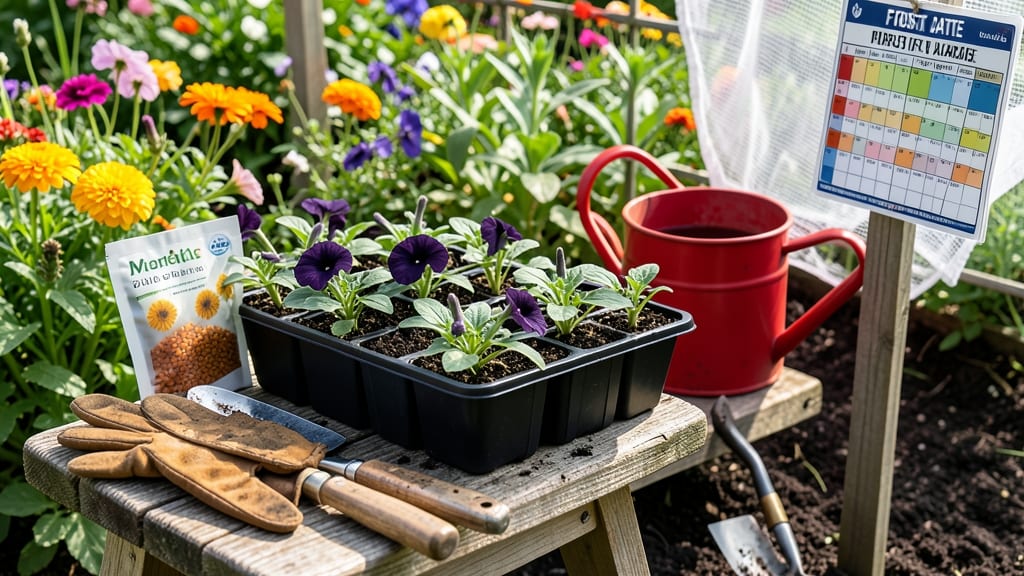
You can plant flowers in Ohio after the last frost date—typically mid-April to early May for most of the state, but timing shifts by zone and microclimate.
Ohio’s unpredictable spring weather can turn a beautiful flower garden into a frost-killed disappointment—unless you know the exact planting windows for your zone. A late freeze in April or a false spring can leave your 🌸 blooms struggling, while planting too early risks stunted growth.
This guide breaks down Ohio’s frost-free windows by region, from Toledo’s shorter season to Columbus’s slightly longer stretch, plus the best flowers for each season. Whether you’re sowing annuals, perennials, or bulbs, we’ll help you avoid common mistakes and extend your bloom time.
You’ll learn how to read frost forecasts, prep your soil for Ohio’s clay-heavy earth, and choose varieties that thrive in 6a-6b zones—so you can enjoy a vibrant garden from spring to fall.
Jan
❄️
Feb
❄️
Mar
🌱
Apr
🌱
May
🌸
Jun
☀️
Jul
🌱
Aug
🌸
Sep
🌸
Oct
🌱
Nov
🍂
Dec
❄️
Ohio flower planting dates by hardiness Zone (5a-6b)
Ohio spans USDA hardiness zones 5a through 6b, meaning frost dates vary dramatically from Toledo’s Zone 5b (shorter frost-free season) to Columbus’s Zone 6a (longer growing window). Timing your flower planting correctly ensures vibrant blooms—not frost-killed seedlings. The key? Knowing your last spring frost and first fall frost dates.
In Zone 5a (e.g., Youngstown, Akron), the average last frost arrives around April 25, while Zone 6b (e.g., Cincinnati, Dayton) typically sees frost-free conditions by April 10.
Fall planting windows also shift: Zone 5a must plant by September 1, while Zone 6b can extend until September 20. These differences matter for annuals, perennials, and bulbs alike.
Late-spring freezes—common in Ohio’s valleys and low-lying areas—can strike as late as May 15. Even Zone 6b isn’t immune. To protect tender warm-season flowers like zinnias or marigolds, wait until May 20 in northern Ohio or May 1 in southern regions.
For cool-season flowers (e.g., pansies, snapdragons), you can plant as early as March 15 in Zone 6b, but Zone 5a gardeners should wait until April 1.
Ohio’s microclimates add another layer of complexity. Urban areas like Columbus often warm up faster than rural zones, while Appalachian foothills (e.g., Athens) can see frost 2 weeks later. Check local NOAA frost alerts or use the Ohio State University Extension’s frost date maps to refine your timeline.
Even a 1-week delay can mean the difference between thriving petunias and wilted geraniums.
| Zone |
Last Spring Frost |
First Fall Frost |
Safe Planting Window (Annuals) |
Fall Planting Window (Annuals) |
Notes |
| 5a (Youngstown, Akron) |
April 25 |
October 20 |
May 15–June 1 |
August 15–September 1 |
Wait until May 20 for warm-season flowers; use row covers. |
| 5b (Toledo, Mansfield) |
April 20 |
October 10 |
May 1–May 15 |
August 1–September 10 |
Lake-effect delays frost; monitor NOAA alerts. |
| 6a (Columbus, Dayton) |
April 10 |
October 25 |
April 20–May 10 |
August 15–September 20 |
Urban areas warm faster; plant cool-season flowers by March 15. |
| 6b (Cincinnati, Lexington) |
March 25 |
November 5 |
April 1–April 15 |
August 1–October 1 |
Longest season; ideal for
Best flowers to plant in Ohio by season (cool vs. warm season)
Ohio’s four distinct seasons create perfect conditions for seasonal flower planting, but timing is everything. Cool-season blooms thrive in spring and fall, while warm-season favorites need summer heat to shine. Knowing which flowers to plant—and when—can extend your garden’s bloom time from early spring to late fall.
In Ohio, cool-season flowers like pansies and snapdragons handle light frosts and even snow, making them ideal for early spring or fall planting.
Meanwhile, warm-season flowers such as zinnias and marigolds need consistent warmth and won’t tolerate frost, so they go in after last frost dates—typically mid-April to early May.
🌱 Ohio Seasonal Flower Planting Guide
- 🌸 Early Spring (March–April): Plant cool-season flowers like pansies, violas, and snapdragons. These handle light frosts and bloom early for colorful spring gardens.
- ☀️ Late Spring/Early Summer (May–June): Wait until after last frost (usually mid-May) to plant warm-season favorites such as zinnias, marigolds, and petunias for summer-long blooms.
- 🍂 Fall (August–September): Replant cool-season flowers like asters, chrysanthemums, and calendula for autumn color before first frost (typically October 15).
- 🌿 Succession Planting Tip: Stagger plantings every 2–3 weeks to ensure continuous blooms from spring to fall. For example, plant marigolds in June and again in July for extended color.
- 🌡️ Ohio-Specific Varieties: Choose drought-tolerant flowers like coneflowers or heat-loving zinnias to thrive in Ohio’s humid summers and variable springs.
For spring planting, start with pansies and sweet alyssum—they’ll brave cool temperatures and even light frosts. These cool-season champions can be planted as early as March in most of Ohio, giving you early-season color when little else is blooming.
Once last frost passes (usually mid-May), switch to warm-season flowers like zinnias, sunflowers, and cosmos. These heat-lovers need consistent warmth to thrive, so don’t rush them into cool soil—wait until soil temps reach 60°F or higher for best results.
Fall is your second chance for cool-season blooms. Plant mums, asters, and calendula in late August to September to enjoy autumn color before first frost. These flowers not only add seasonal interest but also attract pollinators late in the year.
Pro tip: Use succession planting to keep your garden blooming nonstop. For example, plant marigolds every 2 weeks from June to August—this ensures continuous blooms and pest control (marigolds repel many garden pests!).
★★★★★4.6(13 reviews)
|