
Companion Plants
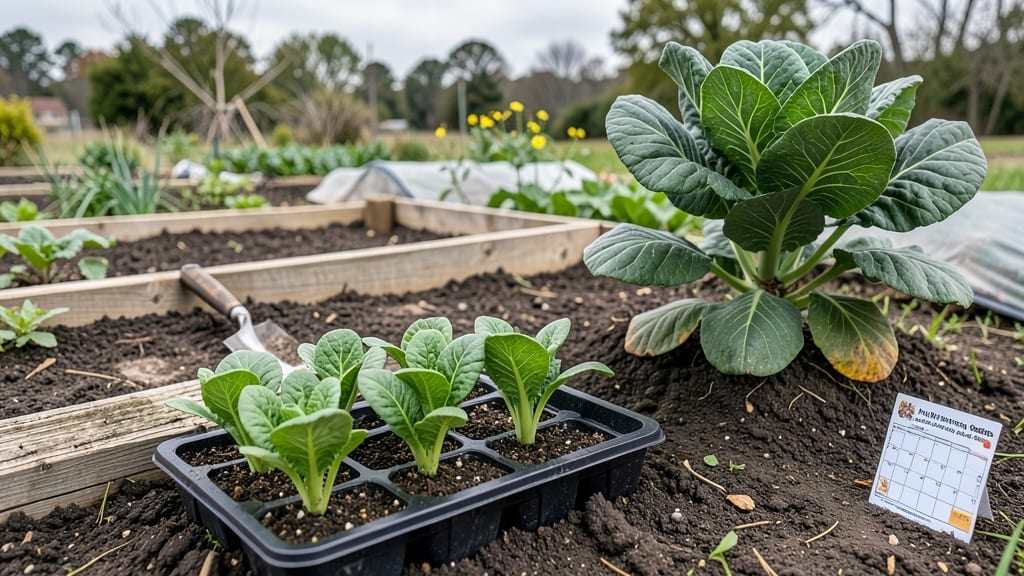
Planting collards in Georgia at the right time means the difference between tender, sweet greens and bitter, bolted disappointment.
Georgia’s warm climate lets you grow 🥬 collards almost year-round—but timing is everything to avoid bolting, pests, and tough flavors. Whether you’re in the Piedmont’s cooler hills or the Coastal Plain’s humidity, the frost-free schedule keeps your harvests coming from fall through spring.
Most gardeners in Zones 7b-8b start their fall crop in late summer (August–September) and their spring crop in early March, but there’s a trick to summer planting too: heat-tolerant varieties like ‘Georgia Southern’ can handle the mid-year heat if you sow them early enough.
Below, I’ll break down the exact planting windows for your region, how to protect young plants from Georgia’s unpredictable frosts, and the one mistake that ruins more collard harvests than any other.
Georgia collard planting calendar: best months by microclimate
Georgia’s three distinct climate zones—North (Zone 7a), Central (Zone 8a), and South (Zone 8b)—create unique frost-free windows for collards. In North Georgia, cooler nights mean earlier fall harvests, while South Georgia extends growing into late spring.
Heat-tolerant varieties like 'Georgia Southern' or 'Top Bunch' thrive in summer when paired with shade cloth.
Timing is critical: Plant too early, and collards bolt in summer heat; too late, and you miss the sweet flavor after frost. My Zone 7a garden yields tender greens from October to December, while Zone 8b extends harvests until March.
Let’s break down the ideal planting schedule for each microclimate.
⚠️ NON-NEGOTIABLE: Always check your local last frost date (typically April 15 in North Georgia, March 15 in South Georgia) and adjust by 6-8 weeks for fall planting.
For North Georgia (Zone 7a), aim to plant collards in early March for spring harvests or mid-August for fall. The cooler climate lets you avoid summer bolting, but shade cloth (30-50%) is a must if extending into late summer.
My Zone 7a garden produces sweeter leaves after the first light frost in October, so I always plant 6 weeks before.
In Central Georgia (Zone 8a), the extended growing season lets you try two plantings: once in late February and again in mid-July. Use heat-tolerant varieties like 'Top Bunch' for summer success. I’ve found that drip irrigation keeps roots cool during 90°F+ days, preventing bolting.
South Georgia’s Zone 8b climate is the most forgiving, with year-round planting potential. Start seeds in February for spring harvests or June for fall.
My South Georgia plants often survive mild winters, but I still protect them with row covers after the first frost to extend harvests into February or March.
Pro tip: Succession plant every 2 weeks in spring and fall to ensure a continuous harvest. Space plants 12-18 inches apart in well-draining soil with a pH of 6.0-7.0. Amend heavy Georgia clay with compost to improve drainage and prevent root rot.
Watch for cabbage worms and aphids, which thrive in Georgia’s humidity. I use neem oil or row covers to deter pests without chemicals. Mulch with straw to retain moisture and suppress weeds—critical during Georgia’s hot, dry summers.
Finally, don’t forget: Collards taste sweeter after frost! In North Georgia, this happens by mid-October, while South Georgia enjoys milder winters with harvests lasting until March. Plan your planting schedule now to enjoy homegrown greens all season long.
🌱
How to extend your collard harvest: succession planting & cold protection
Collards thrive in Georgia’s mild winters, but summer heat can turn them bitter or cause bolting. The key to a long harvest is succession planting and smart cold protection.
By using shade cloth, row covers, and companion plants, you can enjoy fresh collards from late summer through winter—even when temperatures dip.
Start by planting heat-tolerant varieties like 'Champion' or 'Georgia Southern' in late August to avoid the worst summer heat. These varieties handle 90°F+ temperatures better than standard types. For a fall harvest, follow up with transplants in September to replace any struggling early plants.
- 1 Late Summer Planting (Aug-Sept): Use shade cloth (30-50%) to protect seedlings from intense heat while establishing roots. Plant in partial shade if possible.
- 2 Fall Succession (Sept-Oct): Add transplants every 2-3 weeks until mid-October to ensure a steady supply. Space plants 12-18 inches apart for optimal airflow.
- 3 Frost Protection (Nov-Jan): Use floating row covers or lightweight blankets on nights below 32°F. Collards actually sweeten after frost, so don’t rush to harvest!
- 4 Companion Plants: Pair collards with onions, garlic, or radishes to deter cabbage worms. Avoid planting near tomatoes or peppers, which compete for nutrients.
- 5 Winter Care: Mulch with straw or leaves to insulate roots. In Zone 7a, collards may survive light freezes but benefit from hoop houses in harsh winters.
For pest control, rotate companion plants every few weeks to confuse insects. Dill or borage near collard beds attract beneficial parasitic wasps that prey on pests. If aphids appear, blast them off with a strong stream of water in the morning to avoid fungal issues.
Harvest leaves outer to inner to keep plants productive. In winter, young leaves are sweeter and more tender. If collards bolt in spring, cut the flower stalks to encourage new leaf growth. With these strategies, you’ll enjoy homegrown collards for 8+ months—far longer than the typical 3-month window!
Pro tip: Save seeds from your best heat-tolerant plants for next year’s garden. Georgia’s climate is warming, so selecting for localized heat resistance will pay off in future harvests. 🌱