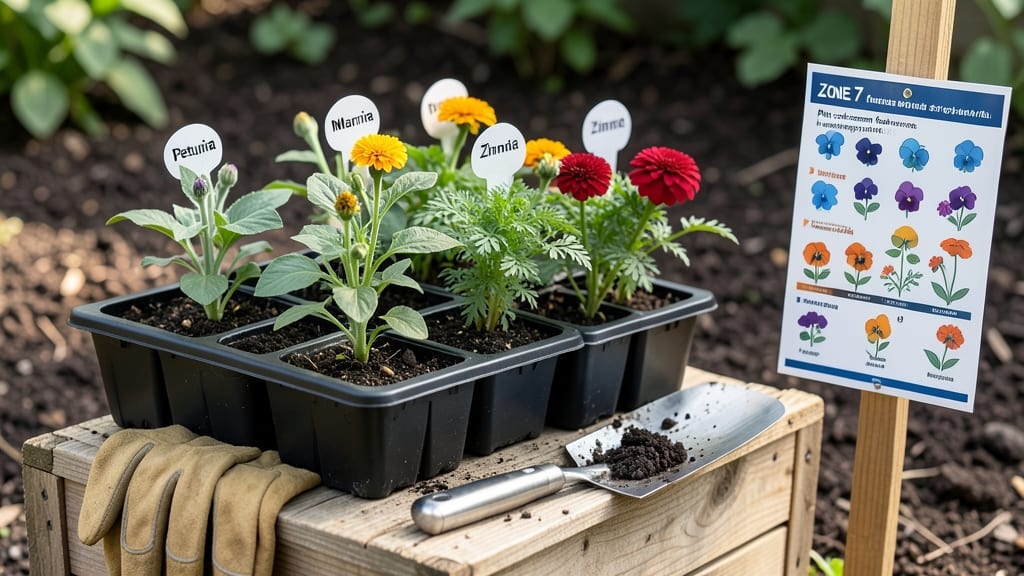
Planting flowers in Zone 7 at the right time means the difference between a garden bursting with color and one that never quite takes off.
Picture this: you’ve spent weeks preparing your soil, choosing the perfect blooms, and even bought frost cloth—only to watch them wilt under an unexpected late frost. That’s why timing is everything in Zone 7, where the window between last and first frost is tight.
Spring is your best bet for annuals like marigolds and pansies, but perennials like daylilies can handle a fall start too. The key? Plant annuals after your March 15 average last frost, and get perennials in the ground 6-8 weeks before November 15, when the first frost typically hits.
Below, I break down the exact months to plant, how to adjust for unpredictable weather, and which flowers thrive in each season—so you can enjoy blooms from spring through fall without the guesswork.
🌸
When to Plant Flowers
Jan
❄️
Feb
🌱
Mar
🌸
Apr
🌸
May
🌸
Jun
🌱
Jul
☀️
Aug
☀️
Sep
🍂
Oct
🍂
Nov
🍂
Dec
❄️
Zone 7 flower planting calendar: exact spring and fall timing by month
Getting your Zone 7 flower planting timing right is everything—one week too early or late can spell disaster for frost-sensitive blooms. Unlike cooler zones, Zone 7 spans two sub-zones (7a and 7b), with Atlanta's humid summers and Denver's dry air creating wildly different conditions.
Let's break down the exact planting windows for annuals, perennials, and bulbs by month, including regional adjustments for your specific microclimate.
Spring planting in Zone 7 kicks off after your last frost date, typically between mid-March (7b) and late April (7a). Fall planting, on the other hand, requires 6-8 weeks before first frost—usually mid-September to early October.
The key? Soil temperature must stay above 50°F (10°C) for spring plantings and below 80°F (27°C) for fall to avoid heat stress.
Here's your Zone 7 planting calendar with exact timing, broken down by flower type and regional variations:
| Month |
Annuals (Direct Sow) |
Annuals (Transplant) |
Perennials |
Bulbs |
Zone 7a vs 7b |
| February |
Start hardy annuals indoors (pansies, snapdragons) |
None (too cold) |
Divide perennials (peony, iris) |
Plant spring bulbs (tulips, daffodils) |
7b: Early Feb | 7a: Mid-Feb |
| March |
Direct sow cool-season annuals (lettuce, calendula) |
Transplant pansies, violas (7b only) |
Plant early perennials (bleeding heart, lungwort) |
None (wait for soil warmth) |
7b: Early March | 7a: Late March |
| April |
Direct sow warm-season annuals (marigolds, cosmos) |
Transplant tomatoes, petunias (after last frost) |
Plant heat-loving perennials (daylilies, coneflowers) |
Plant summer bulbs (dahlias, cannas) |
7b: Mid-April | 7a: Late April |
| May |
Direct sow late bloomers (zinnia, sunflower) |
Transplant tender perennials (salvia, lavender) |
Establish new perennials (black-eyed Susan) |
None (focus on maintenance) |
Both zones: After May 15 |
| September |
Direct sow cool-season annuals (stock, sweet alyssum) |
Transplant fall-blooming perennials (mums, asters) |
Divide crowded perennials (hostas, sedum) |
Plant spring bulbs (tulips,
Best flowers to plant in spring vs. fall for Zone 7 success
Choosing the right flowers for Zone 7 depends entirely on whether you're planting in spring or fall. Spring brings warmth-loving annuals that thrive after the last frost, while fall offers a chance to establish cold-hardy perennials and bulbs that bloom early next year.
My garden has seen the most success with this seasonal strategy—spring for bold colors and fall for long-term beauty.
For spring planting, focus on heat-tolerant annuals like marigolds and zinnias, which bloom nonstop from May through October. These sun-lovers handle Zone 7's summer heat like champions.
Meanwhile, fall planting is your secret weapon for perennials like coneflowers and black-eyed Susans, which establish roots before winter and reward you with 3-4 weeks of extra blooms the following season.
Spring vs. Fall Planting: Pros & Cons
Spring Planting
- ✅ Faster blooms (6-8 weeks)
- ✅ Wide color variety (annuals)
- ✅ No winter stress for seedlings
- ⚠️ Limited timeframe (after last frost)
- ⚠️ Pests thrive in warm soil
Fall Planting
- ✅ Longer root growth before winter
- ✅ Lower pest pressure
- ✅ Early spring blooms (bulbs)
- ⚠️ Slower initial growth
- ⚠️ Timing critical (6-8 weeks before frost)
My top spring picks include cosmos (drought-tolerant and self-seeding) and petunias (prolific bloomers in containers). For fall planting, I swear by tulip bulbs (plant by October 15 for spring color) and chrysanthemums, which handle light frosts beautifully.
The key? Soil temperature—spring plants need 60°F+ soil, while fall perennials thrive when soil cools to 50-60°F.
Don't overlook bulbs like daffodils and crocuses—they're perfect for fall planting in Zone 7. These cold-hardy champions push through snow for early spring color. I've seen daffodils bloom in March even after a 20°F night—their secret?
A 6-inch deep planting zone that insulates roots. For maintenance, mulch bulbs with 3 inches of straw after planting to protect them from freeze-thaw cycles.
For color longevity, pair spring annuals with fall perennials. For example, plant geraniums in May (they bloom until frost) alongside Russian sage in September (which blooms next summer).
This layered approach ensures nonstop color from May to November. My Zone 7 garden stays vibrant year-round because of this simple strategy.
Remember: Watering habits shift with seasons. Spring seedlings need daily watering until established, while fall perennials only require weekly deep watering once roots are down. Use a moisture meter to check soil—spring soil should stay damp, but fall soil can be slightly drier as plants prepare for dormancy.
★★★★★4.6(2 reviews)
|