
Plants
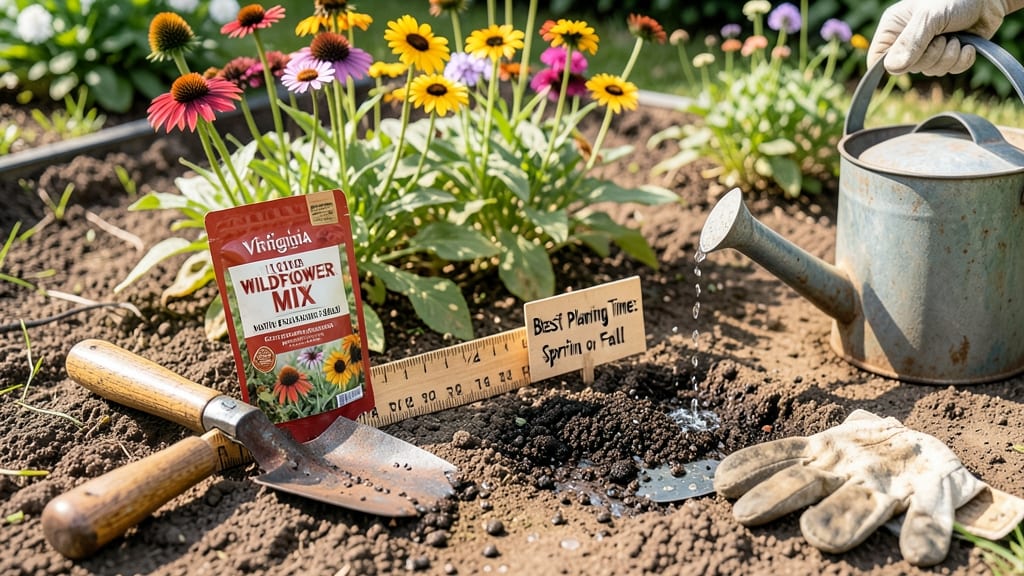
Planting wildflower seeds in Virginia at the right time means the difference between a meadow bursting with color and a patch of dirt that barely sprouts.
If you’ve ever waited all spring for blooms that never came—or watched seeds vanish without a trace—you’re not alone. The key isn’t just when you plant but how Virginia’s USDA Zones 7a/7b and microclimates shift the ideal window from late summer to early spring.
Wildflowers 🌼 thrive when sown just before winter rains or as soon as the soil warms in March, but timing wrong can mean missed seasons or weak growth.
Below, I’ll break down the exact months to plant, how to prep soil for Virginia’s varied regions, and the seed mixes that guarantee the best blooms from Piedmont to the Coastal Plain.
You’ll learn how to read your local frost dates, adjust for humidity, and keep seeds moist without drowning them—so your wildflower patch doesn’t just survive, but stuns.
Best planting months for wildflower seeds in Virginia’s Zone 7a/7b
Planting wildflower seeds in Virginia’s Zone 7a/7b requires timing precision to ensure vibrant blooms and strong root establishment. The ideal window spans from late summer to early fall (August–October) or early spring (March–April), aligning with natural rainfall patterns and soil temperatures.
Missing these windows can lead to poor germination or weak growth, especially for native Virginia species like Black-Eyed Susans and Purple Coneflowers.
Fall planting is often preferred because cooler temperatures and consistent moisture help seeds germinate without competing with summer heat stress. However, early spring planting works well for species like Virginia Bluebells, which thrive in cooler conditions. Understanding these seasonal cues is key to maximizing your wildflower meadow’s potential.
Regional variations within Virginia further refine planting strategies. The Piedmont region (e.g., Richmond, Charlottesville) typically enjoys slightly warmer fall soils, while the Coastal Plain (e.g., Norfolk, Hampton Roads) may experience earlier frosts. Adjusting your schedule by 1–2 weeks based on local microclimates can make all the difference in seedling success.
Here’s a quick reference to help you plan:
| Planting Window | Best For | Soil Temp | Key Species |
|---|---|---|---|
| Late August–September | Fall bloomers, drought-tolerant mixes | 60–75°F | Coreopsis, Goldenrod, Aster |
| October–Early November | Early spring bloomers, perennial mixes | 50–65°F | Virginia Bluebells, Bloodroot, Trillium |
| March–Early April | Spring ephemerals, shade-tolerant species | 45–60°F | Wild Columbine, Dutchman’s Breeches |
| Mid-April–May | Summer-long bloomers, pollinator mixes | 65–80°F | Black-Eyed Susan, Coneflower, Butterfly Weed |
For Zone 7a (colder microclimates like the Blue Ridge Mountains), aim for September planting to avoid early frosts. In Zone 7b (warmer areas like the Shenandoah Valley), you can extend fall planting into early November.
Always check your last frost date—typically around March 15—to avoid planting too early when soils are still cold.
Preparing your soil is just as critical as timing. Loosen the top 2–3 inches of soil to improve seed-to-soil contact, then lightly rake to create a fine, textured surface. Avoid burying seeds deeper than 1/4 inch, as most wildflower seeds need light to germinate.
A light mulch of straw or leaves helps retain moisture during the critical germination phase.
Watering plays a pivotal role in early growth. After sowing, keep the soil consistently moist (not soggy) for the first 4–6 weeks. Use a gentle spray nozzle to avoid displacing seeds, and water in the early morning to reduce evaporation.
Once seedlings emerge, reduce watering to once weekly to encourage deep root growth.
Don’t overlook the importance of seed selection for your region. Mixes labeled for Virginia native wildflowers will thrive with minimal care, while exotic varieties may require more attention.
For example, Black-Eyed Susans and Purple Coneflowers are hardy and adaptable, while Virginia Bluebells prefer moist, woodland settings. Always choose seeds tested for your specific USDA Zone.
Finally, consider succession planting for year-round color. Sow a mix of early spring bloomers (like Bloodroot) in fall, summer favorites (like Butterfly Weed) in early spring, and fall/winter interest plants (like Goldenrod) in late summer. This strategy ensures your garden stays lively from March through October.
With the right timing and a little preparation, your Virginia wildflower meadow will become a pollinator magnet and a stunning addition to your landscape. Start planning now, and watch your garden transform into a blooming paradise! 🌼
How Virginia’s microclimates affect wildflower seed germination timing
Virginia’s diverse geography creates microclimates that dramatically impact when and how wildflower seeds should be planted. From the cool mountain air of the Blue Ridge Mountains to the humid coastal breezes of Tidewater, each region demands a tailored approach.
Understanding these variations ensures your wildflowers thrive year-round, not just during the standard spring window.
Key factors like elevation, humidity levels, and soil temperature fluctuations dictate the best planting dates. For example, seeds planted in the Shenandoah Valley may germinate weeks earlier than those in the Tidewater region due to warmer coastal soils.
Adjusting your schedule based on these factors can mean the difference between a lush meadow and a patchy disappointment.
- Blue Ridge Mountains (USDA 6a-6b)
- Shenandoah Valley (USDA 7a)
- Piedmont Region (USDA 7b)
- Tidewater Region (USDA 8a)
Soil temperature is the most critical factor for germination timing. In cooler high-elevation areas, wait until the soil reaches at least 60°F before planting—this often means delaying until mid-April.
In contrast, Tidewater’s warmer soils may be ready by late February. Use a soil thermometer to monitor conditions and avoid planting too early in chilly microclimates.
Humidity also plays a surprising role. The Piedmont’s higher moisture levels can cause seeds to rot if planted too deeply or without proper drainage. Always prepare your soil with sand or compost to improve aeration.
In drier regions like the Shenandoah Valley, focus on well-draining mixes to prevent seed desiccation during germination.
Don’t overlook wind patterns—coastal areas experience stronger winds that can bury seeds too deeply. After sowing, gently press seeds into the soil with a board or rake to ensure good contact without burying them. In windy microclimates, consider straw mulch to protect newly planted seeds from erosion.
By aligning your planting schedule with Virginia’s microclimate nuances, you’ll unlock vibrant wildflower displays year-round. Start with small test plots in each region to refine your timing, and soon you’ll have a pollinator-friendly paradise tailored to every corner of the state. 🌼