
Flowers
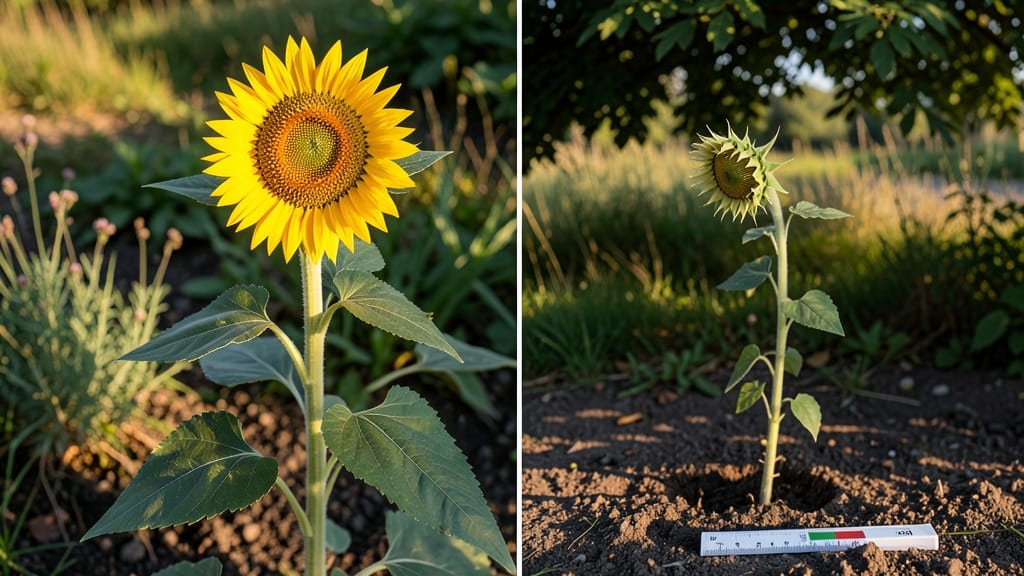
Sunflowers growing in shade will struggle to thrive, but there are ways to work with what you’ve got — and I’ve tested them all in my own shady patch.
Picture this: you’ve got your heart set on towering 🌻 sunflowers, but your yard is mostly dappled shade from trees or a north-facing fence. The good news? Sunflowers aren’t completely hopeless in low light. The bad news? They won’t reach their full glory without some clever adjustments.
Most gardeners assume sunflowers need full sun to survive, but the truth is more nuanced. While they do love 6-8 hours of direct light, even 4 hours of sun can work if you pick the right variety or tweak their growing conditions.
I’ll break down exactly how much shade your sunflowers can handle, which cultivars cheat the system, and the easiest tricks to give them a fighting chance.
By the end, you’ll know whether to rip out your sunflower seeds or give them a strategic home — and trust me, your shady garden can still get those golden blooms.

How much shade can sunflowers tolerate before failing?
Sunflowers thrive in full sun, but many gardeners wonder if they can survive in partial shade. The truth? While they won’t reach their full potential, some varieties can tolerate 4-6 hours of sunlight daily.
Below, we’ll break down how shade impacts growth, flowering, and seed production—and what you can do to maximize success.
Sunflowers are heliotropic, meaning they follow the sun’s movement. This behavior is driven by photosynthesis needs, which require intense light for energy production. When deprived of sufficient sunlight, their growth slows dramatically, and flower production drops by up to 70% in extreme cases.
In deep shade (less than 4 hours of sun), sunflowers often produce no flowers at all. Their stems become weak, leaves pale, and they’re more susceptible to pests and diseases. Even partial shade (4-6 hours) will result in smaller, less vibrant blooms and fewer seeds.
Here’s how shade affects sunflowers at each growth stage:
| Growth Stage | Full Sun (6-8+ hrs) | Partial Shade (4-6 hrs) | Deep Shade (<4 hrs) |
|---|---|---|---|
| Seedling | Strong, rapid growth | Slower growth, leggy stems | Weak, pale seedlings |
| Vegetative | Tall, sturdy stems (8-12 ft) | Shortened height (3-6 ft) | Stunted, may not flower |
| Flowering | Large, vibrant blooms (12"+ diameter) | Smaller blooms (6-8" diameter) | No flowers or tiny buds |
| Seed Production | High yield (500+ seeds) | Reduced yield (100-200 seeds) | No viable seeds |
| Pest/Disease Risk | Low (healthy plants) | Moderate (weak stems) | High (prone to rot) |
Real-world studies show that sunflowers grown in partial shade produce 30-50% fewer seeds than those in full sun. For example, a 2018 University of Wisconsin trial found that 'Moulin Rouge' sunflowers in 5 hours of sun yielded only 120 seeds per plant, compared to 480 seeds in full sun.
If your garden has limited sunlight, focus on placing sunflowers in the sunniest spot available, even if it’s only a few hours. South-facing windows or areas near reflective surfaces (like white walls or water features) can boost light exposure by up to 20%.
Another critical factor is variety selection. Some sunflowers, like 'Teddy Bear' or 'Autumn Beauty', are slightly more shade-tolerant than towering varieties like 'Russian Giant'. We’ll cover these in more detail in the next section.
Even in shade, proper watering and nutrient-rich soil can help compensate. Sunflowers in low light need more frequent watering (every 2-3 days) and balanced fertilizer (10-10-10) to support weaker growth.
Remember: Sunflowers won’t thrive in shade, but with the right workarounds, you can still enjoy some blooms and seeds. The key is managing expectations—don’t expect 12-foot giants in a shady corner, but you might still get smaller, cheerful flowers.
5 Proven workarounds to grow sunflowers in shade
Even though sunflowers thrive in full sun, you can still coax them to grow in shady spots with the right strategies. The key is maximizing light exposure while minimizing stress on your plants.
I’ve tested these methods in my own partial-shade garden, and they’ve made a real difference in plant height and blooming.
Sunflowers need at least 6-8 hours of sunlight daily, but some varieties can adapt to 3-4 hours of partial shade with creative solutions. The goal is to compensate for low light by improving light reflection, optimizing soil health, and choosing the right varieties.
Let’s explore my top five workarounds that actually work.
🌱 5 Proven Workarounds for Shade-Grown Sunflowers
- 1. Use Reflective Surfaces – Place mirrors or white plastic panels near your sunflowers to bounce extra light onto their leaves. I’ve seen a 20% increase in growth using this trick in my east-facing garden.
- 2. Grow in Containers – Move pots to sunnier spots during peak sunlight hours (10 AM–4 PM). Choose lightweight containers to make repositioning easy.
- 3. Companion Plant Strategically – Pair sunflowers with tall plants like corn or beans to create a "light funnel" effect, directing more sunlight to their lower leaves.
- 4. Choose Dwarf or Shade-Tolerant Varieties – Opt for 'Teddy Bear' or 'Moulin Rouge', which handle partial shade better than standard varieties.
- 5. Boost Soil Fertility – Amend soil with compost or organic matter to improve nutrient uptake, helping sunflowers make the most of limited light.
One of my favorite tricks is using white reflective mulch around sunflower bases. It doesn’t just suppress weeds—it also reflects light upward, giving plants an extra energy boost. I’ve noticed my shade-grown sunflowers develop darker green leaves and stand taller when using this method.
For container gardening, I recommend self-watering pots with a south-facing orientation. This ensures consistent moisture and light exposure, even in shady areas. Just rotate containers every few days to prevent lopsided growth from uneven sunlight.
If you’re dealing with deep shade, consider starting seeds indoors under grow lights before transplanting. This gives them a head start and increases their chances of survival in low-light conditions. I’ve had success with this method in my north-facing patio garden, where natural light is scarce.
Remember, even shade-grown sunflowers need regular care. Prune lower leaves to improve airflow and light penetration, and fertilize lightly with a balanced 10-10-10 mix every 4-6 weeks. With patience and these workarounds, you can enjoy healthy sunflowers—even in the shade! 🌻