
Flowers
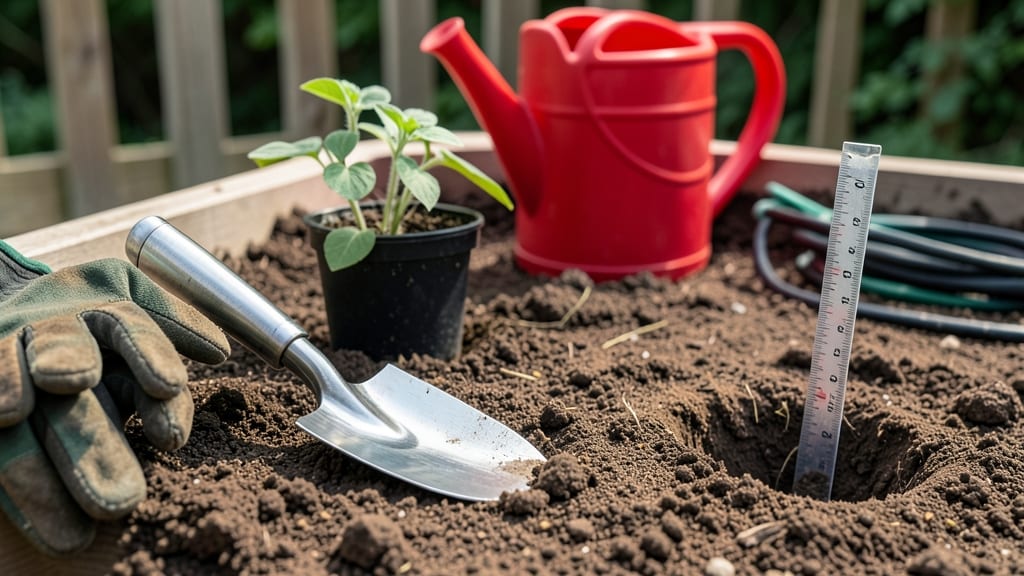
Learning how deep to transplant sunflowers ensures their roots establish strong and steady 🌻 — the key to those towering stems we all love.
Struggling to transplant sunflowers without weakening their growth? The depth at which you bury those delicate roots can make the difference between a thriving giant and a flopping flop.
Too shallow, and they’ll lean like a drunkard; too deep, and they’ll suffocate before they even reach for the sky. The ideal depth depends on your sunflower’s age and root size, not just a one-size-fits-all rule.
Below, I’ll walk you through the exact measurements, how to adjust for different varieties, and the three biggest mistakes that stunt growth after transplanting.


Optimal sunflower transplanting depth by root zone and growth stage
Transplanting sunflowers at the wrong depth can stunt their growth or even kill them before they reach their towering potential. The root zone and seedling age determine how deep you should bury those delicate stems.
Young seedlings need shallow placement, while more established plants benefit from slightly deeper transplanting to stabilize their taproots.
Sunflower roots grow vertically and can reach depths of 3-4 feet, but their lateral roots spread only 12-18 inches wide. This means proper transplanting depth focuses on protecting the primary taproot while allowing the cotyledons (seed leaves) to stay above soil level for photosynthesis.
Here’s the science: Sunflowers have a hypocotyl (the stem below the cotyledons) that should remain just 1-2 inches below soil after transplanting. This depth ensures the plant can anchor itself without suffocating its root collar, the critical junction where roots meet stems.
| Growth Stage | Root Ball Size | Transplant Depth | Key Notes |
|---|---|---|---|
| Seedling (1-2 weeks) | 0.5–1 inch diameter | 0.5–1 inch deep | Keep cotyledons above soil |
| Established (3-4 weeks) | 1.5–2.5 inches diameter | 1–2 inches deep | Protect root collar; firm soil gently |
| Mature (5+ weeks) | 3+ inches diameter | 2–3 inches deep | Stabilize tall varieties; mulch base |
| Dwarf Varieties | 0.5–1.5 inches diameter | 0.5–1 inch deep | Shallow roots; avoid deep burial |
For young seedlings (1-2 weeks old), dig a hole just deep enough to cover the root ball with 0.5–1 inch of soil. Use your finger to create a small trench—this prevents over-burial while keeping the root collar visible.
If the cotyledons end up buried, they’ll rot, starving the plant of energy.
When transplanting 3-4 week-old seedlings, aim for a 1–2 inch depth. At this stage, the taproot is stronger but still delicate. Press the soil firmly around the base to eliminate air pockets, but avoid compacting it too tightly—this restricts root expansion.
For mature sunflowers (5+ weeks old), you can bury them slightly deeper—2–3 inches. This extra depth helps stabilize their tall, top-heavy stems, especially in windy conditions. Use a stake or cage for varieties exceeding 6 feet to prevent flopping.
Soil type plays a crucial role. In sandy soil, which drains quickly, transplant slightly deeper (up to 2.5 inches) to retain moisture near the roots. In clay soil, keep it shallower (1 inch) to prevent waterlogging, which can suffocate roots.
After transplanting, water deeply to settle the soil and eliminate air gaps. Use a watering can with a narrow spout to direct moisture straight to the root zone without disturbing the plant. Mulch with straw or shredded leaves to maintain even moisture and suppress weeds.
Monitor your sunflowers for signs of stress like yellowing leaves or wilting stems. These often indicate improper transplanting depth. If the plant leans or flops, it’s either too shallow (needs staking) or too deep (roots suffocating). Adjust your technique for future transplants!
Pro tip: Use a toothpick or small ruler to measure transplanting depth in the hole. This ensures consistency, especially when handling multiple seedlings. Accuracy here translates to stronger stems and healthier blooms later in the season.
Common mistakes that stunt sunflower growth after transplanting
Transplanting sunflowers seems straightforward, but subtle errors can leave your towering beauties stunted or struggling. The most critical mistake? burying seedlings too deep or too shallow, which disrupts their root systems just when they need stability.
Even experienced gardeners sometimes overlook how soil compaction or rough handling can stress these delicate stems during the transition from seedling to mature plant.
Another silent growth killer is ignoring root disturbance during transplanting. Sunflowers develop deep taproots that anchor them, and jostling these roots—even gently—can delay their establishment by weeks. The good news?
Most of these issues have simple fixes, and I’ll show you how to spot them early and correct them mid-season before your sunflowers throw in the towel.
Sunflowers must be transplanted at the same depth they grew in their seedling tray—typically 1-2 inches deep. Burying deeper than 2 inches can suffocate roots, while planting too shallow (less than 1 inch) leaves stems vulnerable to wind and disease. Use a ruler to verify depth: mark your seedling tray at the soil line, then match that level in the garden.
Let’s start with the most common offender: over-deepening seedlings. When I first tried transplanting sunflowers, I assumed "deeper is better" for stability. Big mistake! Burying past the cotyledon leaves (the first true leaves) can cause the stem to rot or develop weak, leggy growth.
Always check the seedling’s stem color—if it’s white below the soil line, it’s already struggling.
Next up: soil compaction around roots. Packing soil too tightly during transplanting cuts off oxygen flow, which stunts root expansion. To fix this, gently loosen the soil with a fork before planting, and avoid stepping near the transplant site.
If you notice yellowing leaves post-transplant, it’s often a sign of compacted roots—loosen the soil and water deeply to help roots breathe again.
Root disturbance is another sneaky growth thief. Even if you handle seedlings carefully, their taproots can break during removal from trays. To minimize damage, water the seedlings 24 hours before transplanting—this makes roots more flexible.
If you spot a broken taproot, trim the damaged section with sterilized scissors and replant immediately to prevent infection.
Finally, don’t overlook the post-transplant care. Sunflowers need consistent moisture for the first 2 weeks after transplanting, but overwatering can drown roots.
Water at the base of the plant in the morning to reduce fungal risks, and avoid fertilizing until new growth appears—this gives roots time to recover without stress.
With these fixes, your sunflowers will bounce back stronger than ever. Keep an eye on their stem thickness and leaf color—healthy plants should show steady growth within 10 days of proper transplanting. Happy growing! 🌻