
Planting
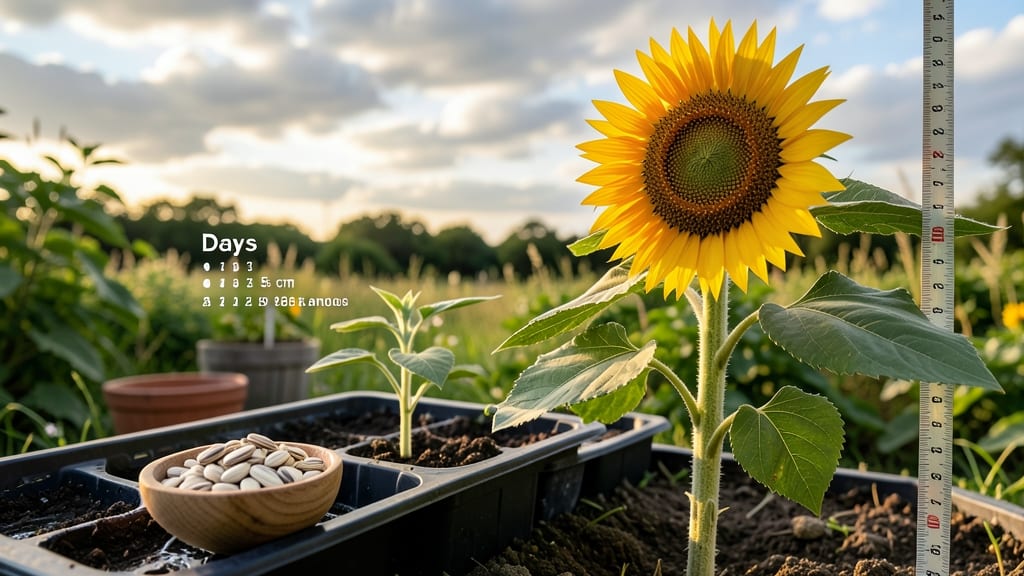
How long does a sunflower seed take to grow? The answer is anywhere from 3 to 10 days to germinate and up to 120 days to reach full bloom, but the journey is packed with surprises if you know what to watch for.
Picture this: you tuck a tiny seed into the soil in April or May, water it gently, and then—nothing. Days stretch into weeks, and you start questioning whether you even planted it right.
But here’s the secret: those first 7 days are the most critical, and a few simple tweaks can shave weeks off the timeline.
Once the sprout breaks through, you’ll see rapid growth in just 2–3 weeks, with stems shooting up toward the sun. By July or August, if conditions are right, you could be staring at a 10-foot-tall 🌻 giant—all from that same seed you barely noticed.
Below, I’ll walk you through the exact stages, the factors that speed up (or slow down) growth, and how to turn your sunflower patch into a fast-tracked showstopper—no waiting required.


Sunflower germination timeline: from seed to sprout in days
Watching a sunflower seed transform into a towering bloom is one of gardening’s most rewarding experiences—but the first critical 14 days determine whether your seeds will sprout or fail. Most sunflower varieties germinate within 7–14 days under ideal conditions, but speed depends on soil temperature, moisture, and seed quality.
Let’s break down the daily milestones so you can track progress like a pro.
Before you even see a sprout, your sunflower seed is hard at work. Inside that tough outer shell, the embryo absorbs moisture and swells—typically within 24–48 hours of planting. This hydration kickstarts metabolic activity, but visible action (like a crack in the seed coat) usually takes 3–5 days.
Pro tip: Keep soil consistently moist but not soggy to avoid damping-off, a fungal risk for young seeds.
Here’s the sunflower germination timeline you can expect, with visual cues to watch for each day. Use this as your cheat sheet to troubleshoot delays or celebrate early sprouts!
If your seeds haven’t sprouted by Day 10, don’t panic—but do investigate. Cold soil (below 50°F) or old seeds (over 2 years) are common culprits. Try gently scratching the seed coat with sandpaper to encourage water absorption, or soak seeds in warm water for 12 hours before replanting.
Remember, sunflowers thrive in warmth, so aim for soil temps of 60–70°F for fastest germination.
Once you spot those first cotyledon leaves (the tiny, round seed leaves), resist the urge to move or disturb the seedlings. Their delicate roots are still shallow, and even a slight shift can stunt growth.
Instead, focus on providing consistent moisture and bright, indirect light until they’re ready for full sun—usually by Day 8–10.
By Day 14, your sunflower seedlings should have 2–4 true leaves and a sturdy stem. This is the perfect time to thin them to 6–12 inches apart (depending on the variety) and introduce a balanced fertilizer (like 10-10-10) to fuel rapid growth.
Pro move: Use a south-facing window or grow light for indoor starters to avoid leggy seedlings.
Delays in germination? Check these 3 red flags: damp soil (fungus risk), low light (weak sprouts), or <
Sunflower growth stages: weeks to full bloom (with speed hacks)
Once your sunflower seeds sprout, the real magic begins! Tracking the week-by-week growth stages helps you anticipate milestones like stem hardening and bud formation. With the right care, you can shave weeks off the timeline and enjoy those bright yellow blooms sooner than expected.
Here’s what to watch for each week—and how to give your sunflowers a growth boost.
From 2-week seedlings to 12-week giants, sunflowers grow at an impressive pace when given ideal conditions. The key is balancing sunlight exposure, consistent moisture, and nutrient-rich soil.
I’ve seen sunflowers reach maturity in as little as 8 weeks with these speed hacks, though standard varieties typically take 10-12 weeks from sprout to bloom.
Watch for stunted growth signs like slow stem elongation or pale leaves—these often mean your sunflowers need more sunlight or phosphorus. I once had a batch that barely grew past 2 feet because they were planted in partial shade. Move them to full sun immediately if you spot this!
For fastest results, plant dwarf varieties like 'Teddy Bear' (60-day bloom time) or use black plastic mulch to warm soil. Container growers can also try hydroponics for 20% faster growth. Just remember: patience pays off—those giant sunflowers are worth the wait! 🌻