
Plants
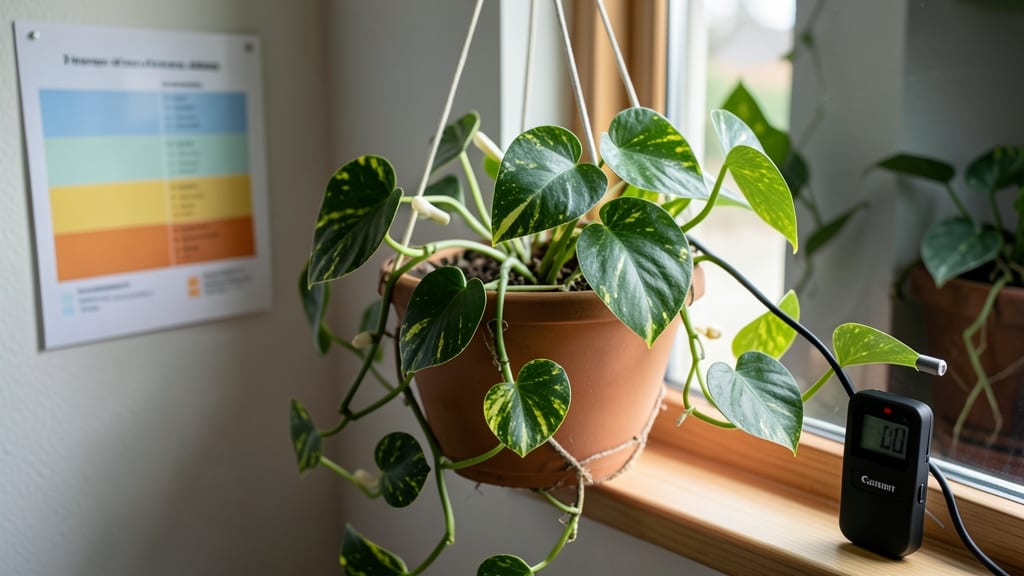
A pothos plant needs bright, indirect light for 4 to 6 hours daily—the sweet spot for lush, trailing growth that keeps those iconic heart-shaped leaves vibrant.
Struggling to keep your 🌿 thriving? You’re not alone—many pothos owners overcomplicate its care, assuming it’s a low-maintenance plant that can survive in dim corners. While it can tolerate low light, pushing it to the limit turns your leafy pet into a sad, leggy shadow of itself.
Here’s the truth: pothos plants are adaptable, but they crave bright, filtered sunlight—think east-facing windows or a few feet back from a south-facing one. Too much direct sun? Watch for crispy edges. Too little? Yellowing leaves and sparse growth give it away.
In this guide, I’ll show you exactly where to place your pothos for optimal growth, how to spot light-related problems early, and simple tweaks to keep it happy—whether you’re in a sun-drenched kitchen or a dim office corner.

Pothos light requirements: ideal sunlight levels for healthy growth
If you're asking how much light does a pothos plant need, you're already on the right track to keeping this resilient houseplant thriving. Pothos (Epipremnum aureum) is famously adaptable, but its light needs are the foundation of its health.
Unlike sun-loving plants, pothos prefers bright indirect light but can survive in low-light conditions—though with some trade-offs. Understanding the balance between too little and too much light will help you avoid common issues like yellowing leaves or leggy growth.
The key to pothos care lies in mimicking its natural tropical habitat. In the wild, these vines grow under the canopy of larger trees, where they receive dappled sunlight but never harsh direct rays.
Replicating this environment indoors is easier than you might think, and it starts with choosing the right spot. Whether you're working with a north-facing window, an office cubicle, or a dimly lit bathroom, small adjustments can make a big difference in your plant's vitality.
⚠️ CRITICAL INSIGHT: Pothos can tolerate low light, but it won't thrive there. While it may survive in 50-100 feet-candles of light (like a dim corner), it will grow more slowly, develop smaller leaves, and become more susceptible to pests. For the healthiest, most vibrant pothos, aim for 100-200 feet-candles of bright indirect light, such as a few feet away from an east or north-facing window.
One of the most common mistakes I see is placing pothos in direct sunlight, especially on south-facing windowsills. While pothos can handle some morning sun, prolonged exposure to harsh afternoon rays will cause leaf burn, visible as brown, crispy edges.
If you notice these symptoms, move your plant a few feet away from the window or use a sheer curtain to diffuse the light. Variegated pothos varieties, like 'Golden Pothos' or 'Marble Queen,' are particularly sensitive to light changes and may lose their striking patterns if deprived of adequate brightness.
On the flip side, underlighting is just as damaging—though less obvious. When a pothos doesn’t get enough light, it stretches toward the nearest source in a phenomenon called etiolation. This results in long, weak stems with sparse, small leaves.
If your pothos looks like it’s reaching for the sky, it’s time to relocate it closer to a light source or supplement with a grow light.
A simple LED grow light placed 6-12 inches above the plant for 12-14 hours a day can work wonders, especially in offices or rooms with minimal natural light.
Pro tip: Rotate your pothos quarter-turn every 2-3 weeks to ensure even growth. Plants naturally grow toward light sources, so one side can become leggy while the other stays compact.
This simple habit promotes bushier, more balanced growth and helps you spot early signs of light stress or nutrient deficiencies before they become severe. Pay attention to the undersides of leaves—if they’re pale or yellowing, it’s a sign your plant isn’t getting enough light.
For those working in offices or apartments with limited natural light, don’t despair. Pothos is one of the most forgiving plants for low-light conditions, but there are ways to optimize its environment.
Place it near a west-facing window where it can catch the softer afternoon light, or group a few plants together—they’ll create a microclimate that benefits each other.
If all else fails, a 10-12 watt LED grow bulb can provide the extra push your pothos needs to thrive in even the dimmest spaces.
Remember, the goal isn’t perfection—it’s finding the sweet spot where your pothos feels comfortable. Start by observing your plant’s response to its current location: Are the leaves vibrant
How to adjust light conditions for different pothos growth stages
Your pothos plant doesn’t need the same light conditions at every stage of its life. Seedlings, mature vines, and variegated varieties all respond differently to light. Understanding these differences helps you avoid common issues like yellowing leaves or leggy growth, ensuring your plant stays lush and vibrant year-round.
For pothos seedlings, start with bright indirect light for 4-6 hours daily. Too much direct sun can scorch delicate leaves, while too little causes weak stems.
Place them near a north-facing window or under a grow light for consistent growth. As they mature, gradually increase light exposure to strengthen their stems.
⚠️ WARNING: Overlooking Light Needs Can Kill Your Pothos ⚠️
- Seedlings: 4-6 hrs bright indirect light (avoid direct sun)
- Mature plants: 6-8 hrs bright indirect light (can tolerate low light)
- Variegated varieties: 10-12 hrs light (more light needed for color)
Mature pothos plants can handle bright indirect light for up to 8 hours a day, but they’re famously adaptable. If your plant starts looking leggy or develops small, pale leaves, it’s craving more light. Rotate the pot quarter-turns weekly to ensure even growth. For variegated pothos, which need more light to maintain their striking patterns, consider supplementing with a LED grow light 12 inches away for 6-8 hours daily.
If your space lacks natural light, grow lights are a game-changer. Use a full-spectrum LED bulb (6000-6500K color temperature) for 10-12 hours a day. Position it 6-12 inches above the plant and adjust the height as it grows.
Avoid incandescent bulbs, which emit too much heat and can burn leaves. For extra efficiency, pair your grow light with a timer to maintain consistency.
Troubleshooting light issues is easier than you think. If your pothos develops brown leaf tips, it’s likely getting too much direct sunlight. Move it further from the window or use a sheer curtain to diffuse harsh rays.
For yellow leaves, check for overwatering combined with low light—pothos roots need oxygen, and soggy soil in dim conditions causes stress. Trim affected leaves and adjust both watering and light exposure.
Remember, pothos is forgiving, but it won’t thrive on neglect. Monitor your plant’s response to light changes weekly, and don’t hesitate to experiment with different spots in your home.
With the right adjustments, your pothos will reward you with glossy, heart-shaped leaves and vigorous growth, whether it’s a seedling, a mature vine, or a variegated showstopper. 🪴