
Flowers
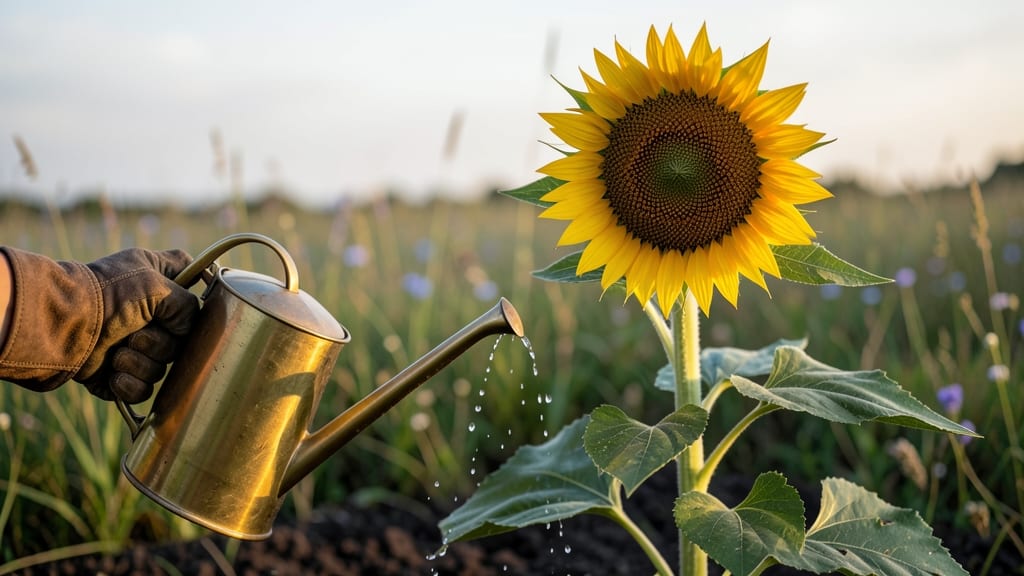
To water sunflowers properly, you’ll need to know how often should sunflowers be watered—aim for deep soaks every 2–3 days for young plants and 1–1.5 inches of water per week once they mature—skipping this routine risks floppy stems or stunted growth.
Picture this: your 🌻 sunflowers planted in USDA Zone 6a after the last frost, their first leaves peeking through the soil. Without consistent moisture, those towering stalks you dreamed of will never reach their full height—or worse, topple over before they bloom.
Here’s the secret: sunflowers hate soggy soil but also can’t handle drought. Young seedlings need frequent, shallow watering to keep the soil moist, while mature plants thrive with deep watering that encourages strong root systems.
I’ll break down exactly how much, how often, and what to watch for when the weather turns hot or dry.
By the end, you’ll know the exact schedule for your sunflowers—whether they’re growing in containers or straight in the garden—and how to adjust for rain, heatwaves, or even forgetful watering days.
Sunflower watering schedule by growth stage: seedlings to full bloom
Sunflowers need consistent moisture to grow from tiny seeds into towering giants, but their watering needs change dramatically as they mature. Overwatering can drown delicate roots, while underwatering causes stems to weaken.
The key is matching their hydration to each growth stage—from germination to seed production. Let’s break it down by week and season so you never guess again.
Young sunflower seedlings are the most vulnerable. During the first 2 weeks after planting, keep the soil evenly moist—like a wrung-out sponge.
This encourages strong root development before they can access deeper water. Daily misting or shallow watering (just ½ inch) is ideal, especially in containers where soil dries faster. Avoid letting the top inch dry out completely, or seedlings may fail to thrive.
| Growth Stage | Watering Frequency | Soil Moisture Target | Key Adjustments |
|---|---|---|---|
| Germination (Weeks 1-2) | Daily (light misting) | Top ½" always moist | Use seedling trays; avoid overhead watering |
| Vegetative (Weeks 3-6) | Every 2-3 days (deep water) | Top 2" moist, 4" dry | Water at soil level; mulch to retain moisture |
| Flowering (Weeks 7-10) | Every 3-4 days (1-1.5" per week) | Top 3" moist, 6" dry | Increase frequency in heatwaves; water early morning |
| Seed Production (Weeks 11-14+) | Every 5-7 days (reduce gradually) | Top 4" moist, 8" dry | Cut back water as seeds mature; avoid wetting heads |
Once seedlings reach 2-3 inches tall (around week 3), shift to deep watering every 2-3 days. The goal is to encourage roots to grow downward. Water until moisture reaches 4-6 inches deep, then let the top 2 inches dry slightly before watering again.
This mimics natural rainfall and strengthens stems. Morning watering is critical—it prevents fungal diseases like powdery mildew that thrive in damp evening foliage.
During the flowering stage (weeks 7-10), sunflowers need 1-1.5 inches of water per week, split into 2-3 sessions. This is when they’re most sensitive to drought stress—buds may drop if deprived.
In hot climates (like USDA zones 8-10), increase to every 2-3 days and water deeply in the early morning. If your soil is sandy, you’ll need to water more frequently than in clay soil, which holds moisture longer.
As sunflowers enter seed production, gradually reduce watering to every 5-7 days. Overwatering now can cause seeds to split or rot. Focus on keeping the base of the plant moist while letting the top 4 inches dry out.
This signals the plant to mature seeds properly. If growing in containers, reduce watering by 25%—pots dry out faster and hold less reserve moisture.
Heatwaves and drought are the biggest challenges for sunflowers. When temperatures exceed 90°F, increase watering to every 2 days and add 2-3 inches of mulch (straw or wood chips) to lock in moisture.
For container-grown sunflowers, move pots to shadier spots during peak heat and check soil moisture daily. Signs of drought stress include drooping leaves that don’t bounce back after watering and yellowing lower leaves.
Rainy seasons complicate things—sunflowers hate soggy soil. If your area gets 1 inch of rain, skip watering for 2-3 days. For heavy rains (>2 inches), pause watering for 4-5 days to prevent root rot.
Always check soil moisture with your finger: if the top 1-2 inches are dry, it’s time to water. Clay soil stays wet longer, while sandy soil drains quickly—adjust accordingly.
Pro tip: Use a moisture meter or the finger test to avoid guesswork. Stick your finger 2 inches into the soil—if it feels dry, water; if damp, wait. For large sunflowers (8+ feet), aim for 2 gallons of water per plant during peak growth.
Smaller varieties need about half that amount. Always water at the base, not the leaves, to minimize disease risk.
By tailoring your watering to each stage, you’ll grow sunflowers with thick stems, vibrant blooms, and heavy seed heads. Consistency is key—sunflowers forgive occasional missed waterings but never recover from chronic over- or underwatering
Signs of overwatering vs underwatering sunflowers: what to watch for
Sunflowers reveal their hydration needs through subtle but telling clues. Yellowing leaves or mushy stems scream overwatering, while crispy edges or drooping foliage signal thirst. The key is learning these visual cues to intervene before damage sets in.
I’ve seen sunflowers collapse from root rot in just 3 days of soggy soil—don’t let that happen to yours!
Start by checking the soil moisture 1–2 inches down. Stick your finger in—if it’s damp, hold off. For sandy soil, water every 2–3 days, while clay soil may need 5–7 days between drinks.
Container-grown sunflowers dry out faster, so monitor them daily. The goal? Keep roots hydrated without suffocating them.
How Often Should Sunflowers Be Watered?
- Taller stalks (up to 14 ft)
- Larger blooms (3–12 inches wide)
- Faster growth (60+ days to harvest)
- Root rot (black, foul-smelling roots)
- Stunted growth (max 3 ft instead of 10+)
- Floppy stems (risk of snapping in wind)
Overwatered sunflowers show yellow lower leaves first, often with white mold on stems. Gently tug the plant—if it pulls out easily, roots are rotting. For underwatered sunflowers, leaves curl inward like taco shells, and stems feel hollow when squeezed.
Both issues require immediate action: reduce watering for soggy soil or deep-water thirsty plants at the base.
Container sunflowers need daily attention in summer heat. If the pot feels light, it’s time to water—aim for 1–2 gallons per plant until water drains from the bottom. For in-ground plants, mulch with straw to lock in moisture.
I’ve saved many sunflowers by switching to drip irrigation during heatwaves—it delivers water straight to roots without wetting leaves.
Adjust your routine by season. In spring, water every 3–4 days; in summer, every 2 days if temps hit 90°F+. Fall slows growth, so stretch watering to 5–7 days.
Always water in the morning to prevent fungal diseases. Pro tip: Use a moisture meter for $10—it’s a game-changer for nailing the 40–60% soil moisture sweet spot.
Remember, sunflowers are drought-tolerant once established, but they won’t forgive neglect in their early weeks. If you spot brown leaf tips, it’s often fluoride buildup from tap water—switch to rainwater or distilled.
With the right balance, your sunflowers will reward you with sunshine-yellow blooms that turn heads (and Instagram feeds!). 🌻