
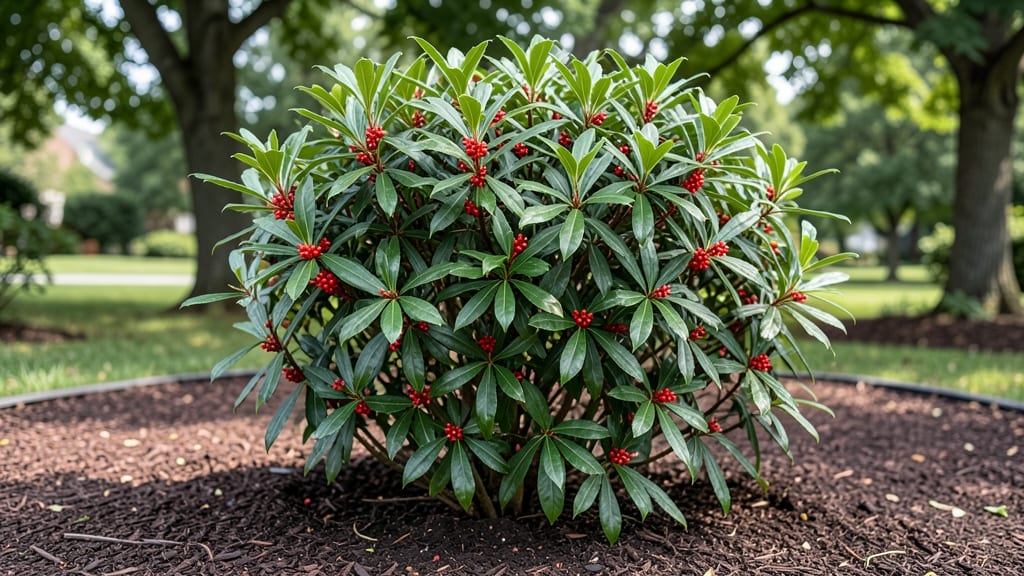
How Tall Does Nandina Grow: Exact Height Ranges by Variety and Care

How To

How Tall Does Nandina Grow: Exact Height Ranges by Variety and Care

How tall does Nandina grow? It varies dramatically from 3 feet to over 10 feet, depending on the variety and how you care for it.

If you’ve ever eyed a Nandina’s striking foliage and wondered whether it’ll fit your garden’s height requirements, you’re not alone. This evergreen shrub—often called heavenly bamboo—offers dramatic variation, from compact ground covers to towering specimens.

Dwarf varieties like 'Fire Power' stay under 4 feet, making them perfect for borders or containers, while standard types can reach 6–10 feet in ideal conditions. The key to controlling its height lies in pruning, soil quality, and sunlight exposure.

Below, I’ll break down the exact height ranges by variety, how to encourage (or limit) growth, and the best ways to use Nandina’s ornamental features—like its year-round foliage and vibrant berries—in your landscape.

Nandina Height Range
3 ftto10 ft
0 ft 3 ft 6 ft 9 ft 12 ft
🌱 Medium Shrub

Nandina height ranges by popular variety: from dwarf to giant

Nandina, often called heavenly bamboo, delivers year-round interest with its vibrant foliage and winter berries. But here’s the secret: its height varies wildly by variety.

Some stay ground-hugging while others reach small tree proportions. Choosing the right type ensures your garden gets the perfect visual impact without overpowering your space.

When selecting Nandina, consider mature height, growth rate, and spread. Dwarf varieties like 'Fire Power' thrive in containers or borders, while taller types like 'Gulf Stream' make stunning backdrop plants. Let’s explore the exact height ranges so you can plan with confidence.

Variety Mature Height Growth Rate Ideal Spacing Best For
'Fire Power' 2–3 ft Slow (6–12 in/year) 18–24 in apart Containers, borders
'Gulf Stream' 6–10 ft Moderate (12–18 in/year) 6–8 ft apart Privacy screens
'Obelisk' 4–6 ft Moderate (12 in/year) 3–4 ft apart Vertical accents
'Moon Bay' 3–4 ft Slow (6–12 in/year) 24–36 in apart Foundation plantings
'Plum Passion' 4–5 ft Moderate (12 in/year) 3–4 ft apart Mixed borders
'Pygmy Date' 2–3 ft Slow (6 in/year) 18 in apart Rock gardens
'Sensation' 3–5 ft Moderate (10–12 in/year) 2–3 ft apart Hedges, mass plantings
'Stardust' 4–6 ft Moderate (12 in/year) 3–4 ft apart Sh

How pruning and care affect Nandina’s final height

Nandina’s height isn’t set in stone—it’s heavily influenced by how you prune and care for it. With the right techniques, you can keep a 6-foot variety compact or encourage a dwarf type to grow taller.

The key lies in understanding how pruning timing, soil conditions, and sunlight exposure interact to shape your plant’s growth trajectory.

For example, aggressive pruning in early spring can reduce vertical growth by 30-50%, while minimal trimming allows stems to elongate naturally. Even soil amendments like compost or slow-release fertilizer can push your Nandina to reach its maximum height faster—or keep it shorter if you limit nutrients.

Let’s explore how to tailor these factors to your garden’s needs.

🌱 Pro Tip: Prune for Height Control

Cut back 1/3 of stems in late winter to encourage bushier, shorter growth. For taller specimens, prune only dead wood in early spring to maintain height. Never prune after summer—this promotes leggy, weak growth that stretches upward uncontrollably.

Sunlight plays a surprising role in height regulation. While Nandina thrives in partial shade, too much direct sun can trigger rapid vertical growth as the plant stretches toward light. If your shrub is growing taller than expected, try moving it to a morning sun spot with afternoon shade.

This subtle shift can reduce height growth by up to 20% while preserving its vibrant foliage.

Soil drainage is another critical factor. Poorly drained soil forces Nandina to grow taller and thinner as it struggles to establish roots. Amend heavy clay with organic matter like compost or perlite to encourage a stockier, more compact growth habit.

Well-draining soil also prevents root rot, which can stunt growth entirely if left unchecked.

For small gardens, focus on repetitive pruning every 6-8 weeks to maintain a controlled height. Trim just above a leaf node to encourage branching. In larger landscapes, allow your Nandina to grow taller but shape it annually to prevent overcrowding.

Always use sterilized shears to avoid disease transmission between cuts.

Remember, Nandina’s height adaptability makes it a versatile shrub for any space. With mindful pruning and care, you can shape it to fit your vision—whether that’s a low hedge or a tall specimen anchoring your garden’s backdrop. Start experimenting this season and watch your Nandina transform! 🌿

★★★★★5.0(14 reviews)
Categories How To