
Planting
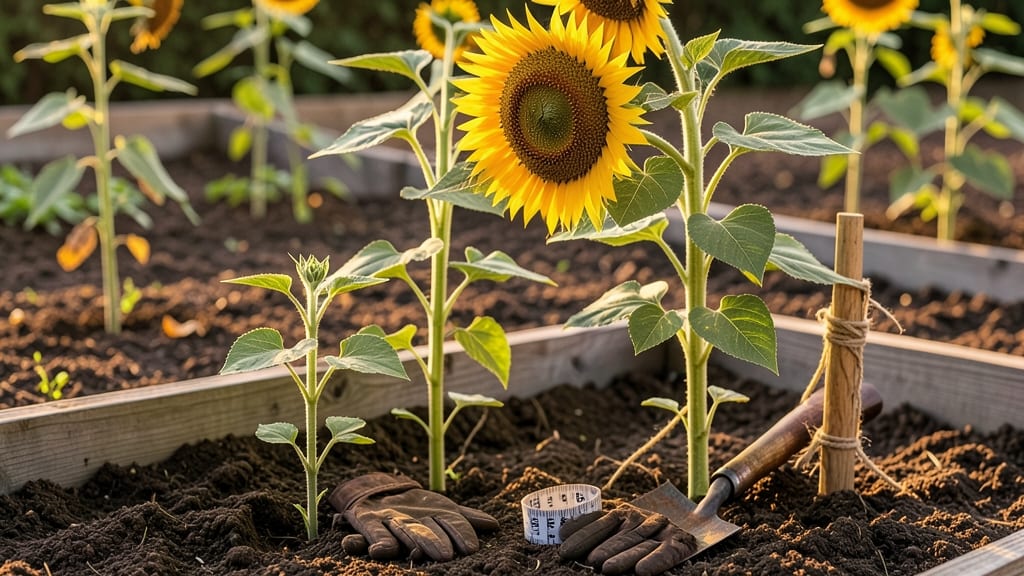
Spacing mammoth sunflower plants correctly ensures your towering 🌻 stalks grow strong, healthy, and free from disease—without wasting garden space.
Picture this: you’ve spent weeks nurturing your mammoth sunflower seeds, only to watch them lean, struggle, or even topple over because they’re crowded. The right spacing isn’t just about aesthetics—it’s the difference between a 12-foot giant and a weak, spindly plant that never reaches its potential.
In this guide, I’ll break down the ideal distances for planting mammoth sunflowers, whether you’re working with in-ground beds, containers, or small urban gardens. You’ll learn how variety, soil, and sunlight play a role, plus how to avoid the most common spacing mistakes that stunt growth.
By the end, you’ll know exactly how far apart to plant your 🌻 sunflowers for maximum height, yield, and ease of care—so you can enjoy those breathtaking blooms without the headaches.


Optimal mammoth sunflower spacing by variety and growth conditions
Mammoth sunflowers are the superstars of the garden—reaching heights of 12-16 feet with massive blooms that turn heads. But their towering growth means proper spacing is non-negotiable. Too close, and you’ll get weak stalks, powdery mildew, and stunted blooms.
Too far apart, and you’ll waste precious garden real estate. Let’s break down the science-backed spacing for different varieties and growing conditions.
First, understand that variety matters. Russian Giant and Mammoth Russian sunflowers need more room than dwarf varieties because they grow 30-50% taller. Even within the same variety, soil quality, sunlight, and climate play huge roles in how much space each plant needs.
For example, in poor soil or high humidity, plants need extra room to avoid competition for nutrients and airflow.
🌱
For in-row spacing, think of it as giving each plant its own personal bubble. The Russian Giant variety, for example, needs 18-24 inches between plants to prevent stalks from leaning into each other. This spacing ensures strong stems and full sun exposure for the entire plant.
If you’re growing in containers or raised beds, reduce in-row spacing to 12-16 inches but never less, or you’ll risk stunted growth.
Row spacing is just as critical. 36-48 inches between rows allows for easy access, reduces soil compaction, and improves air circulation—a must for preventing fungal diseases like powdery mildew. In humid climates, increase row spacing to 48 inches to give plants even more breathing room.
Conversely, in arid regions, you can tighten it to 30 inches since airflow is less of a concern.
💧
Sunlight is another game-changer for spacing. Mammoth sunflowers thrive in full sun (6+ hours daily), but if your garden gets partial shade, space plants 10-15% wider to compensate.
For instance, if your Russian Giant needs 18 inches in-row in full sun, stretch it to 20 inches in partial shade. This extra space helps the plant reach for sunlight and prevents overcrowding stress.
Soil type also dictates spacing adjustments. In clay-heavy or poorly draining soil, increase spacing by 20-30% to avoid waterlogged roots. Amend the soil with compost or sand to improve drainage, but still give plants more room to avoid root competition.
In sandy soil, you can reduce spacing slightly since the soil drains quickly, but monitor for drought stress during dry spells.
🌿
Companion planting is a smart way to maximize space while keeping pests at bay. Pair mammoth sunflowers with bush beans, radishes, or lettuce, which thrive in their shade. Avoid planting near tomatoes or potatoes, as they compete for the same nutrients and can stunt sunflower growth.
If you’re growing in rows, plant fast-growing crops like radishes between sunflowers early in the season, then remove them as the sunflowers mature.
For urban gardeners or small spaces, consider staggered planting. Instead of planting all sunflowers in a grid, offset rows by 12-18 inches to create a more compact layout. This technique also helps maximize sunlight exposure for all plants.
If you’re using containers, choose large pots (at least 12 inches in diameter) and limit yourself to one mammoth sunflower per container
Common spacing mistakes that stunt mammoth sunflower growth
Even experienced gardeners make spacing mistakes with mammoth sunflowers that lead to disappointing results. The most common error is overcrowding, where plants compete for nutrients and sunlight, resulting in stunted growth and weak stalks.
I’ve seen gardens where sunflowers were planted just 6 inches apart—only to watch them lean dramatically or fail to flower at all.
Another frequent issue is uneven spacing across rows or clusters. This creates gaps where weeds thrive and uneven competition for resources. Even a 12-inch variation in spacing can drastically affect yield, with plants at the edges often growing taller but less sturdy than those in the center.
Ignoring soil drainage and root space also sabotages growth. Compacted soil or poor drainage forces roots to compete aggressively, while insufficient depth for taproots (which can reach 5-6 feet deep) limits nutrient absorption and stability.
⚠️ Spacing Mistakes That Kill Mammoth Sunflowers
- Overcrowding: Plants <6 inches apart → disease risk and weak stems
- Uneven rows: Gaps >12 inches → weed invasion and poor yield
- Shallow planting: Seeds <1 inch deep → poor root development
- Ignoring drainage: Waterlogged soil → root rot and stunted growth
Fix these issues by adjusting spacing to 12-18 inches apart in rows 2-3 feet apart, and always plant in well-draining soil.
One of my biggest lessons came from a before-and-after scenario in my own garden. Last year, I planted mammoth sunflowers in a 6x6 grid (6 inches apart), expecting a lush display.
By mid-summer, the stalks were leaning, the flowers were small, and half the plants had powdery mildew from poor airflow. After thinning to 18 inches apart, the remaining plants grew 4 feet taller and produced 2x more blooms.
Another critical mistake is planting too deep. While mammoth sunflowers have long taproots, burying seeds deeper than 1-2 inches delays germination and weakens the root system. I’ve also seen gardeners plant them in containers too small for their mature size, leading to root-bound stress and early decline.
To avoid these pitfalls, always measure your spacing with a tape measure before planting. Use stakes or string lines to mark rows, and group plants in clusters of 3-5 for better wind resistance.
For container growing, choose pots at least 12 inches wide and deep per plant, and use well-draining mix to prevent root rot.
Finally, pay attention to companion plants. Tall sunflowers cast deep shade, so avoid planting low-light crops like lettuce nearby. Instead, pair them with shallow-rooted companions like borage or radishes, which won’t compete for space or nutrients.
With the right spacing, your mammoth sunflowers will reach their full 12-16 foot potential—and become the showstopper of your garden! 🌻