
Trees
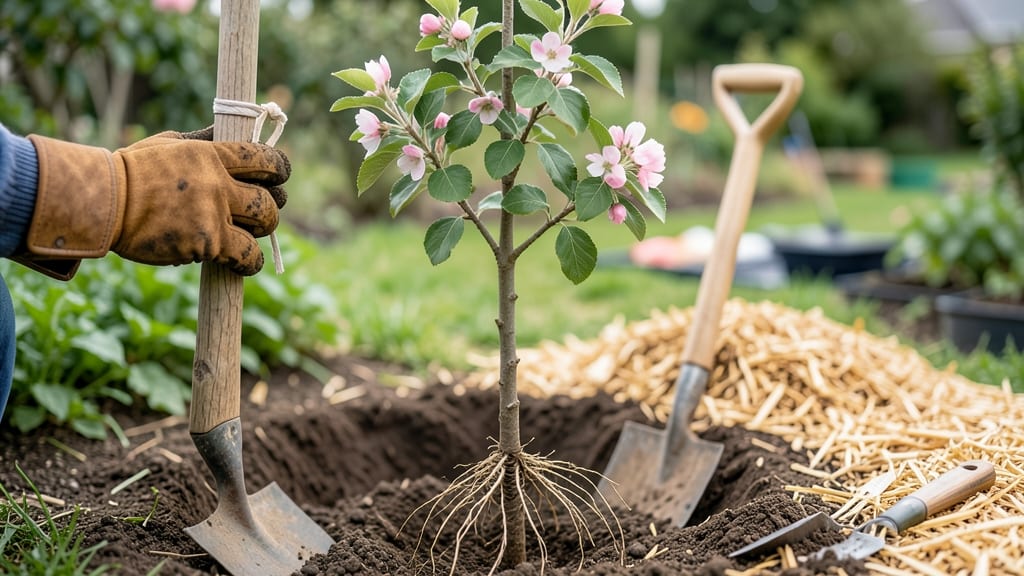
Planting apple trees in North Carolina at the right time ensures strong root growth before summer heat arrives, and missing that window can leave your 🍎 vulnerable to stress or disease.
Timing your apple tree planting in North Carolina can mean the difference between thriving orchards and struggling saplings—getting it wrong by even a few weeks can expose young trees to frost damage or disease.
With USDA Zones 7b and 8a, your best bets are late winter through early spring (February to April) or fall (October to November), when soil temperatures hover between 50-60°F for optimal root establishment.
Below, I break down the exact frost-free windows for your region, how to adjust for container-grown vs. bare-root trees, and the 5 signs your planting timing might be off—so you can set your 🍎 up for success from day one.
Best planting windows for apple trees in NC zones 7b/8a (with frost risk analysis)
North Carolina's USDA Zones 7b and 8a create unique challenges for apple tree planting, where late frosts and microclimates can make or break your orchard.
The Piedmont region (Zone 7b) typically experiences its last frost around March 15, while the Coastal Plain (Zone 8a) often sees frost-free conditions by February 28. These differences mean your planting window can shift by 4-6 weeks depending on location.
For bare-root apple trees, the ideal window is late winter to early spring (February through April), when the ground is workable but before buds swell.
This timing allows roots to establish before the tree enters active growth. Container-grown trees, however, offer more flexibility and can be planted in fall (October-November) or early spring, as their root systems are already established.
Here’s how to calculate your local frost-free dates using NC State Extension’s frost risk maps. For example, in Raleigh (Zone 7b), the average last frost is March 22, while in Wilmington (Zone 8a), it’s February 15.
Planting too early risks frost damage to emerging shoots, while waiting too long may delay root establishment.
Microclimates play a huge role in NC. A south-facing slope in the Piedmont can warm up faster, extending your planting window by 1-2 weeks compared to a valley or shaded area. Coastal regions also benefit from moderating ocean breezes, which can reduce frost risk in early spring.
Popular apple varieties like 'Gala', 'Fuji', and 'Granny Smith' all thrive in NC but have slightly different cold hardiness requirements. 'Gala' tolerates down to 10°F, while 'Granny Smith' needs protection below 15°F. Always check the nursery tag for variety-specific guidance.
If you're planting in Zone 7b (Piedmont), aim for March 15-April 15 to avoid late frosts. For Zone 8a (Coastal), you can start as early as February 15, but monitor local weather forecasts for unexpected cold snaps.
I always check the NC State Climate Office for real-time frost alerts before finalizing my planting date.
One common mistake is planting bare-root trees too late, which delays root establishment. To compensate, soak roots in water or rooting hormone for 1-2 hours before planting. For container-grown trees, remove the pot and inspect roots—if they’re circling, gently tease them apart to encourage outward growth.
After planting, mulch with 3-4 inches of wood chips to retain moisture and regulate soil temperature. In Coastal NC, where humidity is higher, add a 2-inch layer of gravel under the mulch to prevent fungal diseases. This extra step has saved my trees from root rot in past seasons.
For dwarf varieties like 'Liberty' or 'Enterprise', which are popular in NC home orchards, the planting window is slightly more forgiving. Their smaller size means they establish faster,
How to adjust planting timing for container-grown vs. bare-root apple trees
Choosing between container-grown and bare-root apple trees in North Carolina changes your planting window dramatically. While both thrive in USDA Zones 7b-8a, their root systems respond differently to soil temperatures and seasonal stress.
Container-grown trees offer flexibility, but bare-root varieties demand precise timing to avoid winter dieback or summer drought.
For bare-root apple trees, I always aim for late winter to early spring (February-March) when soil temperatures hit 50-60°F. This timing lets roots establish before summer heat arrives.
Container-grown trees, however, can handle fall planting (October-November) or even late spring, giving you a 6-month window instead of just 2 months.
| Factor | Bare-Root Apple Trees | Container-Grown Apple Trees |
|---|---|---|
| Best Planting Window | Late Winter (Feb-Mar) | Fall (Oct-Nov) or Spring (Mar-Apr) |
| Soil Temperature Requirement | 50-60°F (critical for root flush) | 45-65°F (more forgiving) |
| Root Establishment Time | 4-6 weeks (high risk if delayed) | 2-4 weeks (established root ball) |
| Post-Planting Care Adjustment | Deep watering (2x/week), frost cloth if late | Water immediately, mulch heavily (3-4") |
| Frost Sensitivity | High (plant before buds swell) | Moderate (root ball protects roots) |
If you miss the ideal planting window for bare-root trees, don't panic. I've successfully planted them in early December using extra mulch (6-8 inches) and a tree wrap to insulate roots.
For container-grown trees, late spring plantings work well if you water deeply every 3-4 days during the first month to compensate for the root ball's slower adaptation.
One critical adjustment I make is soil preparation. Bare-root trees need loose, well-draining soil mixed with compost, while container-grown trees benefit from amended planting holes (50% native soil, 50% compost). This difference prevents root rot in heavy clay soils common in North Carolina's Piedmont region.
For delayed plantings, I recommend root stimulator granules (like Mycorrhizal fungi) to boost root growth. Container-grown trees planted in late spring should have their upper root ball exposed to encourage new root development into the surrounding soil.
Bare-root trees planted too late may need circular irrigation to prevent drought stress.
Remember, container-grown trees can handle fall planting because their roots are already established in a soil medium. This gives you a second chance if spring planting slips your mind. Just ensure the root ball stays moist until roots penetrate the native soil—usually within 4-6 weeks.