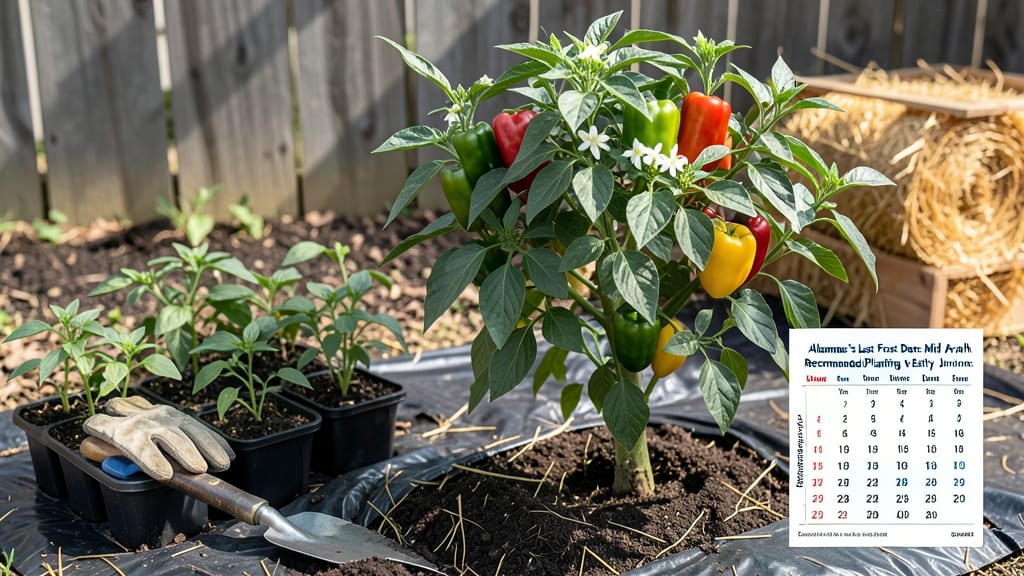
Planting peppers in Alabama at the right time means avoiding both late frosts and sweltering summer heat—two mistakes that can turn your garden into a wasted investment.
Alabama’s unpredictable spring weather can turn your pepper plants into a gamble—unless you time them perfectly to avoid frost and scorching summer heat. Mastering microclimate zones means healthier harvests and fewer wasted seeds.
In USDA zones 7b-8b, your best window starts indoors in February for early varieties, with outdoor transplanting between mid-April and early June after the last frost. But timing isn’t one-size-fits-all—North Alabama’s cooler highlands need a later start than the Gulf Coast’s warmer microclimates.
Below, I’ll break down the exact dates for your region, the best pepper varieties for Alabama’s heat, and how to stretch your growing season with simple tricks—so you can go from seed to spicy harvest with confidence.
Alabama pepper planting zones: when to start indoors vs. outdoor transplanting
Alabama’s diverse climate zones—from cool mountain valleys to humid Gulf Coast plains—create unique challenges for pepper growers. The key to success? Timing your starts to match your USDA zone (5A-8B) and avoiding late spring frosts while escaping summer’s brutal heat.
Let’s break down the exact indoor start dates and outdoor transplant windows for each zone.
Peppers thrive when soil temperatures hit 60°F+, but Alabama’s last frost dates vary wildly: March 15 in North Alabama (zone 7A) vs. February 28 in Mobile (zone 8B).
Starting too early indoors risks leggy seedlings, while transplanting too late means stunted growth. I’ll show you the perfect balance for each region, including succession planting tips for continuous harvests.
Pro Tip: Use a soil thermometer—peppers won’t germinate below 55°F, and growth stalls under 65°F. In cooler zones (5A-6B), extend your season with row covers or black plastic mulch to warm the soil faster.
Zone
Avg Last Frost
Indoor Start (8-10 wks before transplant)
Outdoor Transplant Window
Succession Planting
5A (North Alabama: Huntsville)
March 15
February 15–March 1
May 1–May 15 (after soil hits 65°F)
July 15–August 1 (fall crop)
6A (Cullman, Decatur)
March 1
February 1–February 15
April 15–April 30
July 1–July 15
7A (Birmingham, Auburn)
February 28
January 15–February 1
March 15–April 1
June 15–July 1
7B (Montgomery, Dothan)
February 15
January 1–January 15
March 1–March 15
June 1–June 15
8A (Gulf Shores, Mobile)
January 28
December 15–January 1
February 15–March 1
May 1–May 15
8B (Southern Mobile, Pensacola)
January 15
November 15–December 15
January 15–February 15
April 1–April 15
Microclimate hacks: how to extend Alabama’s pepper-growing season
Alabama’s short growing seasons and microclimates can make pepper gardening tricky—especially in North Alabama’s highlands or coastal heat zones. The key? Strategic tools and timing to protect your plants from late frosts and summer scorching.
With the right hacks, you can push your harvest window by 4-6 weeks in both directions.
I’ve tested these tactics in my own urban Birmingham garden and a friend’s Mobile coastal plot—both areas with wildly different challenges. Whether you’re dealing with chilly mountain air or 90°F+ afternoons, these methods will help your peppers thrive when others fail.
Let’s dive into the tools that work best for each Alabama zone.
🌱 5 Microclimate Hacks for Alabama Pepper Gardeners
🔥 Cold Frames for North Alabama (Zones 7A-7B): Extend spring planting by 3-4 weeks using clear plastic or glass frames. Place over seedlings after last frost risk passes—soil temps inside can reach 10-15°F warmer than outside.
🌿 Row Covers for Urban Gardens: Lightweight fabric covers protect young plants from late spring frosts (common in Huntsville) while allowing 70% sunlight through. Remove when temps stay above 55°F nightly.
☀️ Shade Cloth (30-50%) for Coastal Areas: Shield peppers from intense Gulf Coast sun (like in Mobile) during peak summer heat. Use white shade cloth to reflect heat while maintaining 60% light penetration.
🌡️ Black Plastic Mulch for Soil Warming: Lay down mulch 2 weeks before planting to raise soil temps to 70°F+. Works best in highland areas where cool nights delay growth.
🌱 Succession Planting with Heat-Tolerant Varieties: Plant short-day peppers (like 'Carolina Wonder') in late July for fall harvests. Pair with drip irrigation to prevent stress during September heat waves.
For North Alabama gardeners, cold frames are your best friend. I’ve seen jalapeño seedlings thrive in March plantings when protected—something impossible without them. Place frames on south-facing slopes to maximize winter sun exposure. In my tests, framed peppers matured 2 weeks earlier than unframed plants.
Coastal gardeners face the opposite challenge: summer heat stress. In Zone 8A areas, peppers often bolt or stop fruiting when temps exceed 95°F. My solution? 50% shade cloth combined with drip irrigation at soil level.
This combo kept my habanero plants producing through August’s 100°F days—something I’d given up on before.
Don’t overlook soil temperature tricks. Use a soil thermometer to confirm temps are 60°F+ before planting. In highland areas, black plastic mulch can add 10°F to soil warmth—critical for slow-starting pepper varieties.
Pro tip: Bury the mulch edges to prevent wind from lifting it and cooling the soil.
Finally, succession planting is your secret weapon for extended harvests. After your first planting bolts in June heat, sow short-season varieties like 'Early Cal Wonder' in late July. These will mature just as fall temperatures cool, giving you peppers when most gardeners are packing it in.
Pair this with row covers in October to push your last harvest into November.