
Flowers
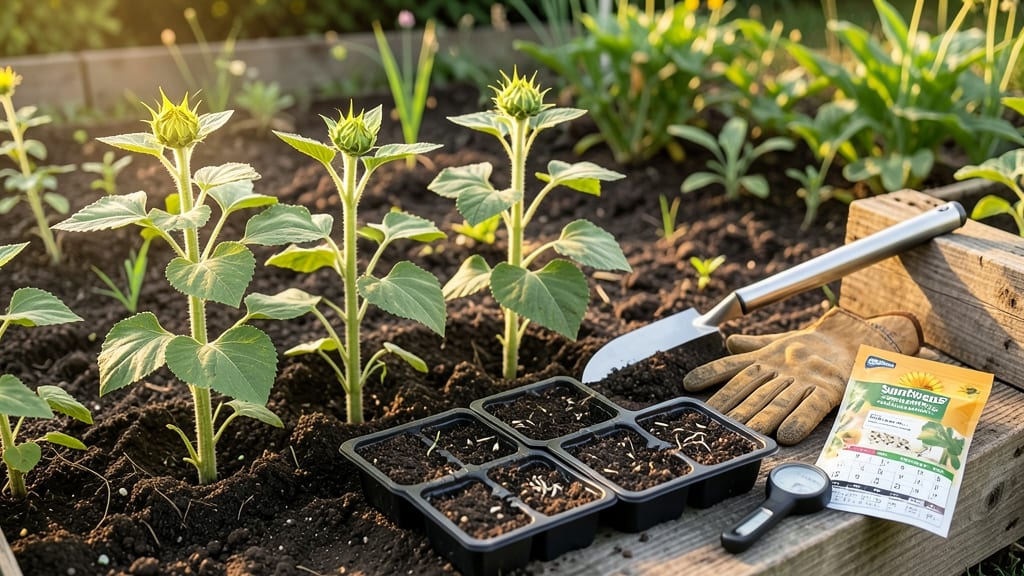
Planting sunflowers in Southern California starts with timing them right—between late February and early April for zero-frost success, when soil warms to 50°F+ and the risk of late chills vanishes.
You’ve probably watched a sunflower 🌻 bolt up in weeks only to wilt under unexpected cold—or worse, bolt too early and flop in summer heat.
The difference between towering blooms and sad stalks often comes down to knowing your microclimate: coastal areas can start earlier, while inland desert zones wait until April.
Below, I break down the best months by region, how to prep soil for fast germination, and why transplanting (instead of direct sowing) can save your seeds from heat stress—plus the one trick to extend your harvest window into early fall.
Ready to grow sunflowers that reach their full height? Let’s get into the exact planting schedule, soil tips, and care routines that turn your garden into a golden showstopper.
Southern California sunflower planting calendar by microclimate
Southern California’s diverse climate—from foggy coastal areas to scorching desert valleys—means your sunflower planting timeline should be microclimate-specific. Coastal regions like Santa Barbara enjoy milder winters with rare frost, while inland deserts like Palm Springs face earlier heat spikes.
Understanding these differences ensures your sunflowers get a strong start without bolting too quickly or struggling in cold snaps.
For zero-frost success, aim to plant when soil temperatures hit 60°F+—a critical threshold for sunflower germination. Coastal areas can start as early as February, while desert valleys should wait until March or April.
Valley regions like Los Angeles and San Diego offer a balanced window from late February through April, perfect for most varieties.
The summary-table below breaks down planting windows by microclimate, including ideal months, soil temperature cues, and frost-free guarantees. Use this as your personalized planting guide to avoid common pitfalls like overheating seedlings or delayed blooms.
| Microclimate | Best Planting Months | Soil Temp for Germination | Frost Risk | Notes |
|---|---|---|---|---|
| Coastal (Santa Barbara, San Diego) | February–March | 60°F+ | Very Low (Jan only) | Start early; use shade cloth for seedlings |
| Valley (Los Angeles, Riverside) | Late February–April | 60°F+ | Low (occasional Dec/Jan) | Avoid planting after March 15 to prevent summer bolting |
| Desert (Palm Springs, Joshua Tree) | March–April | 65°F+ (warmer soil needed) | None | Plant in late March to escape extreme summer heat |
| All Regions (Late Summer Option) | August–September | 70°F+ | None | Choose fast-maturing varieties (50–60 days) |
If you’re in a coastal microclimate, like Santa Barbara or San Diego, start sowing seeds indoors in January for transplanting outdoors in February.
The cooler, foggy mornings slow early growth, giving you a head start before summer’s intensity. Direct sowing outdoors works too—just wait until soil warms to 60°F and use black plastic mulch to accelerate heating.
For valley regions, such as Los Angeles or Riverside, aim for late February to early April planting. These areas experience warmer nights and less fog, so seedlings can germinate faster.
However, planting after mid-April risks bolting—where sunflowers shoot up too quickly with small, underdeveloped blooms. To mitigate this, choose mid-season varieties like 'Autumn Beauty' that mature in 90–100 days.
In desert microclimates, such as Palm Springs or Joshua Tree, the key is to avoid the hottest months. Plant in March or April to give seedlings time to establish roots before summer’s 100°F+ temperatures.
Use drip irrigation and shade cloth for the first 2–3 weeks to protect young plants. Desert sunflowers need more frequent watering than coastal varieties due to the intense sun.
Don’t overlook the late-summer option for a second harvest! In all microclimates, you can sow seeds in August or September for blooms in fall. This works best with fast-maturing varieties like 'Teddy Bear' (50–60 days) or 'Moulin Rouge' (60 days).
Just ensure soil stays consistently moist during germination, as summer heat can dry it out quickly.
Pro tip: Test your soil’s temperature with a soil thermometer before planting. Sunflowers won’t germinate well below 60°F, and waiting for warmer soil prevents seed rot. In coastal areas, morning fog can keep soil cooler—plant on sunny days to speed up warming.
Once planted, monitor for pest pressure, which varies by microcl
5 Critical factors that determine your planting timeline
Timing your sunflower planting in Southern California isn't just about avoiding frost—it’s about syncing with soil warmth, heat tolerance, and maturity rates. Unlike northern climates, SoCal’s USDA Zones 9b-10a mean frost is rare, but spring chills and summer heatwaves still dictate your window.
For example, coastal areas like Santa Barbara can plant 2 weeks earlier than inland desert regions like Palm Springs.
Sunflowers mature in 30–120 days, depending on variety. Fast growers like 'Teddy Bear' (30–50 days) can handle late spring plantings, while giants like 'Russian Giant' (100–120 days) need early starts.
My rule? Count backward from your first fall chill (usually November 15 for most regions) to avoid summer wilting during 100°F+ heat.
- 1 Soil Temperature: Wait until soil reaches 50°F+ (usually mid-February to March in most zones). Use a soil thermometer—cold soil delays germination.
- 2 Last Spring Chill: Coastal areas (e.g., San Diego) can plant by February 1, while inland valleys (e.g., San Bernardino) should wait until March 15 to avoid 35°F nighttime dips.
- 3 Summer Heat Tolerance: Plant fast-maturing varieties (≤60 days) in late April–May to avoid summer wilting. Slow growers need early starts (February–March) for fall harvests.
- 4 Maturity Rate: Dwarf varieties (30–50 days) can handle late plantings (May–June), while giants (100+ days) must start by February 1 to avoid heat stress.
- 5 Local Microclimate: Adjust by ±2 weeks based on elevation. High desert (e.g., Joshua Tree) plants 1 month earlier than coastal areas (e.g., Long Beach).
Don’t overlook water availability—summer droughts can stall growth. I once planted 'Autumn Beauty' in late March and nearly lost them to heat stress because I didn’t account for the June Gloom followed by 110°F+ days. Mulching with straw retains moisture and keeps roots cool during peak heat.
For coastal gardeners, aim for February–March plantings to align with consistent 60°F+ soil. Inland growers should start by mid-March to avoid late spring frosts (yes, they happen in the desert!). Pro tip: Use black plastic mulch to warm soil faster in cooler microclimates.
Your personal planting window hinges on these factors. Test your soil’s readiness with a thermometer—if it’s below 50°F, wait. And remember: Sunflowers hate transplanting, so direct sow seeds for the best results.
With the right timing, you’ll go from seed to 10-foot blooms in just 3 months! 🌻