
Flowers
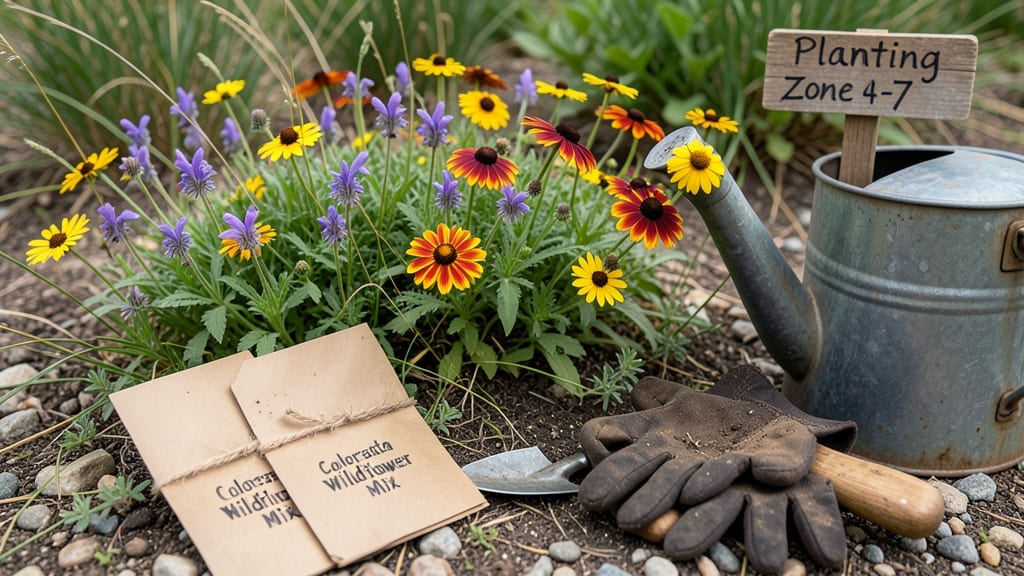
You can plant flowers in Colorado once the soil warms to 50°F and all frost danger has passed—typically late April to mid-May for most USDA zones 5-7, with fall planting possible from early September to mid-October.
Colorado’s unpredictable frost dates can turn a gardener’s dream into a frozen nightmare—unless you know the exact window to plant flowers for zero-frost success. With USDA zones ranging from 4 to 7, timing is everything, especially when elevation shifts frost dates by weeks.
Skipping the wait for warm soil risks stunted growth or worse—your 🌸 blooms may never reach their full potential. But planting too late means missing the 120-180 frost-free days Colorado gardens need for vibrant summer color.
Below, I’ll break down the best planting windows by zone, share foolproof tricks to extend your season, and recommend the fastest-blooming flowers for Colorado’s short growing season.
Colorado’s frost dates by USDA Zone: when to plant flowers without risk
Colorado’s USDA zones 4-7 create a tricky puzzle for gardeners—one late frost can wipe out weeks of effort. The key to zero-frost risk planting lies in understanding your microclimate and elevation-based frost dates.
In my Zone 5 Front Range garden, I’ve learned that waiting until mid-May guarantees frost-free soil, while my friends in Zone 7 Colorado Springs can plant as early as early April. The difference? Altitude and urban heat islands.
For annual flowers, timing is critical—plant too early, and frost will kill tender seedlings. For perennials, you’ve got more flexibility, but early spring planting still requires caution. Colorado’s first frost typically arrives between mid-September and early October, giving us a 120-180 frost-free day window.
That’s why I always check the National Weather Service’s frost predictions before breaking out my trowel.
Here’s the zone-by-zone breakdown you need to plan your flower garden like a pro:
In Zone 5 Denver, where I garden, I’ve found that cool-season annuals like pansies and snapdragons can handle light frosts, so I plant them as early as mid-April. But for tender annuals like marigolds or petunias, I wait until after Mother’s Day to avoid frost damage.
My rule of thumb? Wait until the soil stays above 50°F for 5 days straight—that’s when I know it’s safe to plant.
For fall planting, the strategy shifts. I aim to get cool-season flowers in the ground by mid-September so they establish roots before winter. Perennials like coneflowers and black-eyed Susans can handle Colorado’s first frost, but I still give them a light mulch to protect their roots.
Pro tip: Plant bulbs like tulips in October—they need 6-8 weeks of cold to bloom beautifully next spring.
One mistake I made early on was planting tender perennials like lavender too late in spring. They need time to establish before winter, so I now plant them in early May and give them extra water during Colorado’s dry summer months.
If you’re in Zone 4 or 5, consider starting annuals indoors in March—this gives you a 2-3 week head start before the last frost.
Colorado’s high-altitude gardens (like those in Zone 4) face even shorter seasons. In Grand Junction, where my sister gardens, she plants fast-growing annuals like zinnias and sunflowers to maximize her 120 frost-free days.
She also uses row covers to extend her season by 2-3 weeks in both spring and fall. If you’re in a high-elevation zone, prioritize drought-tolerant perennials that thrive with minimal care.
Don’t forget about microclimates—your garden might be warmer than the official frost date suggests. South-facing slopes and urban areas (like Denver’s downtown) can be 2-3 weeks earlier than rural zones.
I always check for local frost-free date maps from Colorado State University Extension to fine-tune my planting schedule. For example, Boulder’s urban heat island
How to extend your Colorado flower planting season with smart techniques
Colorado’s short growing season doesn’t mean your flower garden has to be short-lived. With the right techniques, you can push your planting windows earlier in spring and later into fall, giving your blooms more time to shine.
I’ve tested these methods in my own USDA Zone 5b garden—some work better than others, but they all deliver results.
The key is combining frost-tolerant varieties with protective tools like row covers and cold frames. These strategies let you start seeds 4-6 weeks earlier than traditional timelines and extend fall blooms until first frost.
My favorite hardy flowers for this approach? Pansies, snapdragons, and sweet peas—they handle cold like pros.
For spring planting, I swear by cloche bells (mini greenhouse domes) over tender seedlings. They create a microclimate that’s 5-10°F warmer than ambient air, letting me plant marigolds and zinnias as early as mid-April in my Denver garden. Just remember to ventilate on warm days to prevent overheating.
In fall, focus on hardy annuals like stock (Zone 6) and sweet alyssum (Zone 3). These thrive in cool weather and often rebloom after light frosts. Pair them with mulch (straw or shredded leaves) to insulate roots—this can delay frost damage by 2-3 weeks.
My asparagus fern bed stays lush until mid-November thanks to this trick.
Pro tip: Monitor your local frost dates using the Colorado State University frost calendar—it’s updated annually and accounts for elevation variations. For example, Fort Collins (Zone 5a) has later frosts than Grand Junction (Zone 6b), so adjust your timing accordingly.
With these techniques, you’ll enjoy continuous blooms from April to October—no frozen dreams here! 🌷