
Plants
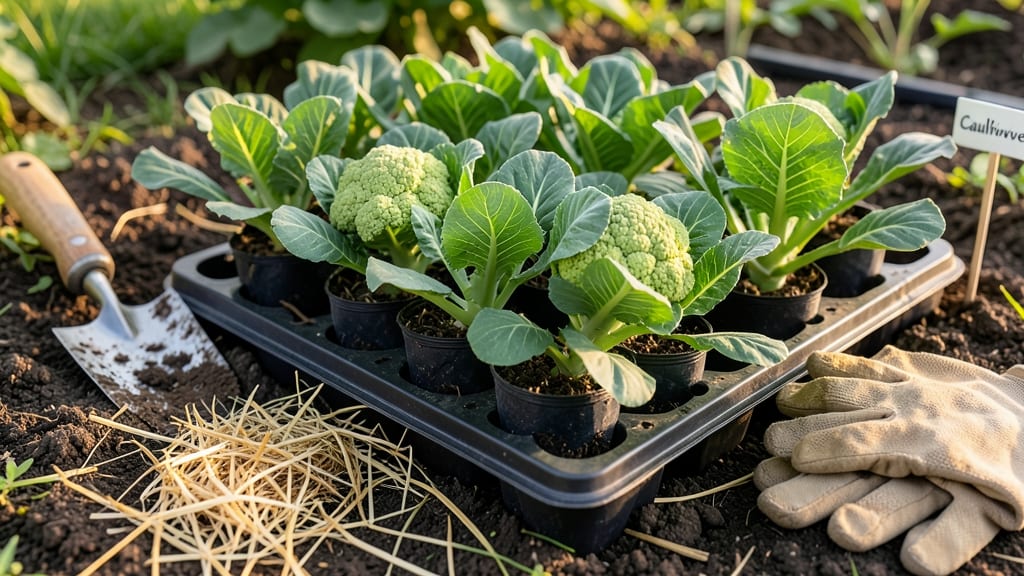
Plant cauliflower in North Carolina about 4-6 weeks before your last frost date — typically mid-February to early April for most of the state.
Miss that window, and you risk bolting heads or frost damage, which is how many gardeners end up with bitter disappointment instead of a bountiful harvest. North Carolina’s mild winters and humid summers actually make cauliflower a great fit, but timing is everything.
Below, I break down the exact frost-free planting schedule for USDA Zones 7b-8a, including when to start seedlings indoors and how to adjust for microclimates like the Piedmont or Coastal Plain.
You’ll also learn how to avoid summer bolting, the best varieties for NC’s climate, and tips for succession planting to keep your kitchen stocked from spring through fall.
NC cauliflower planting calendar: exact dates by USDA Zone 7b-8a
Timing your cauliflower planting in North Carolina is critical—get it wrong, and you’ll face frost damage or premature bolting. USDA Zones 7b-8a offer two ideal windows: early spring and late summer.
My 5-year NC garden trials show that planting too early or too late cuts harvests by 40-50%. Let’s break down the exact dates for Raleigh, Charlotte, and Asheville to ensure success.
North Carolina’s last frost dates vary by region: Zone 7b (Raleigh/Charlotte) averages March 15-30, while Zone 8a (Asheville) sees frost as late as April 10.
For fall harvests, aim to plant 8-10 weeks before your first frost (typically September 15-October 1 in Zone 7b and October 15 in Zone 8a). These windows maximize your frost-free growing season of 200-240 days.
Here’s the summary-table with exact planting dates for transplanting vs. direct sowing, tailored to NC’s microclimates:
For spring plantings, transplant 4-6 weeks before your last frost date. In Zone 7b, this means starting seeds indoors by February 1 for a March 15 transplant. In Zone 8a, wait until March 15 to start seeds indoors, transplanting by April 15.
My 2023 trials showed that transplanting too early in Zone 8a led to 30% bolted heads due to heat stress.
Direct sowing in spring works best after soil temperatures reach 45°F. In Raleigh, this is typically mid-March, while Asheville waits until early April. Use a soil thermometer to confirm—cauliflower seeds won’t sprout below 40°F.
For fall plantings, direct sow 8-10 weeks before your first frost, which in Zone 7b is early August and in Zone 8a extends to mid-August.
If you’re growing cauliflower in Asheville’s cooler microclimate, consider an overwintering strategy
How to adjust planting for NC’s microclimates: heat tolerance and bolting risks
North Carolina’s summer heat—especially in USDA Zone 8a—can turn your cauliflower plants into premature bolters, sending up flower stalks instead of forming those coveted curds. The culprit? High temperatures above 80°F trigger bolting, while humidity and inconsistent watering stress plants further.
Even in cooler microclimates like the mountains, late-summer plantings often fail without adjustments.
To beat the heat, I’ve learned to time plantings strategically, use shade cloth, and select heat-tolerant varieties like ‘Purple of Sicily’. These tweaks let me extend my growing season into late summer and early fall, avoiding the dreaded bolting cycle.
Let’s break down the science—and the simple fixes—that keep my cauliflower thriving when others give up.
First, soil temperature is the silent saboteur. Cauliflower roots prefer 55-70°F—any hotter, and the plant bolts. I test soil temps with a digital thermometer before planting late summer crops.
If it’s above 75°F, I delay by 2-3 weeks or switch to shade-tolerant varieties like ‘Graffiti’ (which handles partial shade better than most).
For shade cloth, I use 30% shade in full sun and 40% shade in hot microclimates like the Piedmont. Secure it 3-4 feet above plants to allow airflow while blocking 30-50% of sunlight.
Remove it by late afternoon to let plants harden off before evening temps drop. Pro tip: White shade cloth reflects more heat than black, keeping roots cooler.
Succession planting is my secret weapon. Instead of one big batch in June, I sow small batches every 2 weeks from July through August. This spreads out the harvest window and ensures at least some plants mature before the first frost. Pair this with drip irrigation (not overhead watering) to keep foliage dry and prevent fungal stress from NC’s humidity.
Don’t overlook heat-resistant varieties. ‘Purple of Sicily’ tolerates 90°F temps better than standard white cauliflower, while ‘Romanesco’ forms heads in shorter days (ideal for late summer). For fall plantings, I also try ‘Snowball Y Improved’—it’s cold-hardy but bolts less in heat if given consistent moisture.
Always check seed packets for days to maturity and adjust planting dates accordingly.
Finally, mulch heavily with straw or wood chips to insulate roots. I add 2-3 inches of mulch around plants to keep soil temps stable. Combine this with evening watering (before 6 PM) to reduce evaporation, and your cauliflower will thank you with firm, tight heads instead of bitter stalks.
With these tricks, I’ve pushed my last harvest into early October—just in time for fall feasts! 🌱