
Flowers
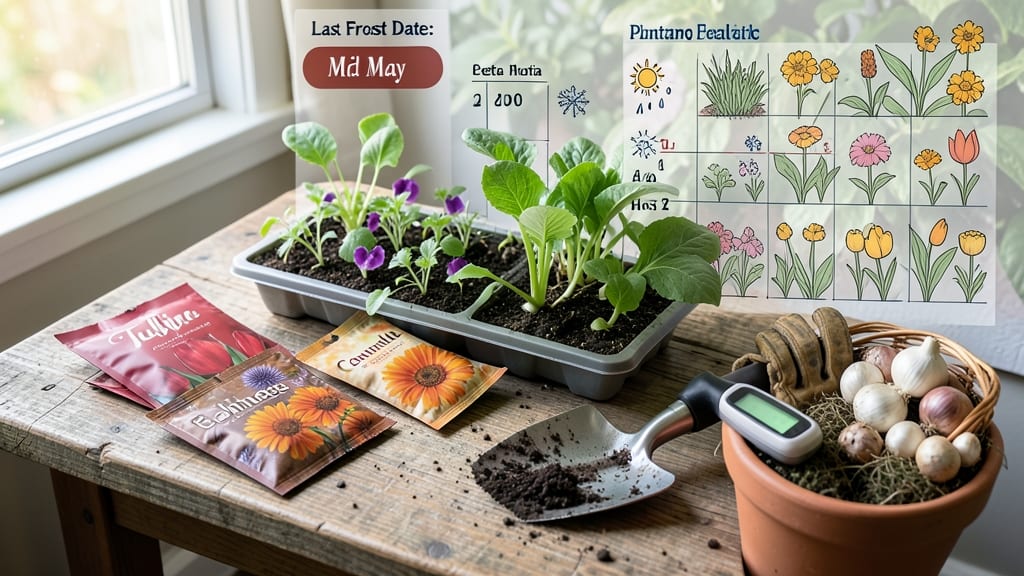
Planting flowers in Ontario at the right time means the difference between a showstopping garden and a sad, frost-nipped disappointment.
Timing is everything in Ontario gardening—plant too early and frost will kill your blooms, too late and you’ll miss peak flowering seasons. Follow these zone-specific guidelines to maximize your flower garden’s success with minimal risk.
Whether you’re in Toronto’s 5b zone or Ottawa’s 4b, knowing when to plant perennials, annuals, or bulbs can save you from costly mistakes.
I’ll break down the best months for each flower type, how to read your local frost dates, and even how to cheat the system with cold frames.
By the end, you’ll know exactly when to put those 🌸 in the ground—no guesswork, just blooms.
Ontario planting zones: when to start flowers by hardiness zone (5-9)
Ontario’s diverse hardiness zones (5a-9a) create unique challenges for gardeners. Knowing your last frost date is critical—plant too early, and frost will kill tender seedlings. Too late, and you’ll miss peak blooming seasons. Each zone has specific planting windows for annuals, perennials, and bulbs to ensure vibrant gardens.
Southern Ontario (zones 5b-6b) enjoys earlier springs, while Northern Ontario (zones 4a-5a) faces later frost risks. For example, Toronto (zone 6a) typically sees its last frost around May 10, while Ottawa (zone 5b) waits until May 15.
These dates shift 2-3 weeks earlier in warmer microclimates like Niagara and London.
Annuals like marigolds and petunias thrive when planted 2-4 weeks after your last frost date. Perennials, such as coneflowers and black-eyed Susans, benefit from early spring planting to establish roots before summer heat. Bulbs, like tulips and daffodils, should be planted in fall (September-October) for spring blooms.
| Zone | Last Frost Avg. | Annuals Planting | Perennials Planting | Bulbs Planting |
|---|---|---|---|---|
| 5a (North) | May 20–25 | June 1–10 | Early May (hardy types) | Sep 15–Oct 5 |
| 5b (Ottawa) | May 10–15 | May 20–30 | Late April–early May | Sep 1–Oct 1 |
| 6a (Toronto) | May 5–10 | May 15–25 | Early April–May | Aug 20–Sep 15 |
| 6b (Niagara) | Apr 25–May 5 | May 1–15 | Late March–April | Aug 15–Sep 10 |
| 7a (Southwest) | Apr 15–20 | Apr 25–May 10 | March–April | Aug 1–Aug 15 |
For zone 5a gardeners, start cold-hardy annuals like pansies indoors in March for early outdoor transplanting. In zone 6b, you can plant heat-loving flowers like sunflowers as early as April 25, while zone 5b should wait until May 20 to avoid frost damage.
Late-summer planting (August) works for cool-season annuals like cosmos and zinnias. These thrive with 60+ days of warm weather ahead. Use row covers if planting tender varieties like geraniums in zone 5a after June 15.
Perennials like bee balm and shasta daisies should be planted in spring (April–May) to establish roots before summer. Fall-planted perennials (e.g., hostas) benefit from cooler temps and less competition for soil nutrients. Always water deeply after planting to reduce transplant shock.
Bulbs like alliums and crocuses can handle fall planting in zone 6b as early as August 15. In colder zone 5a, wait until September 15 to ensure bulbs don’t sprout prematurely. Spring-blooming bulbs (e.g., tulips) need 6–8 weeks of cold to flower reliably.
Pro tip: Check local frost forecasts via Environment Canada or Old Farmer’s Almanac for real-time adjustments. Microclimates near lakes or urban areas can delay frost by 1–2 weeks. Always harden off seedlings before transplanting to prevent shock.
By aligning your planting with zone
Best flowers to plant by month in Ontario (March–August)
Ontario’s variable climate demands smart timing for flower planting—too early and frost zaps your blooms, too late and you miss summer color. I’ve broken down the best flowers to plant each month, focusing on cold-hardy varieties for early starts and heat-tolerant picks for late-season success.
Whether you’re in Southern Ontario’s Zone 6b or Northern Ontario’s Zone 5a, these month-by-month tips will keep your garden thriving.
March is all about preparing for spring, while April kicks off active planting. By May, you’ll be succession planting for continuous blooms, and summer months let you extend your season with heat-loving annuals. Let’s dive into the top-performing flowers for each month, tailored to Ontario’s growing conditions.
- March: Start cold-hardy bulbs (tulips, daffodils) indoors or plant hardy perennials like heuchera and coral bells. Soil temps must be 40°F+.
- April: Plant pansies, violas, and sweet peas (Zone 5a-6b). Wait until after last frost (mid-May in most regions) for annuals like marigolds.
- May: Succession plant sunflowers, zinnias, and cosmos every 2 weeks for continuous blooms. Add perennials like coneflowers and black-eyed Susans.
- June: Direct-sow heat-loving annuals like portulaca and lantana. Transplant tender perennials (e.g., dahlias) after soil warms.
- July: Extend season with fall-blooming bulbs (e.g., chrysanthemums) and succession-sow snapdragons. Deadhead spent blooms to encourage reblooming.
- August: Plant late-season bloomers like asters and goldenrod. Start cool-season veggie flowers (e.g., calendula) for fall harvests.
For March planting, focus on bulbs and hardy perennials that tolerate Ontario’s chilly soils. I recommend tulips and alliums for early color, while heuchera adds foliage interest. If you’re in Zone 5a, wait until soil temps hit 50°F—colder soil can stunt root growth.
By April, the real fun begins! This is the time for cool-season annuals like pansies and sweet peas, which thrive in Ontario’s 50-60°F temps.
I always plant sweet peas early—they climb and bloom profusely, adding vertical interest to borders. For perennials, add hostas and peonies for long-term impact.
May is peak planting season in Ontario, and I make the most of it with succession planting. Every 2 weeks, I sow zinnias and cosmos to ensure nonstop blooms through fall.
Pair them with sunflowers for height and marigolds to deter pests naturally. Don’t forget perennials like coneflowers, which establish roots quickly in May’s warm, moist soil.
June brings heat and humidity, so I switch to drought-tolerant annuals like portulaca and lantana. These thrive in Ontario’s summer sun and require minimal watering. For perennials, I transplant dahlias and canas once soil temps exceed 60°F. Mulch heavily to retain moisture and keep roots cool.
As summer winds down in July and August, I prepare for fall blooms by planting asters and goldenrod. These late-season stars brighten gardens when many annuals fade.
I also start cool-season flowers like calendula and stock for early fall harvests. Deadheading spent blooms keeps perennials like black-eyed Susans producing flowers until frost.