
Flowers
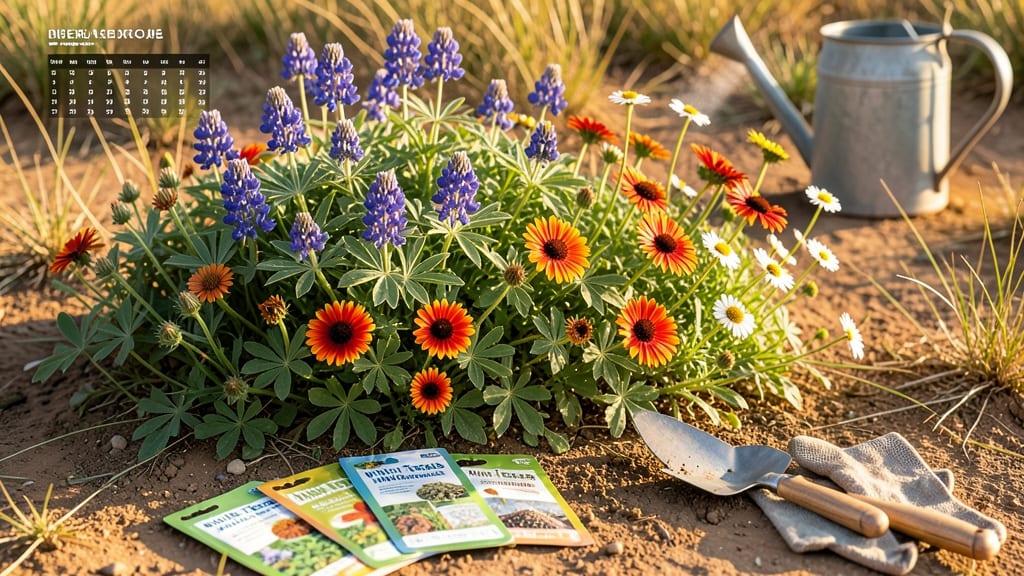
Plant wildflower seeds in Texas from fall through spring—skipping summer’s brutal heat is the key to lush blooms.
Texas wildflowers transform landscapes into vibrant tapestries—but planting them at the wrong time can mean sparse blooms or no flowers at all. Timing is everything, especially when Texas' climate shifts from scorching summers to unpredictable freezes.
North Texas gardeners should aim for September to March, while South Texas can stretch planting into April. Coastal areas benefit from late fall sowing, while West Texas’ desert wildflowers thrive with winter rains.
Below, I break down the best months by region, soil prep secrets, and how to adjust for Texas’ wild weather—so you get the most vibrant blooms with minimal effort.
Texas wildflower planting calendar by region: best months for native species
Texas' diverse climate means Bluebonnets in North Texas bloom alongside Blackfoot Daisies in the Panhandle—each thriving during its own optimal planting window. Timing your seeds correctly ensures vibrant blooms and avoids wasting precious rainwater.
I’ve broken down the best months for each region, accounting for frost dates, rainfall patterns, and native species cycles.
For North Texas (USDA Zones 7b-8a), think of fall planting as your golden ticket. Cooler temperatures and consistent rainfall in September-October create ideal conditions for seeds to germinate before winter dormancy. This is when Bluebonnets and Indian Paintbrush thrive, taking advantage of Texas’ winter rains.
Central Texas (Zones 8a-9a) offers a two-season window: late summer and fall. Plant Blackfoot Daisies and Mexican Feathergrass in August-September to ensure they establish roots before the first frost, typically around December 1.
Spring planting is also viable for annuals like Coreopsis, but summer heat can stress young seedlings.
In South Texas (Zones 9a-10b), where freezes are rare, you can plant year-round—but fall remains best. Seeds like Eastern Red Columbine and Winecups thrive when planted in September-October, benefiting from cooler temps and higher humidity.
Avoid planting during summer’s peak heat, which can cause seed dormancy.
West Texas (Zones 7a-8b) demands precise timing due to its arid climate. Plant drought-resistant species like Prickly Poppy and Desert Marigold in late summer (August-September), using mulch to retain moisture. These seeds need consistent soil moisture for germination, so water deeply after planting and avoid summer heat stress.
🌱 Pro Tip: Always check soil temperatures—ideal germination occurs at 60-75°F. Use a soil thermometer to time your planting for maximum success.
For late-summer planting (June-August), focus on drought-resistant varieties like Mexican Hat or Evening Primrose. These species germinate quickly in warmer soil and establish roots before summer’s peak heat. Always water deeply after planting to encourage root growth, especially in West Texas, where evaporation rates are high.
In fall-planted gardens, aim for September-October across most regions. This timing aligns with cooler temps and increased rainfall, reducing the need for supplemental watering. I’ve seen Bluebonnets planted in October produce twice as many blooms as those sown in spring due to consistent moisture.
If you miss the fall window, don’t despair—
How to adjust planting times for Texas’ unpredictable weather patterns
Texas wildflowers thrive when planted at the right time, but our unpredictable weather can throw off even the best-laid plans. Early freezes in North Texas or sudden heatwaves in the Hill Country can turn your fall planting into a gamble.
The key is flexibility—knowing how to adjust planting windows based on real-time conditions rather than relying on a rigid calendar.
Start by monitoring soil temperatures with a simple soil thermometer. Most Texas wildflower seeds need soil temps between 60-70°F to germinate properly. If your area experiences an early freeze (like those North Texas surprises), delay planting until after the last frost date—or use mulch to protect emerging seedlings.
⚠️ ⚠️ WARNING: Texas Weather Can Ruin Your Wildflower Dreams ⚠️ ⚠️
Texas' North vs. South climate divides mean frost dates vary wildly. North Texas can see frost as late as February 15, while South Texas rarely drops below 32°F. If you plant Bluebonnets too early in East Texas, a late freeze will kill them. Conversely, West Texas heatwaves can dry out seeds before germination.
⚠️ Action Steps:- Check local frost maps (like Texas A&M AgriLife) before planting.
- Use shade cloth (30-50%) to protect seedlings from sudden heat spikes.
- For high-altitude areas (e.g., Hill Country), plant 2-3 weeks later than coastal regions.
🌡️ Pro Tip: If soil temps drop below 50°F, cover seeds with straw mulch to insulate them.
For delayed rains, which are common in West Texas, consider seed stratification—a process that mimics natural winter conditions. Many native seeds (like Indian Paintbrush) benefit from a cold-moist period before sprouting.
Simply mix seeds with moist sand in a sealed bag and refrigerate for 4-6 weeks before planting. This trick works wonders in drought-prone areas where rainfall is unreliable.
If you’re in coastal Texas (e.g., Houston or Galveston), where humidity and mild winters prevail, you can plant wildflowers year-round. However, summer planting (June-August) requires extra care—water deeply twice weekly and use drip irrigation to avoid fungal issues from high humidity.
For high-altitude regions (like Fort Davis), stick to fall planting (September-October) to avoid summer’s extreme heat.
Extend your planting season with mulch and shade cloth. A 2-3 inch layer of straw mulch keeps soil moist and regulates temperature swings. For spring plantings, use shade cloth to protect tender seedlings from late-spring heatwaves.
Remove it once seedlings are established (after 4-6 weeks). This dual approach lets you plant 2-3 weeks earlier in spring or 2-3 weeks later in fall without risking seed failure.
Always have a backup planting window in mind. If your primary planting fails due to weather, North Texas gardeners can replant in late March, while South Texas has a second chance in November**.
Keep a small batch of seeds on hand for emergency replanting—it’s a lifesaver when Texas weather turns unpredictable.